Tapestry of Modern Italy

下载的 PDF 是图像副本。如需可选中文本及更好的辅助技术支持,请使用打印功能。

Tapestry of Modern Italy

揭开一个失落的文明

正在加载考古记录……

正在收集古代记录

跳转到主内容
Tapestry of Modern Italy
文明焦点

Tapestry of Modern Italy

A genomic snapshot (174 samples, year 2000) woven into Italy’s archaeological past

2000 CE
Italy
滚动开始
Chapter I

剧情

了解 Tapestry of Modern Italy 文化

Modern Italy, captured by 174 samples collected in 2000 across Tuscany, Sicily and southern mainland, reflects millennia of migrations seen in archaeological layers—from Neolithic farmers to Roman and medieval movements—mapped onto contemporary genomes.

Time Period

2000 CE (Modern)

Region

Italy

Common Y-DNA

Not reported in this dataset

Common mtDNA

Not reported in this dataset

Chapter II

时间线

这种文化历史上的关键时刻

2500 BCE

Bronze Age mobility across Italy

Archaeological data indicates increased long-distance exchange and new material cultures in Italy, processes later echoed in genetic profiles as additional ancestry components.

Chapter III

Origins & Emergence

This dataset comprises 174 modern individuals sampled in 2000 from locations including Tuscany; Trapani, Sicily; Belvedere (Cosenza); Siracusa; Naples; Salerno; and Crispiano. Archaeological layers beneath these places tell a cinematic story: Paleolithic hunter-gatherer camps gave way to Neolithic farmers who reshaped the land; Bronze Age movements introduced new material cultures across the peninsula; Iron Age societies such as the Etruscans and the Greek city-states of Magna Graecia transformed southern urban landscapes; and the Roman Empire unified diverse peoples under shared institutions. Archaeological evidence—settlements, ceramic typologies, burial practices, and urban stratigraphy—maps these major demographic pulses.

Genetically, modern Italians inherit a palimpsest of those events. The living population preserves signals of ancient farmers and hunters, later Bronze Age mobility, and a succession of historic contacts (Greek colonization, Roman-era movement, medieval migrations across the Mediterranean and Europe). Because these are modern samples, they represent the end result of many centuries of admixture, drift, and local continuity. Archaeological data indicates repeated population turnover and cultural layering at sites such as Siracusa (Sicily) and urban centers in Tuscany; genetics captures the blended echoes of those processes.

  • 174 modern samples collected in 2000 from multiple Italian regions
  • Archaeology shows layers: Paleolithic → Neolithic → Bronze/Iron Age → Historic eras
  • Modern genomes reflect cumulative demographic events, not single migrations
Chapter IV

Daily Life & Society

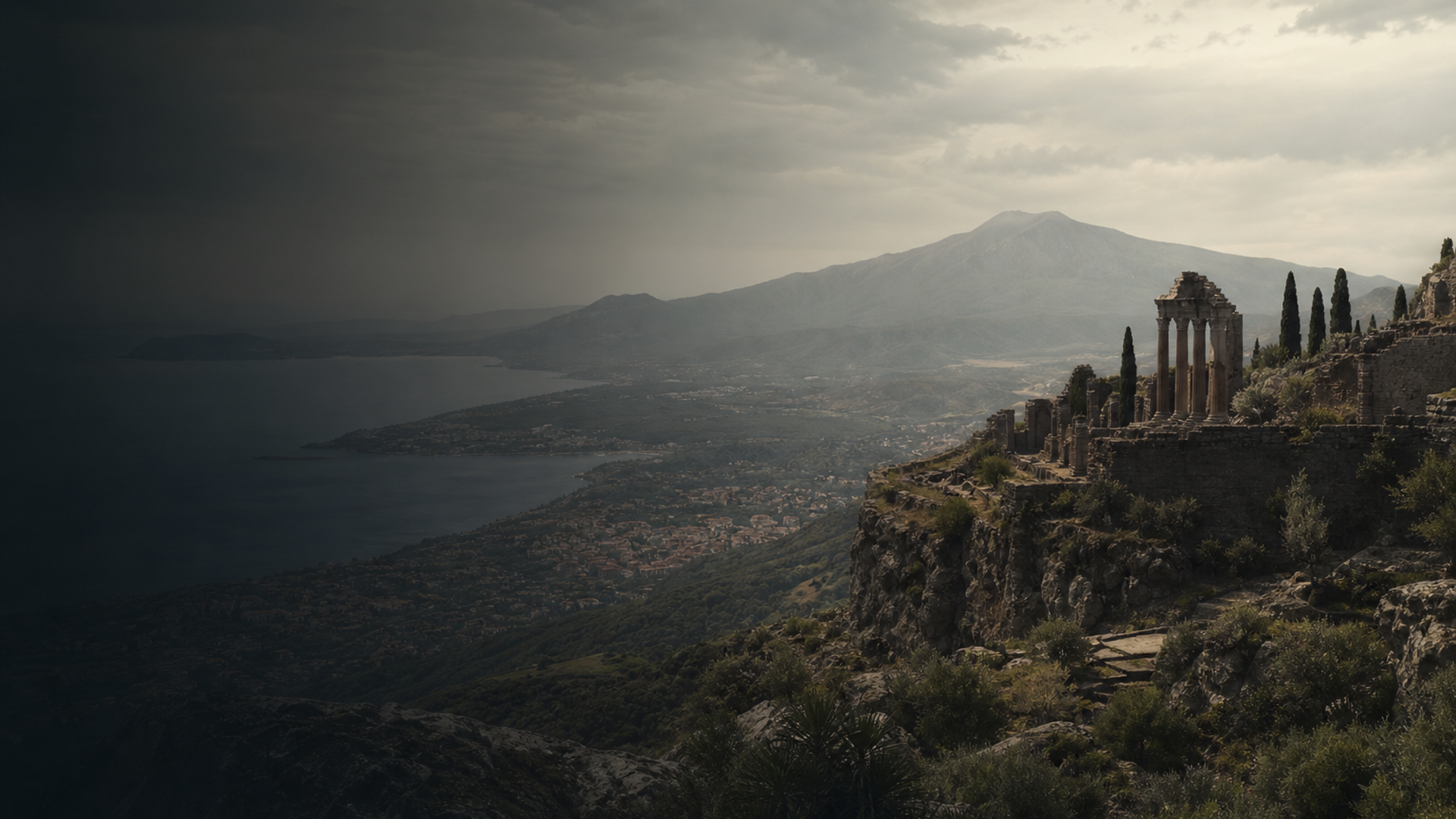
Modern Italian life, as reflected by the sampled places, is rooted in long-standing landscapes: terraced vineyards in Tuscany, baroque streets in Naples, the Greek and Roman ruins that still define Siracusa’s harbor, and the layered castles of Trapani. Archaeological remains—house plans, wells, pottery workshops, and burial grounds—reveal everyday economies of farming, artisanal production, commerce and maritime exchange. These material patterns help explain genetic structure: port cities and trading hubs historically attracted newcomers and fostered admixture, while inland rural communities often show more continuity.

Cultural practices—language dialects, kinship patterns, and localized marriage networks—shape gene flow over generations. For example, island and coastal sites in Sicily (Trapani, Siracusa) have archaeological records of Phoenician, Greek and later Islamic presence; such sustained interactions leave subtle imprints that can be visible in modern genomes. Equally, Tuscan towns preserve Etruscan and medieval stratigraphy, which archaeology uses to track long-term demographic stability in some valleys and turnover in frontier zones.

  • Urban ports and trade routes increase historical admixture
  • Rural continuity fosters localized genetic persistence
Chapter V

Genetic Profile

This collection offers a snapshot of Italy’s genetic landscape at the year 2000. Because the dataset contains modern samples, the results reflect layered ancestry accumulated over millennia rather than discrete ancient populations. The file does not list common uniparental haplogroups for these particular samples; however, population-level analyses from Italy more broadly show a mix of ancestry components that correspond to archaeological phases: Mesolithic hunter-gatherer heritage, Neolithic Anatolian farmer input, Bronze Age inflows linked to steppe-related ancestry, and later Mediterranean/Near Eastern contributions tied to historic contacts.

Regional structure is an important theme—genetic clines and island-mainland differences align with archaeological records of colonization and trade. Southern Italy and Sicily often show clearer traces of eastern Mediterranean and North African connections in both archaeology and genetics, consistent with centuries of seafaring contacts (Greek colonists in sites like Siracusa; later medieval Mediterranean exchanges). Conversely, central and northern regions retain signatures of long-term agricultural settlement and later continental interactions. It is important to emphasize uncertainty: while autosomal components can be modeled, precise attribution to specific archaeological events requires careful sampling and direct ancient DNA from contextual archaeological layers; modern samples are informative but infer historic processes only indirectly.

  • 174 modern genomes reflect cumulative ancestry: hunter-gatherer, Neolithic farmer, Bronze Age, and later Mediterranean inputs
  • Regional genetic structure mirrors archaeological patterns: Sicily/Coastal south show greater Mediterranean connectivity
Chapter VI

Legacy & Modern Connections

The living people sampled across Tuscany, Sicily and southern Italy are the final scene in a long archaeological epic. Their genomes carry the combined echoes of prehistoric migrations and historic movements—Greek settlers in Siracusa, Etruscan polities in Tuscany, and medieval Mediterranean exchanges around Trapani. Archaeological sites act as anchors: they provide the context needed to interpret genetic signals and to separate ancient population events from recent mobility.

For researchers and the public, these modern samples are powerful for understanding recent population structure and medical genetics, but they should be paired with ancient DNA and careful archaeological context to reconstruct deeper histories. Limited-by-design snapshots like this one map where to target archaeological sampling and ancient-genome sequencing to test specific hypotheses about continuity and change.

  • Modern genomes encode archaeological history but require ancient DNA for direct temporal links
  • This 2000-era snapshot guides where to pursue archaeological sampling and aDNA studies
AI 电源

AI 助手

就 Tapestry of Modern Italy 文化提问

AI 助手 由DNAGENICS公司制作

解锁此特性
Ask questions about the Tapestry of Modern Italy culture. Our AI assistant can explain genetic findings, historical context, archaeological evidence, and modern connections.
AI 样本分析

Tapestry of Modern Italy 文化是人类历史中值得了解的一章……

遗传分析揭示了与早期种群的联系,同时显示了独特的适应和文化创新的证据。 古代DNA样本提供了对迁徙模式、社会结构以及古代种群之间的生物关系的深刻见解。

这是人工智能分析的预览。 解锁全AI 助手, 以探索关于:

  • 遗传组成和祖先
  • 移徙模式和起源
  • 日常生活和文化习俗
  • 现代遗传遗产

探索更古老的文化

揭开古代世界文明的故事

使用优惠码 可减免 35% • 11月12日 到期





