Tarquinia: Early Medieval Lives

下载的 PDF 是图像副本。如需可选中文本及更好的辅助技术支持,请使用打印功能。

Tarquinia: Early Medieval Lives

揭开一个失落的文明

正在加载考古记录……

正在收集古代记录

跳转到主内容
Tarquinia: Early Medieval Lives
文明焦点

Tarquinia: Early Medieval Lives

Fragments of people and movement in Viterbo's medieval horizon (771–1156 CE)

771 CE - 1156 CE
Lazio, Viterbo (Tarquinia), Italy
滚动开始
Chapter I

剧情

了解 Tarquinia: Early Medieval Lives 文化

Archaeological and ancient DNA from four Early Medieval individuals from Tarquinia (Viterbo, Lazio) reveal diverse maternal lineages—X2n, T, L, H—hinting at long-distance connections in central Italy. Limited samples make conclusions preliminary.

Time Period

771–1156 CE (Early Medieval)

Region

Lazio, Viterbo (Tarquinia), Italy

Common Y-DNA

Undetermined (no robust Y data)

Common mtDNA

X2n, T, L, H (each observed once)

Chapter II

时间线

这种文化历史上的关键时刻

774 CE

Charlemagne defeats the Lombard Kingdom

The fall of the Lombard Lombardic realm in northern Italy reshaped political networks across peninsular Italy, affecting power dynamics in central regions like Lazio (context for Early Medieval communities).

1156 CE

Late sample horizon from Tarquinia

The upper bound of sampled burials (1156 CE) sits within a period of rising communal institutions and continuing Mediterranean exchange in central Italy.

Chapter III

Origins & Emergence

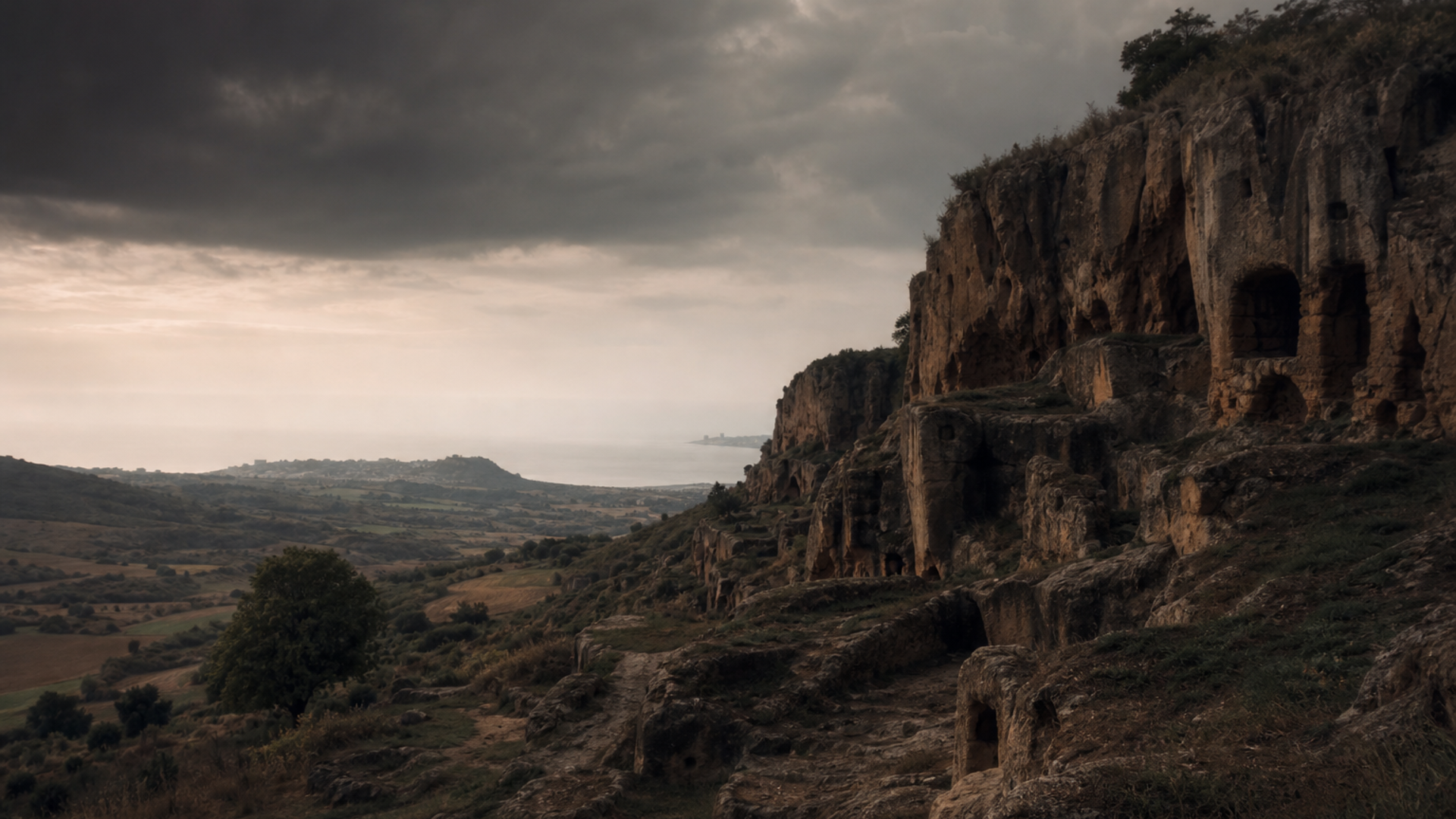
The Early Medieval phase recorded at Tarquinia (Viterbo province, Lazio) unfolds against a landscape of ancient urban memory and renewed medieval networks. Once an Etruscan powerhouse, Tarquinia remained inhabited into the Middle Ages; archaeological strata and cemetery contexts dated between 771 and 1156 CE show settlement continuity, reuse of older monuments, and material culture shaped by local traditions and wider Mediterranean contacts.

Archaeological data indicates a mosaic of influences in central Italy during this period: the legacy of late antique institutions, the political shocks of Lombard and Carolingian transformations, and the gradual emergence of communal centres. Material markers — ceramics, reused architectural stone, and burial practices observed in medieval layers — point to communities negotiating identity through both inheritance and innovation.

Limited evidence suggests that Tarquinia’s medieval inhabitants engaged in regional mobility and long-distance exchange, likely connected to trade routes along the Tyrrhenian coast and road arteries toward Rome. However, small cemetery samples and fragmentary stratigraphic records mean that interpretations of demographic origin and population continuity must remain cautious. Ongoing integration of stratigraphy, artifacts, and genetic data offers the best path to clarify how these Early Medieval communities formed and transformed.

  • Occupation in medieval layers at Tarquinia, Viterbo (771–1156 CE)
  • Archaeological signs of continuity with late antique and Etruscan past
  • Regional and Mediterranean connections inferred from material culture
Chapter IV

Daily Life & Society

Daily life in Early Medieval Tarquinia can be glimpsed through a mixture of archaeological traces and reasonable inference. Buildings and reused Etruscan and late-antique masonry likely formed the skeleton of settlements, while households produced domestic ceramics, metalwork, and small-scale agricultural tools. Archaeological contexts from the region indicate a landscape of small-scale farming, artisanal production, and seasonal market ties that linked coastal towns with inland hinterlands.

Social life was arranged around parish churches, localized authority, and kin networks; funerary practices within small cemeteries reflect both pragmatic reuse of space and social differentiation. Foodways combined locally produced cereals, legumes, and olive oil with imported or traded goods, as suggested by amphorae and other imported ceramics found elsewhere in Lazio’s medieval sites.

Mobility — whether seasonal, economic, or forced — shaped household composition. Limited evidence from Tarquinia’s medieval layers suggests communities that were locally rooted yet open to newcomers: merchants, pilgrims, clerics, and perhaps individuals arriving through wider Mediterranean exchange. Archaeological evidence alone paints only part of the picture; when paired with genetic data, we begin to see the human trajectories behind pottery sherds and stone walls.

  • Households built around reused Etruscan and late-antique architecture
  • Agrarian economy with artisanal and coastal trade connections
Chapter V

Genetic Profile

Four individuals from Tarquinia dated between 771 and 1156 CE were sampled for maternal lineages: mtDNA lineages observed are X2n (1), T (1), L (1), and H (1). The presence of haplogroup H and T is common across Europe and in Italy throughout many periods, and might reflect local and regional maternal ancestry. The detection of X2n is consistent with broader Mediterranean and West Eurasian distributions.
Notably, one individual carries mtDNA haplogroup L. Haplogroup L is most commonly associated with African maternal lineages; its presence in a single early medieval burial in central Italy may indicate long‑distance connections — including trade, migration, or more complex social processes such as movement through Mediterranean networks — but with only one L lineage the evidence is preliminary. Archaeological data indicates continued Mediterranean exchange in the period, which could plausibly account for episodic gene flow.

No robust Y‑chromosome (paternal) pattern is available from these four samples, so paternal structure and male-mediated mobility remain unresolved. Because the sample count is very small (<10), any population-level inferences are tentative: the observed mtDNA diversity suggests heterogeneity in maternal origins or contacts, but larger, better-represented datasets are required to assess demographic processes such as admixture, continuity, or replacement. Integration of future genome-wide data, isotope analyses, and expanded archaeological sampling will be essential to move from intriguing snapshots to reliable narratives.

  • Sample count small (n=4); conclusions are preliminary
  • mtDNA observed: X2n, T, L, H — L indicates possible African-associated maternal ancestry
Chapter VI

Legacy & Modern Connections

The medieval inhabitants of Tarquinia form a thread in the long tapestry of central Italian population history. Archaeological continuity alongside episodic influxes of people and goods created a demographic landscape that contributed to the genetic and cultural substratum of later medieval and modern Lazio.

Genetic signals seen in this small sample hint at connections that reach beyond local boundaries: Mediterranean exchange could introduce maternal lineages from distant regions, while local continuity preserved long-standing genetic inputs. Because the dataset is limited, these findings should encourage targeted sampling — ideally combining genome-wide ancient DNA with isotopic mobility studies — to track how early medieval movements influenced the gene pool of central Italy. In museum displays and public history, these remains invite a cinematic but evidence-based story: of towns built over ancient stones, of people moving across seas and roads, and of modern populations whose ancestry carries echoes of those itinerant lives.

  • Early Medieval Tarquinia contributes to Lazio's long-term genetic fabric
  • Small ancient DNA datasets highlight need for broader sampling and multidisciplinary study
AI 电源

AI 助手

就 Tarquinia: Early Medieval Lives 文化提问

AI 助手 由DNAGENICS公司制作

解锁此特性
Ask questions about the Tarquinia: Early Medieval Lives culture. Our AI assistant can explain genetic findings, historical context, archaeological evidence, and modern connections.
AI 样本分析

Tarquinia: Early Medieval Lives 文化是人类历史中值得了解的一章……

遗传分析揭示了与早期种群的联系,同时显示了独特的适应和文化创新的证据。 古代DNA样本提供了对迁徙模式、社会结构以及古代种群之间的生物关系的深刻见解。

这是人工智能分析的预览。 解锁全AI 助手, 以探索关于:

  • 遗传组成和祖先
  • 移徙模式和起源
  • 日常生活和文化习俗
  • 现代遗传遗产

探索更古老的文化

揭开古代世界文明的故事

使用优惠码 可减免 35% • 11月12日 到期




