Tarquinia Etruscans: Early Iron Age Voices

下载的 PDF 是图像副本。如需可选中文本及更好的辅助技术支持,请使用打印功能。

Tarquinia Etruscans: Early Iron Age Voices

揭开一个失落的文明

正在加载考古记录……

正在收集古代记录

跳转到主内容
Tarquinia Etruscans: Early Iron Age Voices
文明焦点

Tarquinia Etruscans: Early Iron Age Voices

Six genomes from Tarquinia (1104–764 BCE) hint at local continuity and Mediterranean connections

1104 CE - 764 BCE
Tarquinia Civita, Lazio (Italy)
滚动开始
Chapter I

剧情

了解 Tarquinia Etruscans: Early Iron Age Voices 文化

Genomes from six individuals excavated at Tarquinia Civita (Lazio, Viterbo) dated 1104–764 BCE illuminate the early Etruscan world. Limited sample size suggests a mosaic of local continuity and wider Mediterranean links, with Y haplogroup J present and diverse maternal lineages.

Time Period

1104–764 BCE

Region

Tarquinia Civita, Lazio (Italy)

Common Y-DNA

J (observed in 2 of 6)

Common mtDNA

U, H3, T2, T2b, HV+

Chapter II

时间线

这种文化历史上的关键时刻

1104 BCE

Earliest sampled burial at Tarquinia Civita

A genome dated to 1104 BCE from Tarquinia Civita provides an early genetic glimpse into the Etruscan cultural horizon.

900 BCE

Urban growth and artistic florescence

Archaeological evidence indicates Tarquinia's rising prominence with developing tomb painting and trade networks.

764 BCE

Latest sampled burial in the series

A genome dated to 764 BCE completes the current temporal span of sampled individuals from Tarquinia.

Chapter III

Origins & Emergence

The rise of the Etruscan culture at Tarquinia unfolds like layers of painted stone—an urbanizing center built upon Bronze Age roots. Archaeological data from Tarquinia Civita and the nearby Monterozzi necropolis show continuity of burial landscapes and evolving monumental tomb painting traditions through the early Iron Age. Pottery forms, metalwork, and settlement patterns indicate intensifying local craft specialization and increased long-distance trade across the central Mediterranean during the 9th–8th centuries BCE.

Genetic data from the six samples (dated 1104–764 BCE) add a tactile thread to this picture. Two individuals carry Y-chromosome haplogroup J, a paternal lineage widespread today across the eastern Mediterranean and parts of southern Europe; maternal lineages include U, H3, T2, T2b, and HV+. These signals are consistent with a population shaped by local continuity since the Bronze Age, combined with maritime connections that brought people, goods, and ideas into Lazio.

Limited evidence suggests the early Etruscan city of Tarquinia was neither an isolated island nor a freshly transplanted population. Rather, the archaeological and genetic traces point to a dynamic coastal hub—rooted locally but open to the sea. Because the dataset is small, any reconstruction of origins remains provisional and should be tested with larger sampling across time and loci.

  • Archaeological continuity from Bronze Age contexts into early Iron Age at Tarquinia.
  • Material culture indicates local craft plus Mediterranean exchange.
  • Genetic signals suggest local roots with eastern Mediterranean connections, but sample size is small.
Chapter IV

Daily Life & Society

Stone, pigment, and bone preserve hints of everyday existence: tomb paintings at Tarquinia portray processions, banquets, and ritual gestures, while domestic archaeology reveals weaving, metalworking, and food production around the urban core of Tarquinia Civita. Archaeological contexts from the site indicate differentiated burial practices—some richly furnished, others modest—suggesting social stratification and the emergence of elite families who controlled trade and ritual spaces during the early Iron Age.

Dietary isotopes from comparable Etruscan contexts show a mixed agricultural and marine-based diet; combined with imported pottery and metalwork, these suggest that Tarquinia's inhabitants were both farmers and seafarers. Genetic data from the six genomes align with a cosmopolitan milieu: maternal haplogroups such as H3 and T2 are common across Europe and the Mediterranean, implying networks of mobility that likely included marriage ties, adoption of foreigners into local communities, or long-distance movement of women and men alike.

Archaeological data indicates vibrant urban life anchored by ritual landscapes and craft districts. Even so, reconstructing daily life from a handful of burials is necessarily partial—further excavation and DNA sampling will be needed to clarify household composition, kinship, and mobility patterns across social strata.

  • Tomb paintings and grave goods reflect ritual life and social differentiation.
  • Material and isotope evidence point to mixed agricultural and maritime subsistence, consistent with a connected coastal city.
Chapter V

Genetic Profile

The genomic snapshot from Tarquinia consists of six individuals dated between 1104 and 764 BCE. Two males carried Y-chromosome haplogroup J, a paternal lineage observed across the eastern Mediterranean and the Aegean as well as parts of southern Italy today. The maternal pool is diverse: haplogroups U, H3, T2, T2b, and HV+ appear among the samples. This combination of paternal and maternal lineages is compatible with a population that retained local genetic continuity while participating in broader Mediterranean exchange networks.

Important caveats frame any interpretation. With only six genomes, statistical power is limited: drift, kinship, or chance sampling can skew apparent frequencies. The presence of haplogroup J does not by itself imply a recent mass migration from the Near East; rather, it may reflect long-standing maritime connectivity and gene flow across the Mediterranean over centuries. Likewise, mtDNA lineages observed are widespread in Europe and the Near East and do not uniquely identify geographic origins.

Archaeogenetic comparisons with larger regional datasets will be essential. Preliminary signals from Tarquinia are consistent with scenarios where the Etruscan-speaking cultural network emerged from local Bronze Age roots augmented by sustained Mediterranean interactions, rather than wholesale demographic replacement. Because the sample count is under ten, these conclusions remain provisional and call for additional sampling from Tarquinia and neighboring sites.

  • Two of six males carried Y haplogroup J, suggesting Mediterranean paternal links.
  • Diverse mtDNA (U, H3, T2, T2b, HV+) points to mixed maternal ancestry; conclusions are preliminary due to low sample count.
Chapter VI

Legacy & Modern Connections

The painted tombs and street grids of Tarquinia echo into the present as reminders of a city that anchored early Etruscan identity. Genetic traces from these six individuals hint at population continuity in central Italy and at the deep web of Mediterranean contacts that helped shape language, religion, and craft. Modern populations in Lazio and southern Europe carry a palimpsest of these ancient lineages, though genetic drift and later migrations have reshaped frequencies over millennia.
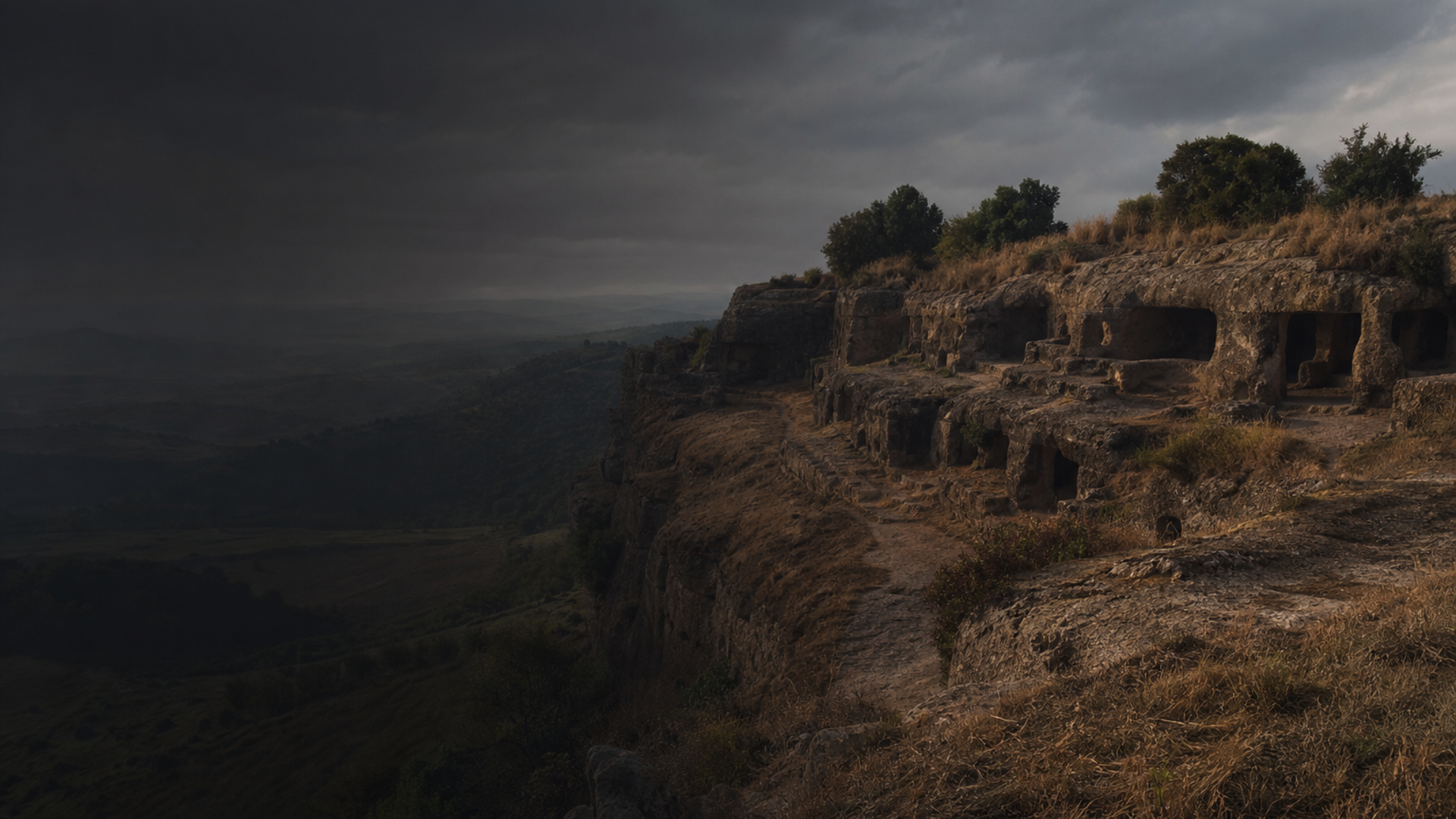
Archaeological data indicates that Tarquinia was a cultural force whose artistic vocabulary and maritime links radiated across the Tyrrhenian. The limited aDNA record complements this picture: rather than resolving longstanding debates about Etruscan origins on its own, it enriches the narrative by showing concrete examples of the biological diversity present in an early Etruscan city. Future, larger-scale genetic sampling paired with careful archaeological context will refine how these ancient voices connect to the present.

  • Tarquinia's material culture influenced wider Tyrrhenian networks.
  • Current genetic signals suggest continuity and interaction; more sampling is needed to trace direct links to modern populations.
AI 电源

AI 助手

就 Tarquinia Etruscans: Early Iron Age Voices 文化提问

AI 助手 由DNAGENICS公司制作

解锁此特性
Ask questions about the Tarquinia Etruscans: Early Iron Age Voices culture. Our AI assistant can explain genetic findings, historical context, archaeological evidence, and modern connections.
AI 样本分析

Tarquinia Etruscans: Early Iron Age Voices 文化是人类历史中值得了解的一章……

遗传分析揭示了与早期种群的联系,同时显示了独特的适应和文化创新的证据。 古代DNA样本提供了对迁徙模式、社会结构以及古代种群之间的生物关系的深刻见解。

这是人工智能分析的预览。 解锁全AI 助手, 以探索关于:

  • 遗传组成和祖先
  • 移徙模式和起源
  • 日常生活和文化习俗
  • 现代遗传遗产

探索更古老的文化

揭开古代世界文明的故事

使用优惠码 可减免 35% • 11月12日 到期




