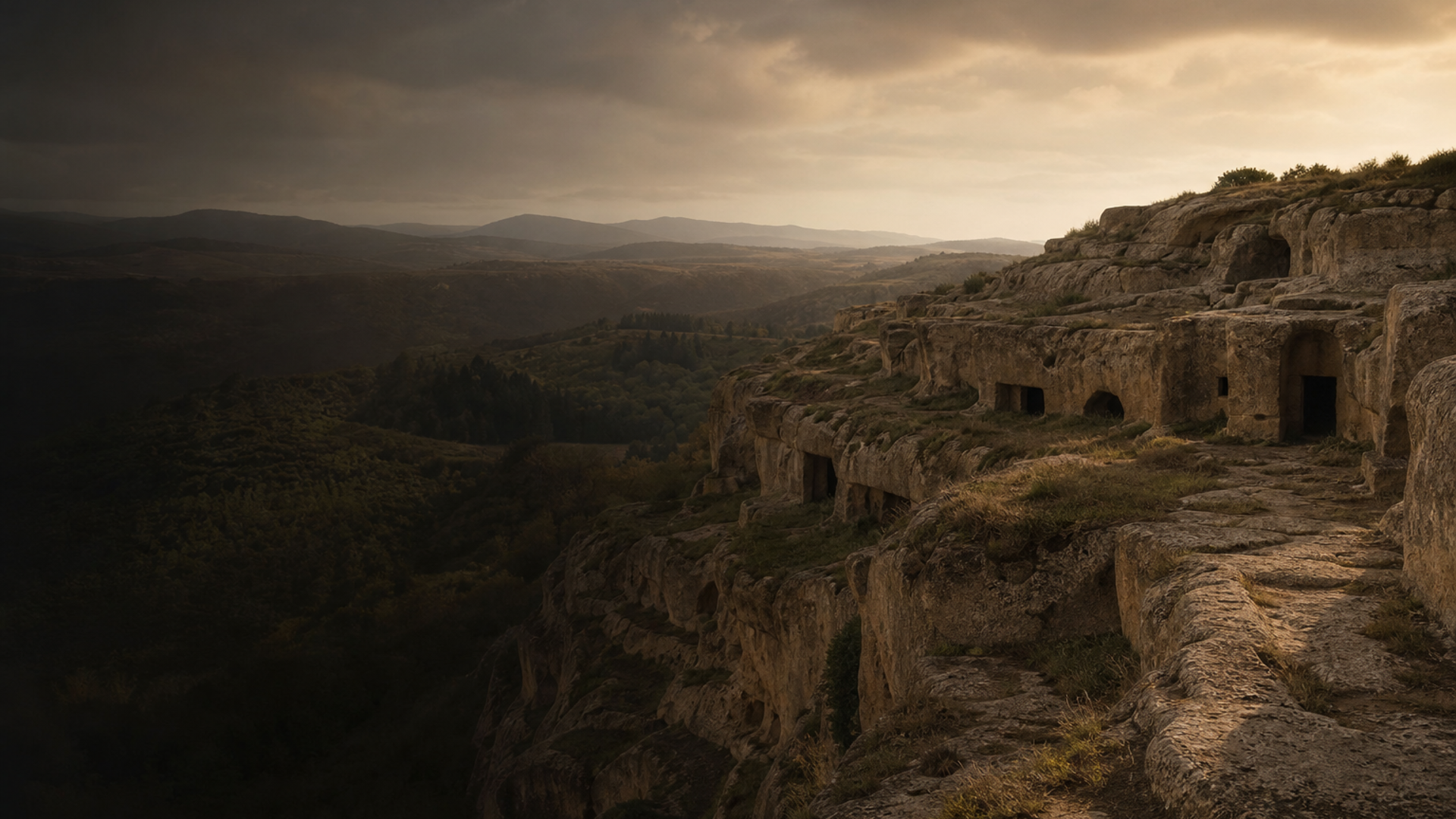
Tarquinia Etruscans, Viterbo Burials

下载的 PDF 是图像副本。如需可选中文本及更好的辅助技术支持,请使用打印功能。

Tarquinia Etruscans, Viterbo Burials

揭开一个失落的文明

正在加载考古记录……

正在收集古代记录

跳转到主内容
Tarquinia Etruscans, Viterbo Burials
文明焦点

Tarquinia Etruscans, Viterbo Burials

Late Etruscan community in Tarquinia (400–1 BCE) revealed by graves and maternal DNA

400 CE - 1 BCE
Lazio, Italy (Viterbo, Tarquinia)
滚动开始
Chapter I

剧情

了解 Tarquinia Etruscans, Viterbo Burials 文化

Archaeological and mitochondrial DNA evidence from 17 burials at Tarquinia (Viterbo, Lazio) illuminates Late Etruscan lifeways between 400–1 BCE. Maternal lineages (H, T2e, U, HV) suggest connections with broader Mediterranean and European gene pools, while archaeological contexts situate these people in a richly painted ritual landscape.

Time Period

400–1 BCE

Region

Lazio, Italy (Viterbo, Tarquinia)

Common Y-DNA

undetermined / not reported in dataset

Common mtDNA

H (5), T2e (3), U (2), HV (1), H5 (1)

Chapter II

时间线

这种文化历史上的关键时刻

400 BCE

Late Etruscan burials at Tarquinia

Burials dated around 400 BCE mark a period of active funerary display at Tarquinia and the samples' earliest timeframe within the dataset.

Chapter III

Origins & Emergence

The burials from Tarquinia (province of Viterbo) span the later centuries of independent Etruscan culture as it met the expanding Roman world. Archaeological data indicates graves come from the necropolis zones of Tarquinia — including the famed Monterozzi area — where painted chamber tombs and simpler pit graves record social distinction and ritual practice. The material culture associated with these burials (pottery styles, grave goods, funerary architecture) ties them to the broader Etruscan tradition that developed in central Italy from the early Iron Age onward.

Cinematic fragments of life — painted banquets, carved sarcophagi, and ceramic trade wares — speak to persistent local identity and Mediterranean exchange. Limited evidence suggests continuity with earlier regional populations in central Italy, but later centuries show increasing interaction with Greek colonies and Roman neighbors. Genetic sampling from 17 individuals provides a maternal snapshot of this community, allowing archaeologists to test hypotheses about mobility and continuity in a period of political transformation. While the dataset is regionally focused and time-limited (400–1 BCE), it contributes to a layered picture: local traditions refracted through networks of trade, marriage, and cultural exchange across the Tyrrhenian littoral.

  • Tarquinia (Monterozzi necropolis) is the primary archaeological context
  • Late Etruscan period during interaction with Greek and Roman worlds
  • Material culture indicates both local continuity and Mediterranean exchange
Chapter IV

Daily Life & Society

Archaeological evidence paints Tarquinia as a place of ritual drama and everyday labor. Painted tombs depict banquets, musicians, and processions — visual narratives that emphasize elite display, kinship, and funerary ideology. Grave goods recovered across sites in Viterbo range from imported amphorae and Attic pottery to locally made ceramics and metalwork, indicating active participation in Mediterranean trade networks.

Settlement archaeology and funerary contexts suggest a society structured by households and extended kin groups, where elite families maintained visible ritual presences in chamber tombs while others used simpler burials. Osteological indicators (where available) can suggest diets rich in cereals, legumes, and marine resources for coastal communities, with variability by status and age. Craft specialization is visible in metalwork and textile production evidence, and inscriptions in the Etruscan language attest to a literate administrative and ritual tradition. Archaeological data indicates that by the 3rd–1st centuries BCE, Tarquinia was negotiating identity under increasing Roman influence — a dynamic reflected in burial choices and material assemblages.

  • Tomb paintings reveal social rituals: banquets, processions, music
  • Grave goods show trade links and status differentiation
Chapter V

Genetic Profile

Seventeen individuals sampled from Tarquinia (400–1 BCE) offer a maternal-focused glimpse into this Late Etruscan community. Mitochondrial haplogroups observed include H (5 individuals), T2e (3), U (2), HV (1), and H5 (1). The prevalence of haplogroup H aligns with broad patterns across Europe in the first millennium BCE, reflecting continuity of common maternal lineages. T2e and HV are commonly found in Mediterranean populations and can signal connections through maritime networks; haplogroup U is often associated with deeper European hunter-gatherer ancestry and appears sporadically in later populations.

No consistent Y-DNA signatures are reported for this dataset, limiting direct inference about paternal lineages and male-mediated mobility. Genome-wide contexts from broader Etruscan studies suggest a mixture of Anatolian Neolithic-derived ancestry, local hunter-gatherer components, and varying levels of steppe-related ancestry — patterns typical of Iron Age Italy — but these are general trends and may not apply uniformly to the Tarquinia burials. Because the sample set is modest and geographically concentrated, conclusions about population continuity, migration, or social structure must remain cautious. Archaeogenetic results here are best interpreted as complementary to the archaeological record: maternal lineages indicate links to Mediterranean and European gene pools, while funerary practices reveal the social choices that shaped who was buried where.

  • mtDNA dominated by haplogroup H, common in Europe
  • T2e and HV suggest Mediterranean connections; U indicates older European ancestry
Chapter VI

Legacy & Modern Connections

The Tarquinia burials document a living culture at the threshold of Roman domination. Archaeological continuity in funerary forms and the presence of widespread maternal lineages indicate that people in this landscape shared biological and cultural ties with earlier inhabitants of central Italy and with Mediterranean neighbors. Modern populations in Lazio inherit a complex tapestry of ancestry shaped by millennia of movement and contact; these Late Etruscan samples form one thread of that tapestry.

Archaeogenetics helps bridge the visual drama of painted tombs and the invisible threads of descent — showing how maternal lines circulated even as political landscapes shifted. While this dataset is regionally specific and limited to 17 individuals, it enriches the narrative of human resilience, adaptation, and exchange in ancient Italy.

  • Contributes to understanding continuity between Iron Age and later Italian populations
  • Maternal lineages show long-standing Mediterranean and European connections
AI 电源

AI 助手

就 Tarquinia Etruscans, Viterbo Burials 文化提问

AI 助手 由DNAGENICS公司制作

解锁此特性
Ask questions about the Tarquinia Etruscans, Viterbo Burials culture. Our AI assistant can explain genetic findings, historical context, archaeological evidence, and modern connections.

AI 样本分析

Tarquinia Etruscans, Viterbo Burials 文化是人类历史中值得了解的一章……

遗传分析揭示了与早期种群的联系,同时显示了独特的适应和文化创新的证据。 古代DNA样本提供了对迁徙模式、社会结构以及古代种群之间的生物关系的深刻见解。

这是人工智能分析的预览。 解锁全AI 助手, 以探索关于:

  • 遗传组成和祖先
  • 移徙模式和起源
  • 日常生活和文化习俗
  • 现代遗传遗产

探索更古老的文化

揭开古代世界文明的故事

使用优惠码 可减免 35% • 11月12日 到期