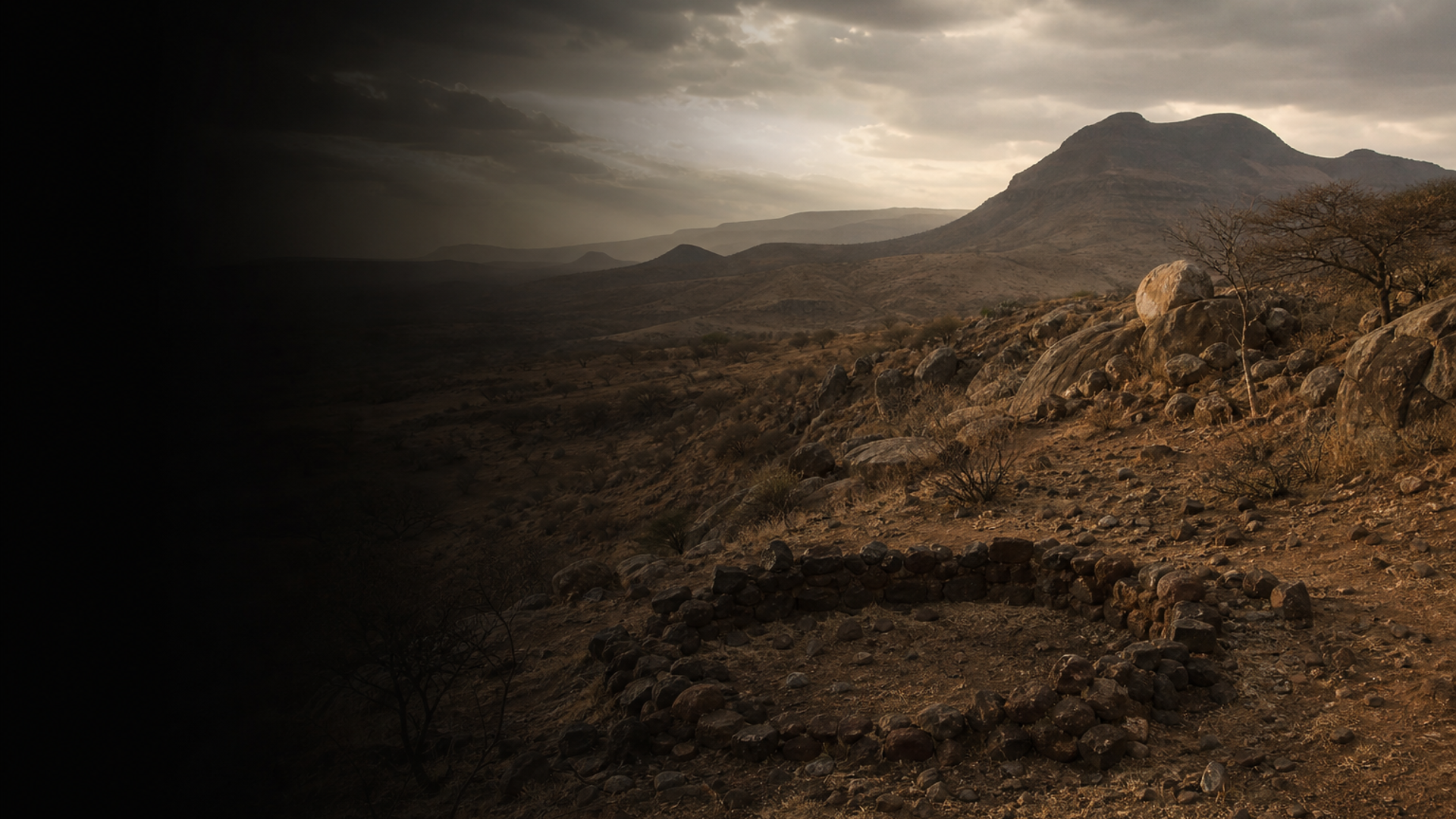
Taukome Early Iron Age Echoes

下载的 PDF 是图像副本。如需可选中文本及更好的辅助技术支持,请使用打印功能。

Taukome Early Iron Age Echoes

揭开一个失落的文明

正在加载考古记录……

正在收集古代记录

跳转到主内容
Taukome Early Iron Age Echoes
文明焦点

Taukome Early Iron Age Echoes

A lone 10th‑century burial linking ironwork, pottery, and maternal L‑lineages

900 CE - 1000 CE
Taukome, Botswana
滚动开始
Chapter I

剧情

了解 Taukome Early Iron Age Echoes 文化

Taukome, Botswana (900–1000 CE): a single Early Iron Age individual whose maternal mtDNA (haplogroup L) offers a tentative genetic window into Late 1st‑millennium CE southern Africa. Archaeological context and DNA together hint at pastoralist and Bantu‑era connections, but conclusions remain preliminary.

Time Period

900–1000 CE (Early Iron Age)

Region

Taukome, Botswana

Common Y-DNA

Unknown / not reported

Common mtDNA

L (1 sample)

Chapter II

时间线

这种文化历史上的关键时刻

900 CE

Onset of dated occupation

Archaeological and radiocarbon data place initial Taukome contexts around 900 CE within the Early Iron Age (50 words max).

950 CE

Burial with recoverable mtDNA

A single individual dated within the 900–1000 CE range yielded mtDNA haplogroup L, providing a preliminary genetic link to maternal lineages in the region.

1000 CE

End of current dated range

Current archaeological and genetic dates at Taukome bracket activity through ca. 1000 CE; further excavation could extend this range.

Chapter III

Origins & Emergence

Taukome sits within the broader Taukome Early Iron Age horizon of central‑southern Botswana, a landscape where new technologies and lifeways converged during the Late 1st millennium CE. Archaeological data indicate that communities in this era adopted ironworking, elaborated ceramic traditions, and managed domesticated stock and wild resources. The dated horizon of 900–1000 CE places Taukome in a dynamic period often associated with the southward spread of Bantu‑language speakers and the consolidation of regional pastoralist economies.

Excavation at the Taukome locality produced human remains that can be placed within this Early Iron Age timeframe. Material culture from nearby contexts — pottery styles, traces of iron smelting or tool use, and faunal assemblages — provide the archaeological scaffolding for interpreting daily life and mobility. However, the precise origins of the Taukome inhabitants remain imperfectly resolved: limited stratigraphic exposure, taphonomic disturbance, and a small sample base mean that interpretations emphasize regional patterns rather than detailed local histories.

Limited evidence suggests Taukome participated in networks of exchange and technological transmission that reshaped southern African lifeways. Future excavations and additional radiocarbon dates are necessary to move from evocative hypothesis to robust narrative.

  • Dated to ca. 900–1000 CE, within the Early Iron Age horizon
  • Archaeological indicators of ironworking, ceramics, and pastoralism regionally
  • Interpretations are provisional due to limited sample and contextual data
Chapter IV

Daily Life & Society

The human silhouette that emerges from Taukome is painted in broad strokes by archaeological inference: people who lived where savanna meets scrub, who combined herding and hunting, who worked iron and shaped clay into resilient pots. Archaeological data from contemporaneous Early Iron Age sites in Botswana commonly record storage and cooking vessels, iron tools and fragments of smelting debris, and the bones of cattle, sheep/goats and wild game — patterns that suggest mixed economies balancing mobility and settlement.

At Taukome itself, burial contexts allow glimpses of social practice: placement of the body, any associated grave goods, and the mortuary treatment can signal age, gender roles, or ritual behavior. Because detailed inventories of associated artifacts from the single sampled burial are limited, we must be cautious. Ethnographic and regional archaeological analogies suggest households organized around kin networks, seasonal movement to exploit grazing and water, and craft specialists or household ironworkers supplementing pastoral economies.

Material culture style — pot decoration, iron tool forms — can map cultural identities and contacts. Combined with landscape archaeology, these fragments create a cinematic but careful reconstruction of lives lived between flint and forge, herd and hearth. Yet every reconstruction is shadowed by uncertainty until more data are recovered.

  • Mixed herding, hunting and small‑scale cultivation inferred from regional parallels
  • Mortuary contexts offer social clues but are limited by small sample size
Chapter V

Genetic Profile

Genetic evidence from Taukome is extremely limited: only one individual has been reported with recoverable mitochondrial DNA, identified as haplogroup L. Haplogroup L is widespread across sub‑Saharan Africa today and in ancient samples, representing deep maternal lineages that predate the Iron Age expansions in the region. The presence of mtDNA L in the Taukome individual aligns with expectations for local maternal ancestry but cannot by itself resolve population movements or language shifts.

No Y‑chromosome haplogroup has been reported for the single sampled individual, leaving paternal lineage questions open. With a single mtDNA genome, population‑level inferences — such as the degree of genetic continuity with earlier forager groups, admixture with incoming Bantu‑speaking farmers, or links to pastoralist migrants — remain speculative. Limited sample size (<10 samples) requires us to label any broader genetic narrative as provisional.

Nevertheless, even one ancient genome tethered to secure archaeological context is valuable. It anchors maternal ancestry to Taukome at ca. 900–1000 CE and provides a data point for future comparative studies. When juxtaposed with additional ancient DNA from southern Africa, such data will help disentangle threads of maternal continuity, migration, and local adaptation during the Early Iron Age.

  • mtDNA haplogroup L recovered from 1 individual — consistent with sub‑Saharan maternal lineages
  • No Y‑DNA reported; conclusions are preliminary given single sample
Chapter VI

Legacy & Modern Connections

Taukome's lone genetic voice contributes a faint but meaningful note to the larger chorus of southern African prehistory. Archaeology and genetics together suggest that the Early Iron Age saw transformations in technology, economy, and movement that shaped the genetic landscape of modern Botswana. Contemporary communities in the region — including Tswana‑speaking and other southern Bantu groups — inhabit territories long used by earlier generations, and their cultural practices preserve echoes of Iron Age lifeways in livestock management, pottery, and social organization.

However, it is essential to avoid simplistic ancestry claims. A single ancient mtDNA sample cannot establish direct descent or exact ethnic continuity. Instead, the Taukome data emphasize the mosaic nature of regional ancestry: ancient maternal lineages like haplogroup L persist alongside layers of later admixture. As further ancient genomes from Botswana and neighboring regions accumulate, researchers will be able to more precisely map how Early Iron Age populations contributed to the genetic tapestry of present‑day southern Africa. For now, Taukome stands as a provisional bridge between archaeology and DNA — evocative, scientifically cautious, and awaiting fuller illumination.

  • Contributes to understanding maternal ancestry in Botswana but is not definitive
  • Highlights the need for more ancient genomes to trace continuity and admixture
AI 电源

AI 助手

就 Taukome Early Iron Age Echoes 文化提问

AI 助手 由DNAGENICS公司制作

解锁此特性
Ask questions about the Taukome Early Iron Age Echoes culture. Our AI assistant can explain genetic findings, historical context, archaeological evidence, and modern connections.
AI 样本分析

Taukome Early Iron Age Echoes 文化是人类历史中值得了解的一章……

遗传分析揭示了与早期种群的联系,同时显示了独特的适应和文化创新的证据。 古代DNA样本提供了对迁徙模式、社会结构以及古代种群之间的生物关系的深刻见解。

这是人工智能分析的预览。 解锁全AI 助手, 以探索关于:

  • 遗传组成和祖先
  • 移徙模式和起源
  • 日常生活和文化习俗
  • 现代遗传遗产

探索更古老的文化

揭开古代世界文明的故事

使用优惠码 可减免 35% • 11月12日 到期