Vardbakh Voices: Armenia in Antiquity

下载的 PDF 是图像副本。如需可选中文本及更好的辅助技术支持,请使用打印功能。

Vardbakh Voices: Armenia in Antiquity

揭开一个失落的文明

正在加载考古记录……

正在收集古代记录

跳转到主内容
Vardbakh Voices: Armenia in Antiquity
文明焦点

Vardbakh Voices: Armenia in Antiquity

Two maternal genomes from Yerevan 2 Cave open a quiet window into Armenia, 100 BCE–300 CE.

100 BCE - 300 CE
Armenian Highlands (Armenia)
滚动开始
Chapter I

剧情

了解 Vardbakh Voices: Armenia in Antiquity 文化

Ancient DNA from Vardbakh (Yerevan 2 Cave) dates to 100 BCE–300 CE. Two samples both carry mtDNA U7b, suggesting maternal links to broader Near Eastern gene pools. Limited sample size makes conclusions preliminary; archaeological context ties them to the Late Hellenistic–Early Roman Armenian world.

Time Period

100 BCE – 300 CE

Region

Armenian Highlands (Armenia)

Common Y-DNA

Unknown (no robust Y results)

Common mtDNA

U7b (2 samples)

Chapter II

时间线

这种文化历史上的关键时刻

100 BCE

Earliest dated individuals at Vardbakh

Most conservative calendar date for the Vardbakh samples, placing them in the Late Hellenistic period of the Armenian Highlands.

Chapter III

Origins & Emergence

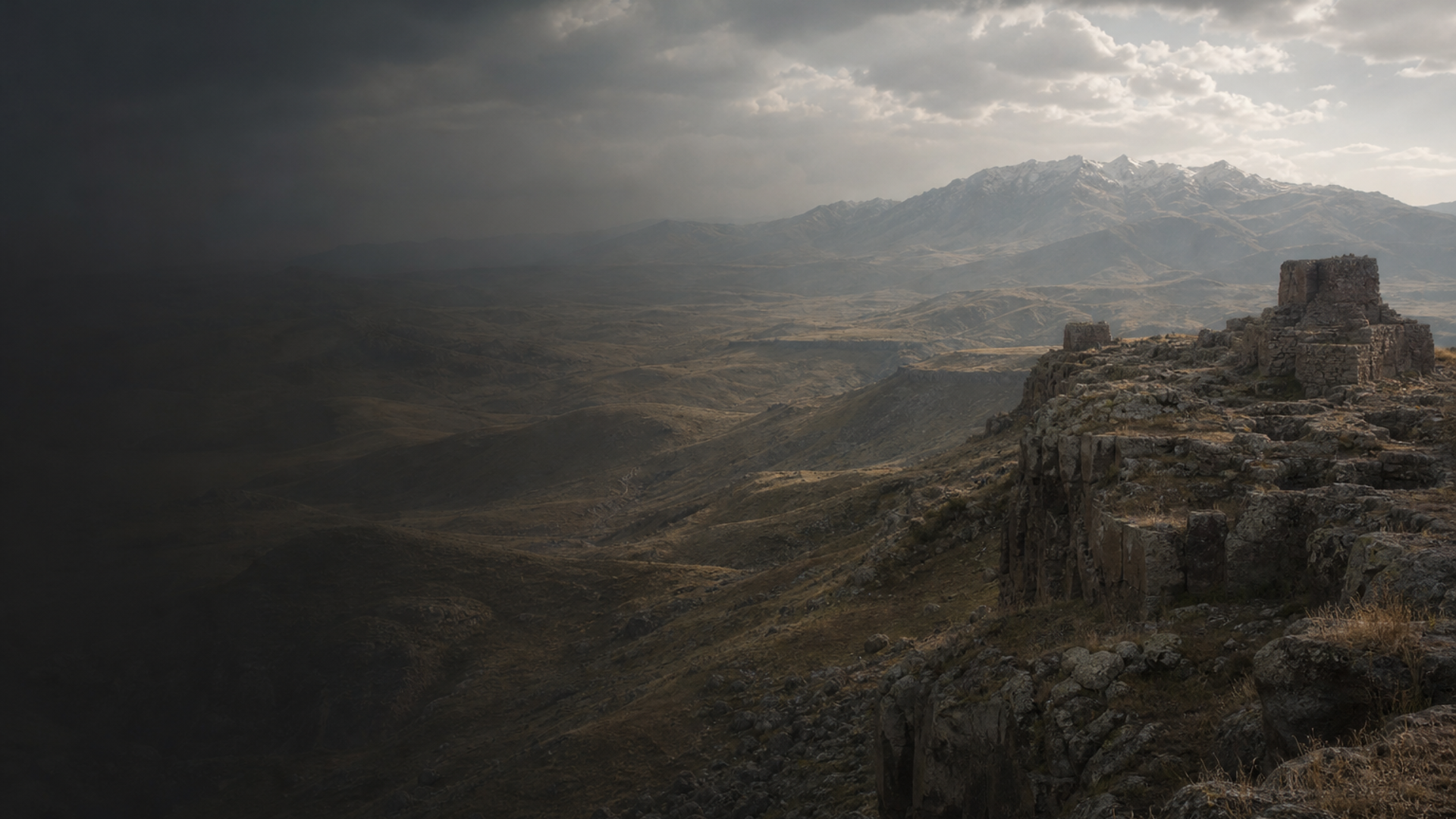
The human stories preserved at Vardbakh (Yerevan 2 Cave) unfold against a landscape of folds and ridges that has been a crossroads for millennia. Archaeological data indicates occupation or use of the Armenian Highlands throughout the Late Hellenistic and early Roman eras; the two ancient genomes from Vardbakh are dated to roughly 100 BCE–300 CE, a period contemporary with the Artaxiad and early Arsacid courts in Armenia. Material traces across the region—fortified settlements, rural homesteads, caravan routes—attest to a mixed economy of agriculture, pastoralism, and long-distance exchange.

Limited evidence suggests that communities here were not isolated islands but participants in networks stretching across the Near East and into Anatolia and Iran. The placement of Vardbakh within the Yerevan basin situates its inhabitants along routes that channeled goods, ideas, and people during a time of intensified political interaction. While these genomes provide a snapshot of biological ancestry, the archaeological context—site stratigraphy, pottery types, and landscape use—frames those genomes within a living, mobile society.

Because only two samples are available, any model of origin must be cautious: they can hint at broader patterns but cannot by themselves reconstruct migration events or demographic shifts. Instead, they act like cinematic close-ups that invite wider fieldwork and additional genetic sampling across Ancient Armenia and neighboring regions.

  • Samples dated 100 BCE–300 CE from Vardbakh (Yerevan 2 Cave)
  • Occupants lived during Late Hellenistic–Early Roman Armenian periods
  • Evidence points to regional connectivity across the Near East
Chapter IV

Daily Life & Society

Archaeological data from the Armenian Highlands paints a vivid, if fragmentary, picture of everyday life during Antiquity. Terraced fields and irrigation traces across the high valleys point to mixed farming of cereals, pulses and orchard crops, while seasonal herd movements suggest transhumant pastoralism remained central to many households. Craft production—pottery, metalworking, and textile manufacture—thrived in village and town contexts; trade goods attest to links with Anatolia, the Levant, and the Iranian plateau.

Settlements ranged from fortified hilltops to riverine villages. Ceramics and architectural features recorded in regional surveys indicate cultural continuity with earlier Bronze and Iron Age traditions, overlaid with stylistic influences arriving with Hellenistic and Roman contacts. Burial practices in caves and cemeteries vary widely, reflecting social diversity: some interments include modest grave goods, others are simple and unadorned, pointing to different economic statuses or cultural practices within the same landscape.

Limited written records—inscriptions and classical accounts—provide occasional glimpses of political life and elite display, but the majority of inhabitants lived as farmers, herders, and artisans. The Vardbakh individuals likely belonged to such local communities; their material world would have been defined by seasonal cycles, local craft economies, and the steady flow of ideas along ancient routes.

  • Mixed farming and transhumant herding common in the highlands
  • Local crafts and regional trade connected communities across the Near East
Chapter V

Genetic Profile

Genetic data from Vardbakh is sparse but evocative. Both recovered individuals (n=2) carry mitochondrial haplogroup U7b, a maternal lineage today found at higher frequencies in parts of the Near East, the Caucasus, and southern Asia. The presence of U7b in both samples suggests at least a partial continuity of maternal ancestry lines connected to broader Near Eastern genetic landscapes during the first centuries BCE–CE.

No robust Y-chromosome results are reported for these two individuals, so male-line inferences are not possible from this dataset. With only two genomes, any population-level interpretation must be treated as preliminary: low sample counts limit statistical power and may overemphasize lineages that were locally common by chance. Nevertheless, the U7b signal aligns with archaeological expectations of a region that experienced long-term interaction with neighboring zones to the south and east.

Comparative ancient DNA studies across the Caucasus and adjacent regions increasingly reveal a mosaic of ancestries: local highland substrata mingled with gene flow from Anatolia, the Iranian plateau, and steppe corridors at different times. The Vardbakh mtDNA data are compatible with such a mosaic, but broader sampling—both temporally and geographically—is necessary to clarify the timing and directionality of migrations, sex-biased gene flow, and continuity into the medieval and modern Armenian gene pool.

  • Both individuals carry mtDNA haplogroup U7b
  • No definitive Y-DNA reported; conclusions are preliminary (n=2)
Chapter VI

Legacy & Modern Connections

These two maternal genomes act as quiet emissaries from an ancient Armenian landscape, hinting at threads that may continue into present-day populations. Modern genetic surveys show U7 lineages surviving in the Near East, the Caucasus, and parts of South Asia; the Vardbakh U7b instances are therefore plausible echoes of maternal continuity or long-standing regional connections.

Archaeologically, material continuities—house forms, agricultural practices, craft traditions—suggest that cultural lifeways in the Armenian Highlands were resilient even as political rulers changed. Genetic continuity may mirror this resilience in part, but robust conclusions require many more samples across time and social contexts. For museum and public audiences, these results illustrate how ancient DNA complements archaeology: together they let us hear both the broad sweep of history and the intimate voice of individuals who lived, worked, and moved across a pivotal crossroads.

  • U7b presence aligns with Near Eastern and Caucasus maternal lineages
  • Further sampling needed to test continuity between antiquity and modern populations
AI 电源

AI 助手

就 Vardbakh Voices: Armenia in Antiquity 文化提问

AI 助手 由DNAGENICS公司制作

解锁此特性
Ask questions about the Vardbakh Voices: Armenia in Antiquity culture. Our AI assistant can explain genetic findings, historical context, archaeological evidence, and modern connections.
AI 样本分析

Vardbakh Voices: Armenia in Antiquity 文化是人类历史中值得了解的一章……

遗传分析揭示了与早期种群的联系,同时显示了独特的适应和文化创新的证据。 古代DNA样本提供了对迁徙模式、社会结构以及古代种群之间的生物关系的深刻见解。

这是人工智能分析的预览。 解锁全AI 助手, 以探索关于:

  • 遗传组成和祖先
  • 移徙模式和起源
  • 日常生活和文化习俗
  • 现代遗传遗产

探索更古老的文化

揭开古代世界文明的故事

使用优惠码 可减免 35% • 11月12日 到期




