Voices of Lariey: 1629–1630 Alpine Remnants

下载的 PDF 是图像副本。如需可选中文本及更好的辅助技术支持,请使用打印功能。

Voices of Lariey: 1629–1630 Alpine Remnants

揭开一个失落的文明

正在加载考古记录……

正在收集古代记录

跳转到主内容
Voices of Lariey: 1629–1630 Alpine Remnants
文明焦点

Voices of Lariey: 1629–1630 Alpine Remnants

A compact, early modern Hautes‑Alpes assemblage revealed by bones and genomes

1629 CE - 1630 CE
Hautes‑Alpes, Provence‑Alpes‑Côte d'Azur, France
滚动开始
Chapter I

剧情

了解 Voices of Lariey: 1629–1630 Alpine Remnants 文化

Archaeological and genetic data from Lariey‑Puy‑Saint‑Pierre (Hautes‑Alpes, France) dated 1629–1630 CE offer a brief glimpse into an Alpine community. Ten samples yield limited but intriguing paternal and maternal lineages, highlighting continuity and change in the southern French Alps.

Time Period

1629–1630 CE

Region

Hautes‑Alpes, Provence‑Alpes‑Côte d'Azur, France

Common Y-DNA

R (n=1), F (n=1)

Common mtDNA

H (n=1), T (n=1)

Chapter II

时间线

这种文化历史上的关键时刻

1629 CE

Lariey‑Puy‑Saint‑Pierre deposition

Archaeological context and radiocarbon/stratigraphic control place human remains and associated materials at Lariey to 1629–1630 CE, offering a tightly dated community snapshot.

Chapter III

Origins & Emergence

Set high in the narrow valleys of the Hautes‑Alpes, the Lariey‑Puy‑Saint‑Pierre assemblage is a fleeting archaeological window dated tightly to 1629–1630 CE. Archaeological data indicates human activity at the site in the early 17th century, a moment when Alpine communities navigated seasonal herding, local trade, and the political tremors of early modern France. The material traces recovered are modest; skeletal remains and associated context suggest a rural, valley‑oriented population rather than a large urban center.

Limited evidence suggests continuity of human presence in Southern Provence since ancient times, but direct cultural lines between the Late Paleolithic of Southern Provence and this early modern community should not be assumed. Instead, the Lariey material sits within a deep palimpsest of occupation: Pleistocene landscapes, medieval pastoral routes, and early modern lifeways all layered in the same high country. Radiocarbon and stratigraphic control underpin the 1629–1630 CE attribution, but archaeological coverage is narrow and interpretations remain provisional.

In cinematic terms, Lariey is a brief vignette — a small chorus in a long Alpine story. The remains capture a community moment, not a full cultural biography; archaeological inference must therefore be cautious, stressing local practice and regional connections rather than sweeping continuity claims.

  • Site: Lariey‑Puy‑Saint‑Pierre (Hautes‑Alpes), Provence‑Alpes‑Côte d'Azur, France
  • Date: tightly dated to 1629–1630 CE by archaeological context
  • Context: rural Alpine community within a long occupation palimpsest
Chapter IV

Daily Life & Society

Archaeological indicators from the Lariey locality paint an evocative portrait of early modern mountain life. The narrow valleys and steep meadows of the Hautes‑Alpes favored mixed subsistence: seasonal transhumance, small‑scale agriculture in valley bottoms, and local artisanal tasks. Material culture is sparsely preserved at the site, but associated finds and regional parallels suggest households oriented around livestock, stored harvests, and close kin networks.

A cinematic image emerges: smoke drifting from low stone dwellings, shepherds guiding flocks along ancient tracks, and tight social ties binding families across hamlets. Contemporary historical pressures — the consolidation of state authority in 17th‑century France, regional markets, and episodic epidemic and warfare in adjacent regions — would have shaped daily rhythms. Archaeological data indicates modest community size; demographic fluctuations are plausible given broader early modern instability, but mortality patterns at Lariey cannot be robustly reconstructed from the present sample alone.

Interpretation must remain careful. The material preserves snapshots of economy and social life, but the small excavation footprint and limited finds mean many reconstructions are conjectural. Combining archaeology with local archives and genetic data offers the best route to richer narratives.
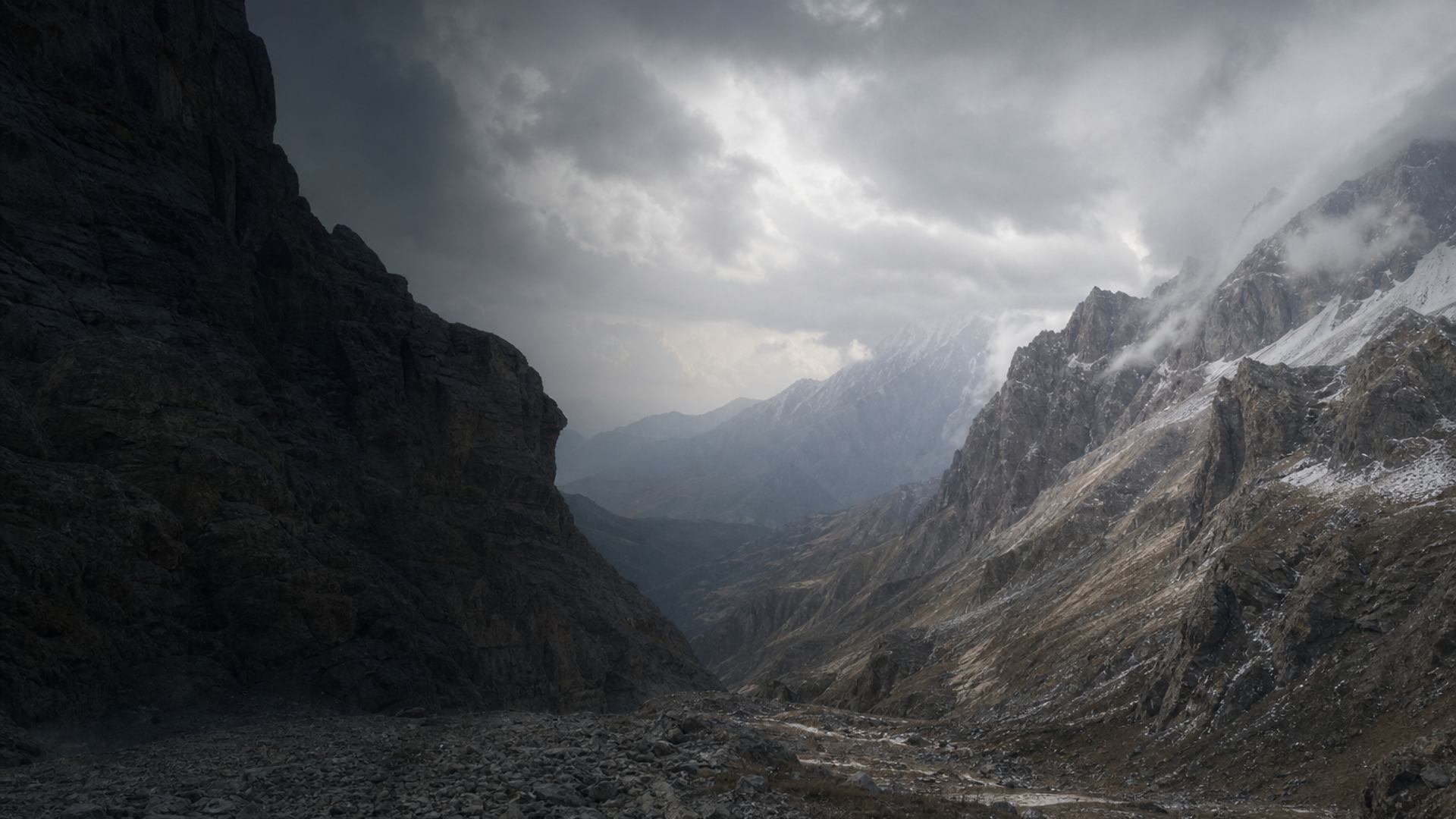
  • Economy likely centered on transhumance and valley agriculture
  • Social structure inferred as small, kin‑based households
Chapter V

Genetic Profile

Ten genome samples from Lariey‑Puy‑Saint‑Pierre (n=10) form the genetic basis for this profile. The dataset is small and represents a narrow 1629–1630 CE window; therefore genetic conclusions are preliminary. Within the sampled individuals, Y‑chromosome haplogroups recorded include R (n=1) and F (n=1). On the mitochondrial side, haplogroups H (n=1) and T (n=1) were observed. Many samples produced either degraded or unassigned haplogroup calls, which is common in early modern contexts with limited preservation.

Haplogroup R is broadly associated with paternal lineages common across western Europe; in the absence of fine‑scale subclade resolution it is best read as indicating European affinity rather than a precise migration event. Haplogroup F on the paternal side is less common in Western Europe today and its presence here could reflect either rare local lineages or incomplete resolution—further sequencing would be required to clarify origins. On the maternal side, H and T are both well‑attested in European populations from the Mesolithic to the present; their presence is compatible with longstanding maternal continuity in the region but cannot alone demonstrate direct descent from Paleolithic groups.

Importantly, the small sample count (n=10) and low counts for named haplogroups (each n=1) mean that population‑level inferences are tentative. Genetic data from Lariey is most valuable when integrated with archaeological context and larger regional ancient DNA surveys to assess continuity, migration, and microdemographic processes.

  • Sample count is small (n=10); results are preliminary
  • Observed haplogroups: Y R (1), F (1); mtDNA H (1), T (1)
Chapter VI

Legacy & Modern Connections

The Lariey assemblage is a whisper from a single Alpine moment that nonetheless contributes to regional narratives. Archaeologically, it anchors early modern rural life in the Hautes‑Alpes to specific coordinates and a tight date range. Genetically, the limited haplogroup evidence is consistent with broader European lineages while hinting at local diversity.

For modern inhabitants and descendants, these data suggest continuity of human presence in the southern French Alps but do not by themselves map direct genealogical descent. Instead, Lariey should be read alongside larger ancient DNA datasets and historical records to reveal how Alpine populations were reshaped by trade, mobility, and demographic shocks over centuries. Future sampling and higher‑resolution sequencing could transform the preliminary patterns recorded here into robust stories of continuity, contact, and change.

  • Contributes a dated genetic snapshot to Alpine population history
  • Highlights need for broader sampling and higher‑resolution data
AI 电源

AI 助手

就 Voices of Lariey: 1629–1630 Alpine Remnants 文化提问

AI 助手 由DNAGENICS公司制作

解锁此特性
Ask questions about the Voices of Lariey: 1629–1630 Alpine Remnants culture. Our AI assistant can explain genetic findings, historical context, archaeological evidence, and modern connections.
AI 样本分析

Voices of Lariey: 1629–1630 Alpine Remnants 文化是人类历史中值得了解的一章……

遗传分析揭示了与早期种群的联系,同时显示了独特的适应和文化创新的证据。 古代DNA样本提供了对迁徙模式、社会结构以及古代种群之间的生物关系的深刻见解。

这是人工智能分析的预览。 解锁全AI 助手, 以探索关于:

  • 遗传组成和祖先
  • 移徙模式和起源
  • 日常生活和文化习俗
  • 现代遗传遗产

探索更古老的文化

揭开古代世界文明的故事

使用优惠码 可减免 35% • 11月12日 到期




