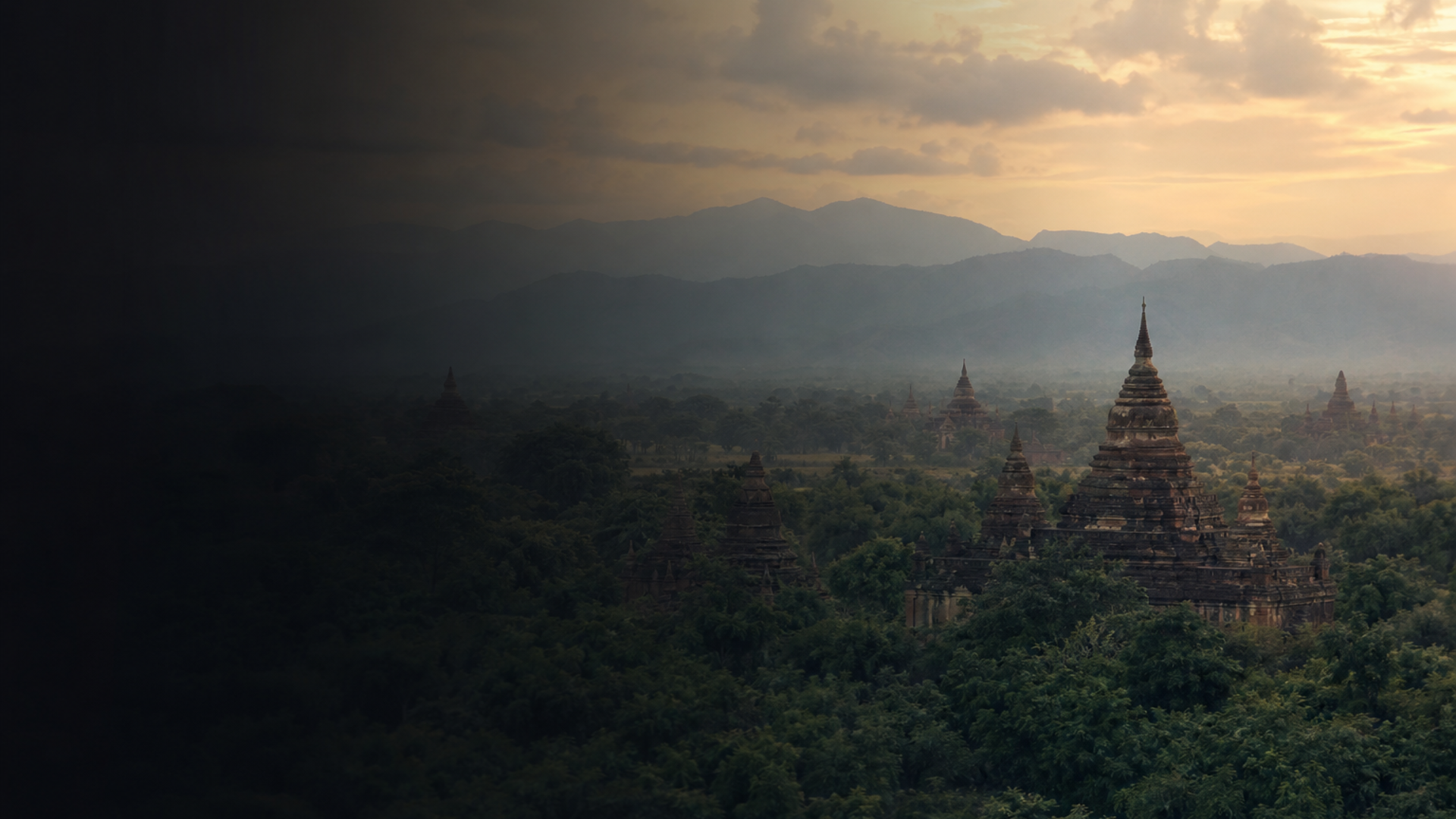
Voices of Modern Myanmar

下载的 PDF 是图像副本。如需可选中文本及更好的辅助技术支持,请使用打印功能。

跳转到主内容
文明焦点

Voices of Modern Myanmar

A modern mosaic: archaeology and DNA illuminate contemporary Burmese communities

2000 CE
Myanmar (Burma)

剧情

Archaeological contexts and 11 modern DNA samples from sites across Myanmar (Yangon, Mandalay, Ayeyarwady, Sagaing, Bago, Mon) offer a preliminary window into the region's living genetic landscape and its deep cultural continuities.

Time Period

2000 CE (modern)

Region

Myanmar (Burma)

Common Y-DNA

Not reported (regionally often O lineages)

Common mtDNA

Not reported (regionally often M, R derivatives)

时间线

2000 CE

Modern sampling across Myanmar

Eleven modern individuals sampled from Mandalay, Yangon, Ayeyarwady, Sagaing, Bago, and Mon regions provide a preliminary genetic snapshot of contemporary communities.

Origins & Emergence

The samples represented here are from the modern era — collected from urban and riverine communities across Myanmar in 2000 CE — and should be read as portraits of living populations rather than archaeological horizons. Archaeological data from the region documents deep, layered occupation: riverine settlements in the Ayeyarwady delta, trade entrepôts around Yangon and Thanlyin, and monastic and urban cores in Mandalay and Sagaing. These landscapes have been shaped by repeated movements: Tibeto-Burman expansions, Austroasiatic presence, Mon cultural continuity in the south, and maritime contacts with South and Southeast Asia.

Material traces — ceramics, faunal remains, stratified urban deposits — indicate continuity of riverine agriculture and long-distance exchange. Yet modern sampling captures a tapestry altered by colonial-era migration, internal displacements, and 20th-century urbanization. Archaeological contexts in places like Bilin (Mon State) and Dedaye (Ayeyarwady) suggest persistent local cultural practices; however, connecting specific modern DNA samples directly to older excavated deposits requires careful stratigraphic and temporal control that is not available here.

Limited evidence suggests that the living genetic landscape is a mosaic formed by ancient regional substrates and more recent movements. Because these 11 samples form a small, geographically diverse modern set, any claims about deeper historical origins must remain tentative.

  • Samples are modern (2000 CE) and reflect living communities
  • Sites sampled: Mandalay, Yangon, Thanlyin, Dedaye, Ye-U, Daik-U, Nyanglaybin, Bilin
  • Archaeology shows long-term riverine settlement and layered cultural influences

Daily Life & Society

In the cinematic sweep of Myanmar's rivers and rice fields, daily life has long been anchored to waterways and monastic centers. Urban neighborhoods in Yangon and Mandalay combine market streets, pagoda precincts, and clustered households; in the delta around Dedaye and Nyanglaybin, tidal rhythms shape agriculture and fishing economies. Archaeological remains — mundane pottery, postholes, and midden deposits — record repetitive, seasonal activities that sustain dense human communities.

Ethnographic and archaeological observations indicate multiethnic urban fabrics: Burmese (Bamar) majorities mingle with Mon, Rakhine, Shan, and other groups through trade, marriage, and shared religious institutions. Material culture preserves craft specializations — lacquerwork in Bago regions, boatbuilding in river towns — and suggests household networks that extend along rivers rather than strictly by village. Archaeological indicators of continuity (e.g., long-lived occupation layers) contrast with signs of rapid change during colonial and modern infrastructure expansions.

From a genetic perspective, social practices such as patrilocal residence, endogamous communities, and migration for work would shape patterns of uniparental markers and autosomal ancestry. Archaeological data indicates these behaviors vary regionally, so DNA patterns are expected to reflect both stable local kin groups and broader urban admixture.

  • Riverine and urban livelihoods dominate sampled locations
  • Material culture shows craft specializations and long occupation sequences

Genetic Profile

The genetic portrait derived from these 11 modern samples is necessarily preliminary. Eleven individuals sampled across several Burmese regions provide an initial glimpse but are insufficient to define population-wide frequencies. No common Y- or mtDNA haplogroups were provided with the input; therefore conclusions rely on comparison to broader regional surveys. Regionally, Southeast Asian male lineages are frequently dominated by haplogroup O (O-M175 and subclades), while maternal lineages often include diverse M and R-derived mtDNA branches (including B, F and related clades). These broad patterns reflect deep Paleolithic and Holocene settlement of Mainland Southeast Asia and later demographic overlays.

Archaeogenetic interpretation must differentiate uniparental signals from autosomal ancestry: uniparental markers illuminate single-line descent pathways, while genome-wide profiles reveal admixture proportions and timing. For Myanmar, published regional studies commonly detect a mixture of East Asian-related ancestry (linked to Tibeto-Burman and other northern sources), indigenous Southeast Asian substrates, and varying South Asian admixture near coastal trade corridors. Any observation of such mixtures in these 11 samples should be treated as suggestive rather than definitive.

Importantly, one Yangon sample was processed in Singapore; laboratory provenance and modern mobility mean some genetic signals could reflect recent migration or diaspora. Larger, geographically stratified sampling and integration with archaeological contexts are required before drawing robust demographic histories.

  • Sample set is small (11); findings are preliminary
  • Regional expectation: mixed Southeast Asian ancestry with O (Y) and M/R (mtDNA) lineages

Legacy & Modern Connections

The living communities sampled in Myanmar carry cultural memories embedded in landscape, language, and ritual. Archaeological continuity in settlement patterns and craft traditions links contemporary practices to long-term regional lifeways. Genetically, modern populations reflect both ancient substrata and recent movements — trade, migration, and urbanization — that have blurred older boundaries.

For an ancestry platform, these samples offer powerful, humanizing snapshots: they can help users see how individual stories fit within broader regional dynamics. But scientific rigor demands transparency about limits. With only 11 modern samples, researchers should avoid overgeneralizing; instead, present these data as early, evocative evidence that invites deeper, interdisciplinary sampling and dialogue with local histories and communities.

  • Modern practices reflect long-term cultural continuity and recent change
  • Small sample size underscores need for broader, community-engaged sampling

AI 助手

AI 助手 由DNAGENICS公司制作

解锁此特性
Ask questions about the Voices of Modern Myanmar culture. Our AI assistant can explain genetic findings, historical context, archaeological evidence, and modern connections.

AI 样本分析

Voices of Modern Myanmar 文化是人类历史中值得了解的一章……

遗传分析揭示了与早期种群的联系,同时显示了独特的适应和文化创新的证据。 古代DNA样本提供了对迁徙模式、社会结构以及古代种群之间的生物关系的深刻见解。

这是人工智能分析的预览。 解锁全AI 助手, 以探索关于:

  • 遗传组成和祖先
  • 移徙模式和起源
  • 日常生活和文化习俗
  • 现代遗传遗产
使用优惠码 可减免 30% • 11月14日 到期