Voyagers of Ocean: The Austronesian Reach

下载的 PDF 是图像副本。如需可选中文本及更好的辅助技术支持,请使用打印功能。

Voyagers of Ocean: The Austronesian Reach

揭开一个失落的文明

正在加载考古记录……

正在收集古代记录

跳转到主内容
Voyagers of Ocean: The Austronesian Reach
文明焦点

Voyagers of Ocean: The Austronesian Reach

Maritime pioneers whose pottery, plants and genes reshaped islands from Taiwan to Vanuatu.

4000 BCE - 19506378 BCE
Taiwan, Philippines, Indonesia, Micronesia, Vanuatu, Guam, Solomon Is.
1 Ancient Samples
滚动开始
Chapter I

剧情

了解 Voyagers of Ocean: The Austronesian Reach 文化

Archaeological and genetic evidence from 267 samples (6378 BCE–1950 CE) traces Austronesian expansion from Taiwan through Island Southeast Asia into Remote Oceania. Material culture and DNA reveal East Asian origins, Papuan admixture, and island-specific social and genetic legacies.

Time Period

c. 4000 BCE – 1950 CE (samples 6378 BCE–1950 CE)

Region

Taiwan, Philippines, Indonesia, Micronesia, Vanuatu, Guam, Solomon Is.

Common Y-DNA

O (predominant), S, M, NO, F

Common mtDNA

E2a, E, B, E2, F (E2a most frequent)

Chapter II

时间线

这种文化历史上的关键时刻

4000 BCE

Neolithic communities in Taiwan

Farming settlements in northern Taiwan (e.g., Hanben/Blihun) emerge; archaeological markers later associated with Austronesian dispersal appear.

1600 BCE

Maritime spread into Near Oceania

Seafaring groups reach parts of Island Southeast Asia and the Bismarck Archipelago, initiating Lapita-affiliated movements into Remote Oceania.

900 CE

Latte architecture in the Marianas

Monumental latte stone construction appears in Guam and the Northern Marianas, indicating regionally distinct social forms.

1950 CE

Historic-era samples and continuity

Modern-contact and historic samples document later demographic change and provide a bridge to contemporary populations.

Chapter III

Origins & Emergence

The Austronesian story is a maritime narrative etched into pottery sherds, voyaging canoes and genomes. Archaeological sequences in northern Taiwan (Hanben/Blihun, Gongguan on Green Island) show Neolithic farming communities by the later fourth millennium BCE that archaeological data link to a southward expansion. From these nodes, people carrying a suite of domesticated plants and distinctive pottery styles moved into the Philippines and through Island Southeast Asia.

By the late Holocene the movement reached the Bismarck Archipelago and beyond: dentate-stamped and red-slipped ceramics, as well as Lapita-style assemblages in parts of Vanuatu (Teouma, Efate) and the northern Solomons, mark waves of settlement into Near and Remote Oceania. Meanwhile, older skeletal and genetic material from sites such as Leang Panninge (South Sulawesi) and Morotai/Aru islands attest to long-standing local hunter–gatherer populations that interacted with incoming farmers. Limited evidence suggests complex, bidirectional contact: cultural traits and genes flowed both ways, producing regionally distinct island cultures.

Genetic patterns and archaeology together support a model of an origin in southern China/Taiwan with rapid maritime dispersal, followed by localized admixture with Papuan-related groups in Near Oceania. The sample set (267 individuals spanning 6378 BCE–1950 CE) captures this branching and mixing, but regional granularity remains uneven and some conclusions are preliminary.

  • Origin likely in southern China/Taiwan with Neolithic roots c. 4000–3000 BCE
  • Material markers include Lapita and dentate/red-slipped pottery across islands
  • Early local hunter–gatherers (e.g., Leang Panninge) contributed to admixture
Chapter IV

Daily Life & Society

Life for early Austronesian-speaking communities revolved around the sea and the garden. Canoe technology, celestial navigation and knowledge of wind and current corridors enabled long-distance transport of people, plants and animals. Archaeobotanical evidence and toolkits portray economies built on taro, yam, banana, breadfruit and, in some regions, rice and millet; pigs, dogs and chickens often travelled as commensal companions.

Settlements ranged from small coastal hamlets to more complex villages with specialized craft production. Lapita-associated sites (for example Teouma on Efate) reveal finely made pottery and specialized burial practices, while in the Mariana archipelago later Latte sites (Naton Beach, Guam; Saipan Garapan) show monumental latte stone architecture reflecting new social expressions. Stone adzes, shell ornaments, obsidian flakes and fishhooks are common finds; sourcing studies indicate long exchange networks linking islands.

Social organization appears flexible: kin-based households, craft specialists and voyaging lineages all feature in the material record. Status differences are visible in burial goods and architectural investment at some sites, though many communities retained egalitarian elements. Archaeological contexts demonstrate that technological skill, ecological knowledge and maritime connectivity underpinned survival across very different island ecologies.

  • Maritime subsistence with cultivated crops and transported commensal animals
  • Distinctive material culture: Lapita ceramics, latte architecture, shell ornaments
Chapter V

Genetic Profile

The genetic dataset of 267 individuals spanning 6378 BCE to 1950 CE reveals recurring patterns consistent with an East Asian origin and substantial local admixture. Y-chromosome haplogroup O is the most common paternal lineage in the dataset (30 counts), aligning with expectations for populations dispersing from Taiwan and southern China. Smaller counts of S (4), M (2), NO (1) and F (1) suggest contributions from Papuan/Melanesian and other regional paternal ancestries in particular islands.

Mitochondrial DNA shows a strong Austronesian-associated maternal signal: E2a is the most frequent (89 counts), followed by E (37), B (34), E2 (21) and F (15). High frequencies of mtDNA E/E2 and B align with maternal lineages documented across Island Southeast Asia and Remote Oceania, suggesting that female-mediated gene flow was crucial to the spreading farming communities. In Near Oceania and parts of Indonesia and the Philippines, autosomal profiles indicate rapid admixture with Papuan-related ancestry soon after arrival; in Remote Oceania the proportion of Papuan-like ancestry varies by island and by time.

Because this dataset spans millennia, we can observe shifts: early farmer-derived East Asian signals are diluted regionally by local ancestries, and later periods show further diversification. The sample size (267) affords robust continental-scale patterns, but some island-level subgroups remain represented by few samples, so regional inferences should be considered provisional.

  • Paternal lineages dominated by haplogroup O, reflecting East Asian origins
  • Maternal lineages (E2a, E, B) emphasize strong Austronesian female ancestry and regional admixture
Chapter VI

Legacy & Modern Connections

The cultural and genetic imprint of the Austronesian expansions endures across islands from Taiwan to the far Pacific. Modern Austronesian-speaking populations inherit a mosaic of East Asian and Papuan-related ancestry; maternal markers such as mtDNA E2a and B survive at appreciable frequencies, while Y-haplogroup O and its diversity signal multiple male-mediated movements. Cultural continuities — voyaging knowledge, canoe design, agricultural traditions and place-based ritual — link living communities to archaeological horizons like Lapita and the Latte period.
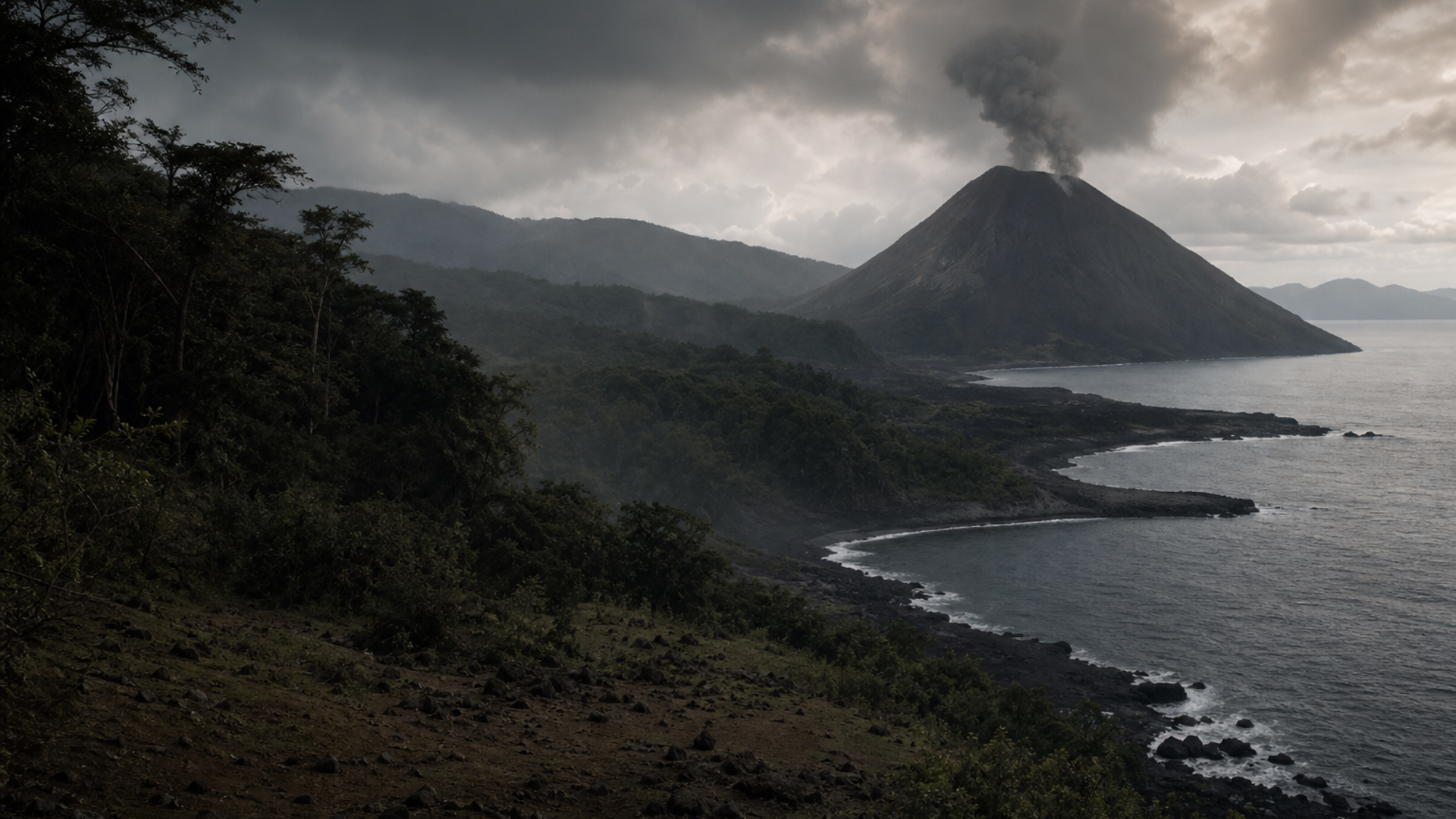
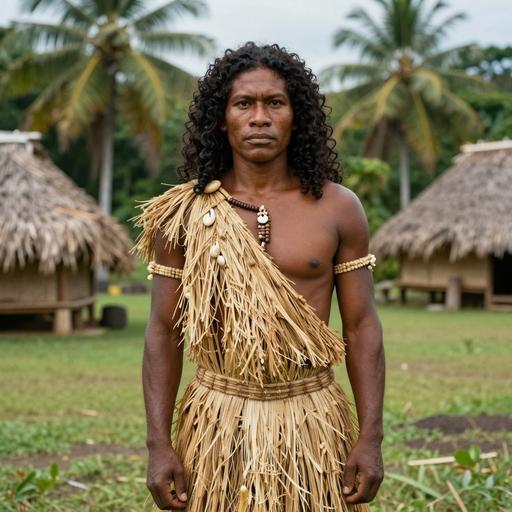
For contemporary ancestry studies, these patterns mean that an individual with roots in Island Southeast Asia or Oceania may carry a blend of lineages reflecting both initial Neolithic arrivals and millennia of local admixture. Archaeology and ancient DNA together illuminate routes of migration, episodes of interaction, and the island-by-island processes that produced the rich cultural diversity visible today. However, modern populations have continued to change through historic contacts, so ancient snapshots must be integrated cautiously with recent demographic events.

  • Modern Austronesian populations show mixed East Asian and Papuan ancestries
  • Cultural practices (navigation, agriculture, monumentality) reflect long-term continuity
Chapter VII

样本目录

1 份与 Voyagers of Ocean: The Austronesian Reach 文化相关的古 DNA 样本,为研究该时期的人群提供遗传线索。

1 / 1 samples
纵向 样本 国家 大纪元 日期 文化 性别 Y-DNA mtDNA
重建的肖像画 Austronesian individual, Vanuatu
Austronesian individual, Vanuatu
Vanuatu Vanuatu_2300BP 410 BCE Austronesian M S-P315 M28a7
AI 电源

AI 助手

就 Voyagers of Ocean: The Austronesian Reach 文化提问

AI 助手 由DNAGENICS公司制作

解锁此特性
Ask questions about the Voyagers of Ocean: The Austronesian Reach culture. Our AI assistant can explain genetic findings, historical context, archaeological evidence, and modern connections.
AI 样本分析

Voyagers of Ocean: The Austronesian Reach 文化是人类历史中值得了解的一章……

遗传分析揭示了与早期种群的联系,同时显示了独特的适应和文化创新的证据。 古代DNA样本提供了对迁徙模式、社会结构以及古代种群之间的生物关系的深刻见解。

这是人工智能分析的预览。 解锁全AI 助手, 以探索关于:

  • 遗传组成和祖先
  • 移徙模式和起源
  • 日常生活和文化习俗
  • 现代遗传遗产

探索更古老的文化

揭开古代世界文明的故事

使用优惠码 可减免 35% • 11月12日 到期





