Wielbark at Pruszcz Gdański

下载的 PDF 是图像副本。如需可选中文本及更好的辅助技术支持,请使用打印功能。

Wielbark at Pruszcz Gdański

揭开一个失落的文明

正在加载考古记录……

正在收集古代记录

跳转到主内容
Wielbark at Pruszcz Gdański
文明焦点

Wielbark at Pruszcz Gdański

Iron Age graves on the Baltic edge, where archaeology meets ancient DNA

100 CE - 300 CE
Pomeranian Province, northern Poland
滚动开始
Chapter I

剧情

了解 Wielbark at Pruszcz Gdański 文化

Archaeological and genetic data from 26 Iron Age individuals (100–300 CE) at Pruszcz Gdański, Poland, illuminate the Wielbark cultural horizon in Pomerania — a zone of maritime contacts, shifting identities, and complex ancestry signals.

Time Period

100–300 CE (Iron Age)

Region

Pomeranian Province, northern Poland

Common Y-DNA

CTS (3), L (3), L75 (2), M (2), P (2)

Common mtDNA

H (8), U (3), K (2), V3c (2), rCR (1)

Chapter II

时间线

这种文化历史上的关键时刻

100 CE

Establishment of Pruszcz Gdański cemetery use

Pruszcz Gdański cemetery in Pomerania begins accruing burials characteristic of the Wielbark horizon (inhumation and cremation).

Chapter III

Origins & Emergence

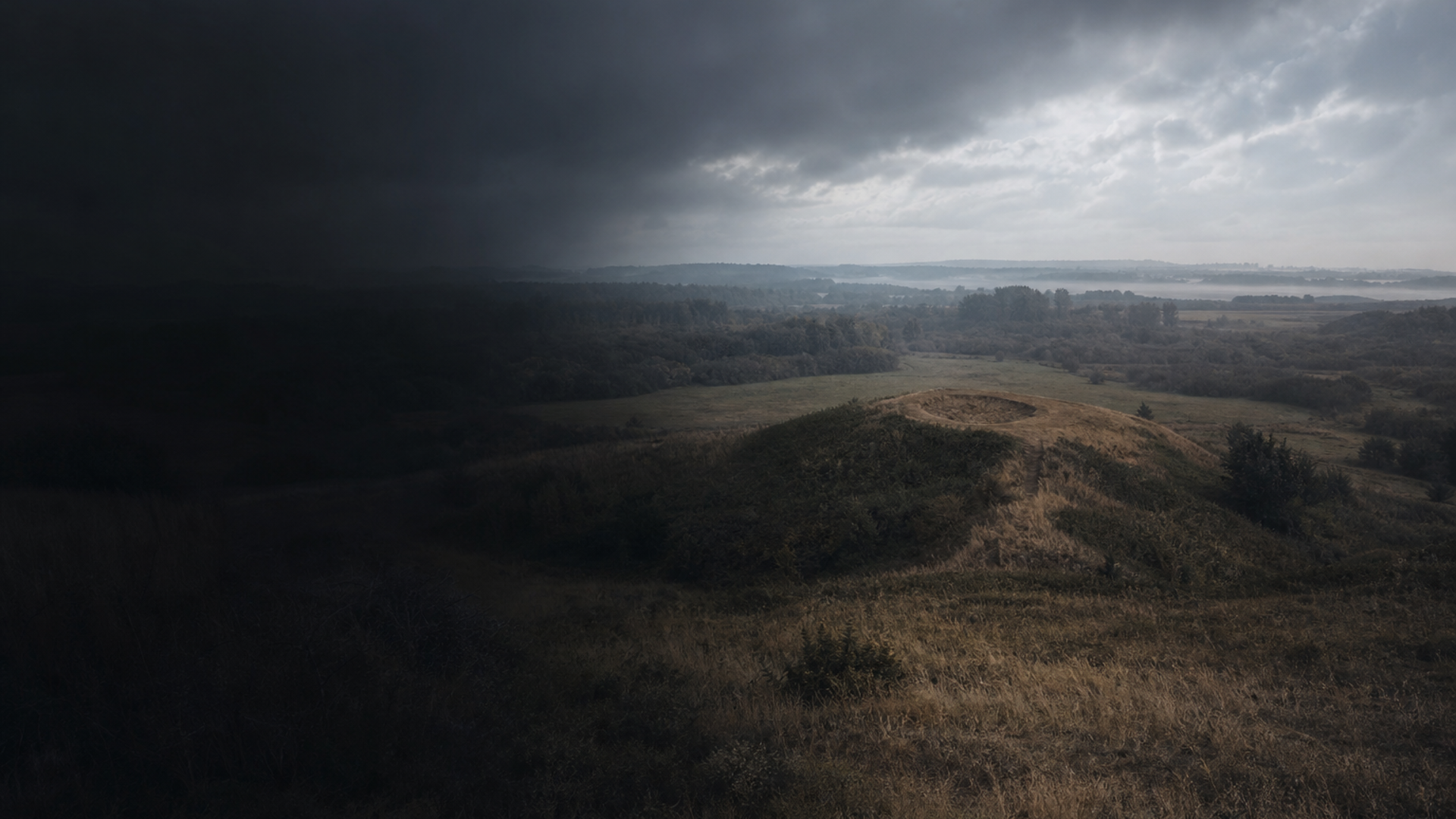
From the damp coastal plains near Gdańsk rises a patchwork of burial grounds and habitations that archaeologists group under the Wielbark cultural horizon. Centered in modern Pomerania and extending into parts of northern Poland, the Wielbark phenomenon is most visible in funerary practice: cemeteries that combine inhumation and cremation, often arranged with stone settings, modest grave goods, and a striking lack of the large hill graves associated with some contemporaries. Pruszcz Gdański (Pomeranian Province) is one such locale where systematic excavation has produced a concentrated snapshot of life and death between roughly 100 and 300 CE.

Archaeological data indicates a community engaged with both inland and maritime networks — trade in Baltic amber, movement of craft styles, and the circulation of metalwork and personal ornaments. Historically, sources later connect populations of this zone to migratory movements in the 3rd–4th centuries CE, but direct links between migration narratives and the material record remain debated. Limited evidence suggests that Wielbark communities were locally rooted yet porous to external influences: cultural change appears to be a blend of local continuity and episodic influxes of people, goods, and ideas. The Pruszcz Gdański assemblage thus invites a narrative of an Iron Age shoreland where identity was negotiated through burial practice and exchange rather than monolithic population replacement.

  • Wielbark horizon: 1st–4th centuries CE in Pomerania and adjacent regions
  • Pruszcz Gdański cemetery provides dense burial samples dated c. 100–300 CE
  • Material culture shows local continuity with external Baltic and continental contacts
Chapter IV

Daily Life & Society

Life on the Baltic littoral combined farming, animal husbandry, craft production, and trade. Archaeological remains from Wielbark contexts — including pottery, iron tools, weaving implements, and simple personal adornments — paint a picture of households oriented to mixed subsistence and seasonal mobility. The coastal setting of Pruszcz Gdański would have favored fishing and access to amber routes that linked the Baltic shore to wider European exchange networks.

Burial evidence at Wielbark sites often emphasizes small, individualized funerary deposits rather than ostentatious display. Grave goods, when present, include brooches, belt fittings, and occasional weapons, suggesting social distinctions expressed through personal items rather than monumental architecture. Osteological analyses from similar Wielbark cemeteries point to varied diets and workloads, with signs of both local agricultural activity and craft specialization. Archaeological indicators also suggest gendered divisions of labor but not strict segregation: textile production, metalworking, and childcare leave overlapping traces in the material record.

Taken together, the village landscapes near Pruszcz Gdański appear as resilient, adaptable communities — rooted in place but attentive to the currents of trade and cultural exchange sweeping the Baltic in the early centuries CE.

  • Mixed economy: agriculture, animal husbandry, fishing, and trade
  • Grave goods modest; social differentiation expressed in personal items
Chapter V

Genetic Profile

Ancient DNA from 26 individuals excavated at Pruszcz Gdański offers a meaningful, though not exhaustive, genetic window into Wielbark-era populations (100–300 CE). The dataset includes several recurring Y-chromosome labels reported as CTS (3 individuals), L (3), L75 (2), M (2), and P (2). Mitochondrial lineages are dominated by European maternal haplogroup H (8), with additional U (3), K (2), V3c (2), and one labeled rCR. These patterns suggest a substantial autochthonous European maternal ancestry alongside a more heterogeneous paternal signal.

Interpretation requires caution. Some reported Y labels (e.g., L, M, P) are today more frequent in regions outside northern Europe; their presence here may reflect deep, complex ancestries, incomplete phylogenetic resolution in short panels, or rare lineages that were locally established in the Iron Age. The repeated occurrence of CTS and L75-style markers hints at lineage clustering, but finer subclade resolution is necessary to infer specific migration routes or language affiliations. With 26 samples, conclusions are stronger than single-site pilot studies but remain sensitive to sampling bias: cemeteries capture particular social groups, and unrepresented communities may have different genetic profiles.

Genetic data corroborates archaeological impressions of a porous frontier — largely European maternal continuity with a diverse set of paternal lineages that may reflect male-mediated mobility, long-distance contacts, or lineage-specific founder events. Further sequencing, expanded reference panels, and spatially broader sampling will sharpen these preliminary but evocative signals.

  • Dataset: 26 individuals — substantial for a single cemetery but not exhaustive
  • Maternal lineages (H, U, K, V3c) indicate strong European continuity
  • Paternal labels (CTS, L, L75, M, P) show heterogeneity; interpretation remains provisional
Chapter VI

Legacy & Modern Connections

The Pruszcz Gdański Wielbark assemblage contributes to a layered story of northern Poland: enduring local traditions braided with episodes of contact and mobility. In the present day, genetic echoes from these Iron Age burials appear as fragments in the broader mosaic of Northern European ancestry — maternal haplogroups common in modern Europe reappear in ancient mtDNA, while some paternal signals remind us that the past was a networked stage of intermittent long-range movement.

Caution is essential: ancient cemeteries sample particular groups and social identities that may not map directly onto modern populations. Nevertheless, combining archaeological context with genetic profiles allows museums and researchers to present visitors with a more textured past — one where coastal farmers, craft specialists, and travelers all contributed to the genetic and cultural heritage of the Baltic. As ancient DNA sampling expands, the Pruszcz Gdański data will serve as a crucial local reference point for tracing how Iron Age communities contributed to the ancestry of later medieval and modern populations in Poland and beyond.

  • Ancient DNA provides local reference data for Northern European ancestry models
  • Archaeology + genetics together reveal continuity and episodic connections to distant regions
AI 电源

AI 助手

就 Wielbark at Pruszcz Gdański 文化提问

AI 助手 由DNAGENICS公司制作

解锁此特性
Ask questions about the Wielbark at Pruszcz Gdański culture. Our AI assistant can explain genetic findings, historical context, archaeological evidence, and modern connections.
AI 样本分析

Wielbark at Pruszcz Gdański 文化是人类历史中值得了解的一章……

遗传分析揭示了与早期种群的联系,同时显示了独特的适应和文化创新的证据。 古代DNA样本提供了对迁徙模式、社会结构以及古代种群之间的生物关系的深刻见解。

这是人工智能分析的预览。 解锁全AI 助手, 以探索关于:

  • 遗传组成和祖先
  • 移徙模式和起源
  • 日常生活和文化习俗
  • 现代遗传遗产

探索更古老的文化

揭开古代世界文明的故事

使用优惠码 可减免 35% • 11月12日 到期




