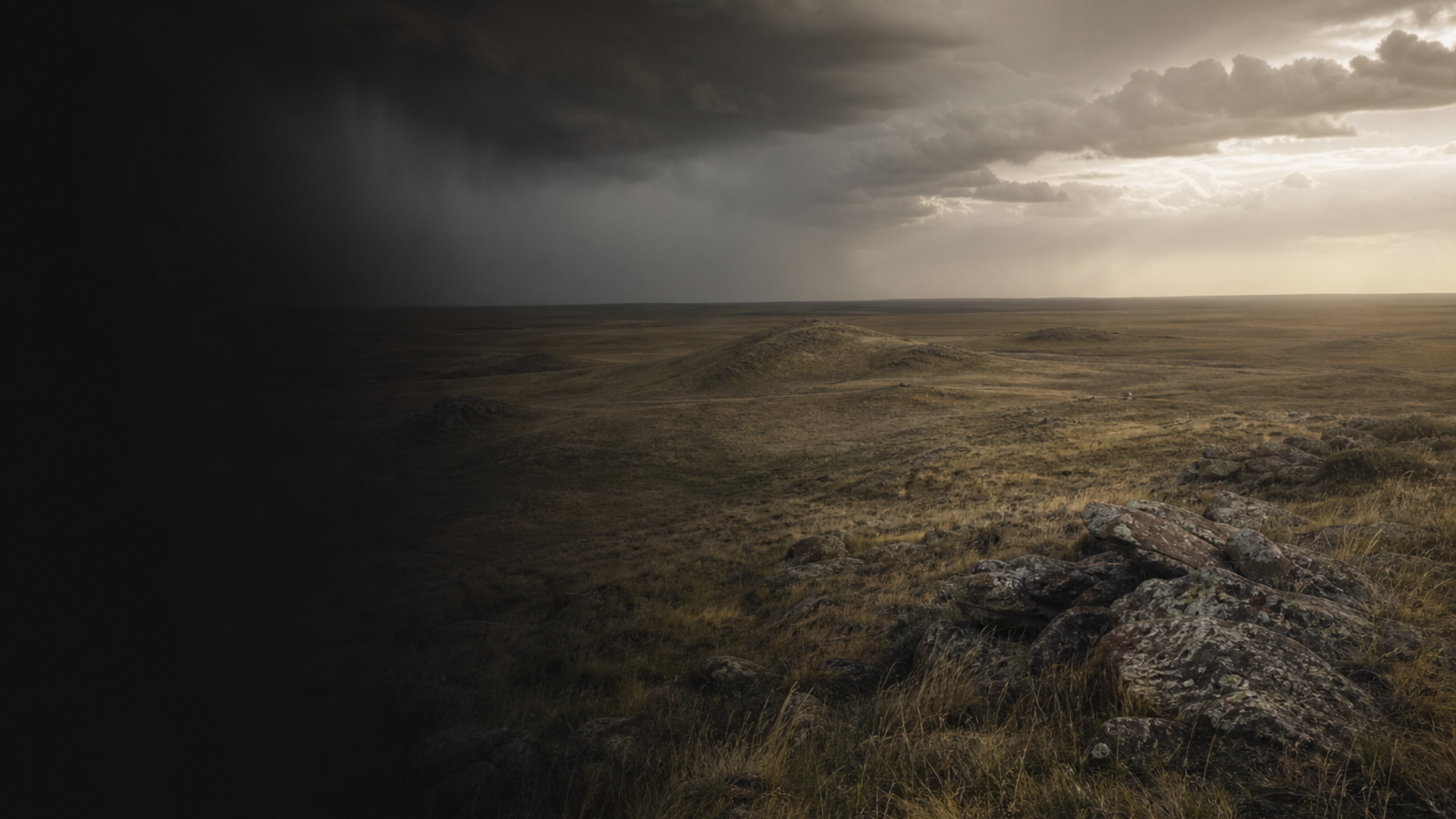
Wind and Burial: Yamnaya of Kalmykia

下载的 PDF 是图像副本。如需可选中文本及更好的辅助技术支持,请使用打印功能。

跳转到主内容
文明焦点

Wind and Burial: Yamnaya of Kalmykia

Early Bronze Age steppe communities in the Lower Volga revealed by graves and genomes

3335 CE - 2144 BCE
Kalmykia, Lower Volga, Russia (Ulan V, Temrta IV, Peshany V, Sukhaya Termista I)

剧情

Archaeological and genetic evidence from six Early Bronze Age Yamnaya individuals (3335–2144 BCE) in Kalmykia, Russia, links wind-swept pit graves and horse-associated ritual to steppe ancestry. Limited sample size makes conclusions preliminary but echoes broader Yamnaya patterns.

Time Period

3335–2144 BCE (Early Bronze Age)

Region

Kalmykia, Lower Volga, Russia (Ulan V, Temrta IV, Peshany V, Sukhaya Termista I)

Common Y-DNA

R (4), I (1) — Y data from five individuals

Common mtDNA

U (3), T (2), U4 (1)

时间线

2500 BCE

Yamnaya cultural horizon active in Lower Volga

Pit graves and pastoralist lifeways become widespread in the Kalmykia steppe, reflecting mobility and steppe-wide ritual patterns.

Origins & Emergence

Beneath the endless grasses of the Lower Volga, the archaeological record preserves the austere silhouette of Early Bronze Age Yamnaya life. Excavations at Ulan V, Temrta IV, Peshany V and Sukhaya Termista I reveal pit graves, often accompanied by copper tools, animal offerings and traces of wooden or turf chambers — hallmarks of the broader Yamnaya horizon that spread across the Pontic–Caspian steppe. Radiocarbon dates from the associated human remains span roughly 3335–2144 BCE, placing these burials well within the formative centuries of steppe pastoralist expansion. Archaeological data indicates these communities practiced mobile pastoralism with regional expressions in mortuary ritual.

Genetically, the Kalmykia assemblage fits into a larger picture: the predominance of Y-chromosome haplogroup R mirrors patterns seen across Yamnaya-associated samples elsewhere, while mtDNA types such as U and T reflect maternal lineages common on the steppe. Limited evidence suggests local continuity with earlier Eneolithic populations may have been supplemented by incoming steppe ancestry rather than wholly replaced. Because the dataset comprises just six individuals, interpretations about population movement, social structure or demographic change remain provisional and should be treated as an initial glimpse rather than a comprehensive survey.

  • Radiocarbon span: 3335–2144 BCE; sites in Kalmykia, Lower Volga
  • Material culture matches Yamnaya burial practices: pit graves, animal offerings
  • Limited sample size (6) — conclusions remain preliminary

Daily Life & Society

The Yamnaya world was shaped by mobility and the rhythms of herd management. Archaeological finds from Kalmykia — such as animal bone assemblages, simple metal objects and placed offerings within graves — suggest economies focused on sheep, cattle and horse husbandry, seasonal movement across pastures, and craft activities tuned to a pastoralist life. Burial goods are modest but symbolically loaded: pots, ochre, and traces of harness equipment evoke a society where animals and status were intimately connected.

Socially, Yamnaya groups are often reconstructed as kin-based, with networks organized around family units and alliances that could be maintained across wide tracts of steppe. Archaeological data indicates variation in grave richness, which may reflect status differences or age/sex-related roles. The Kalmykia burials show craft and ritual continuity with the wider steppe tradition, but local differences in grave orientation and accompanying objects hint at regional identities within the Yamnaya phenomenon.

Because organic structures rarely survive on the steppe, much of daily life must be inferred from burial contexts and faunal remains; combining these with genomic evidence helps move from evocative portrait to testable hypotheses about mobility, marriage patterns and community organization.

  • Economy centered on pastoralism: sheep, cattle, and horses; seasonal mobility
  • Burial variation suggests social differentiation and regional practices

Genetic Profile

Genomic data from these six individuals provides a molecular lens on steppe ancestry in the Lower Volga. Mitochondrial genomes were recovered from all six individuals, revealing maternal haplogroups U (three individuals), T (two), and U4 (one). These maternal lineages are commonly observed in Eurasian steppe contexts and are consistent with a mixture of deeply rooted European hunter-gatherer maternal ancestry and lineages widespread among Bronze Age pastoralists.

Y-chromosome data were resolved for five individuals, showing a predominance of haplogroup R (four individuals) and one instance of haplogroup I. The high frequency of R aligns with the broader association of haplogroup R (and its subclades) with Yamnaya and related steppe pastoralist groups, while the presence of haplogroup I points to persistence or incorporation of other local male lineages. Archaeological and genetic concordance suggests that at least some male-mediated gene flow accompanied the cultural spread of Yamnaya practices.

Crucially, the small sample count (n=6) constrains statistical power. Limited evidence suggests these Kalmykia individuals reflect the characteristic steppe genetic profile, but more sampling is needed to resolve fine-scale structure, sex-biased admixture patterns, and continuity with antecedent local populations.

  • mtDNA: U (3), T (2), U4 (1) — maternal lineages typical of steppe contexts
  • Y-DNA (5 samples): R predominant (4), I present (1) — matches broader Yamnaya male signal

Legacy & Modern Connections

The genetic echoes of Yamnaya populations reverberate far beyond Kalmykia. Ancient DNA has shown that steppe pastoralists contributed substantially to the ancestry of later Bronze Age and Iron Age populations across Europe and parts of Asia, and the Kalmykia samples fit into that larger mosaic. Maternal lineages like U and T and paternal R-lineages found here link these burials to the demographic processes that reshaped the genetic map of Eurasia in the 3rd and 2nd millennia BCE.

Archaeologically, the material culture and burial rites preserve a cultural memory of mobility, horse culture and ritual that would influence successive societies on the steppe. However, because this dataset is small, any direct line drawn between these specific individuals and modern populations should be made cautiously. Continued sampling across Kalmykia and adjacent regions will be necessary to clarify how local ancestries contributed to later genetic landscapes.

  • Kalmykia genomes reflect steppe ancestry that later influenced Europe and Asia
  • Small sample size means links to modern populations are suggestive, not definitive

AI 助手

AI 助手 由DNAGENICS公司制作

解锁此特性
Ask questions about the Wind and Burial: Yamnaya of Kalmykia culture. Our AI assistant can explain genetic findings, historical context, archaeological evidence, and modern connections.
AI 样本分析

Wind and Burial: Yamnaya of Kalmykia 文化是人类历史中值得了解的一章……

遗传分析揭示了与早期种群的联系,同时显示了独特的适应和文化创新的证据。 古代DNA样本提供了对迁徙模式、社会结构以及古代种群之间的生物关系的深刻见解。

这是人工智能分析的预览。 解锁全AI 助手, 以探索关于:

  • 遗传组成和祖先
  • 移徙模式和起源
  • 日常生活和文化习俗
  • 现代遗传遗产
使用优惠码 可减免 30% • 11月15日 到期