Wuzhuangguoliang: Voices of Late Neolithic Shaanxi

下载的 PDF 是图像副本。如需可选中文本及更好的辅助技术支持,请使用打印功能。

Wuzhuangguoliang: Voices of Late Neolithic Shaanxi

揭开一个失落的文明

正在加载考古记录……

正在收集古代记录

跳转到主内容
Wuzhuangguoliang: Voices of Late Neolithic Shaanxi
文明焦点

Wuzhuangguoliang: Voices of Late Neolithic Shaanxi

Shaanxi community (3400–2702 BCE) revealed by archaeology and 11 ancient genomes

3400 CE - 2702 BCE
Shaanxi, China (Wuzhuangguoliang)
滚动开始
Chapter I

剧情

了解 Wuzhuangguoliang: Voices of Late Neolithic Shaanxi 文化

Genomic and archaeological study of 11 individuals from Wuzhuangguoliang (Shaanxi, 3400–2702 BCE) illuminates Late Neolithic–Early Chalcolithic lifeways. Maternal lineages (B, A, G, D) and paternal F hint at strong local East Asian continuity with regional networks.

Time Period

3400–2702 BCE

Region

Shaanxi, China (Wuzhuangguoliang)

Common Y-DNA

F (2 of 11)

Common mtDNA

B (3), A (incl. A7, 2), G (1), D (1)

Chapter II

时间线

这种文化历史上的关键时刻

2500 BCE

Local florescence at Wuzhuangguoliang

Archaeological and genomic evidence places a flourishing of settlement activity and mortuary use at Wuzhuangguoliang around 2500 BCE within the Late Neolithic–Early Chalcolithic transition.

Chapter III

Origins & Emergence

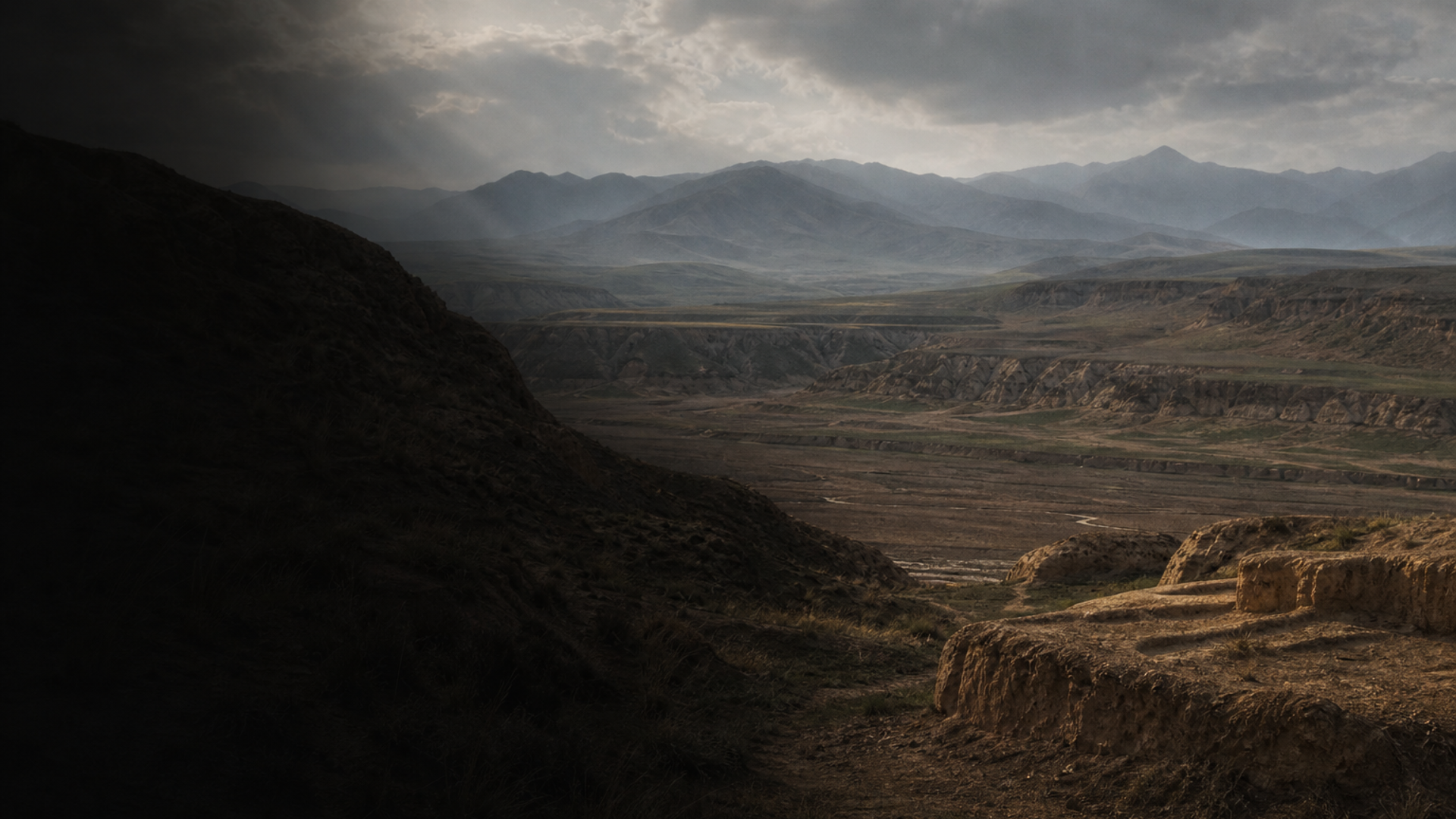
The Wuzhuangguoliang horizon sits on the loess-cloaked terraces of central Shaanxi between ca. 3400 and 2702 BCE, at the cusp of the Late Neolithic and the Early Chalcolithic. Archaeological data indicates a settled, agrarian lifeway with recognizable ceramic traditions and burial practices that link this community to broader networks across the Yellow River margins. The site of Wuzhuangguoliang itself yields discrete mortuary contexts and household debris that speak to generational occupation and local adaptation to the plateau environment.

Genetically, the small assemblage of 11 genomes provides a first, tentative window into population makeup during this dynamic interval. The prevalence of East Asian maternal haplogroups (notably B and A lineages) and the occurrence of Y-chromosome F lineages are consistent with continuity from earlier Yellow River Neolithic groups, while also allowing for regional heterogeneity. Limited geographic sampling and modest sample numbers mean that narratives of migration or large-scale replacement must remain cautious. Archaeology and ancient DNA together suggest a picture of local communities rooted in the Loess Plateau, engaged in regional exchange and cultural interaction rather than abrupt demographic overturn.

  • Located in Shaanxi on loess terraces, 3400–2702 BCE
  • Archaeological data indicates settled agriculture and distinct pottery traditions
  • Genomic evidence consistent with regional Yellow River Neolithic continuity
Chapter IV

Daily Life & Society

The everyday world of Wuzhuangguoliang would have been textured: earthen houses clustered on terraces, hearths and storage pits, and ceramic vessels shaped for cooking, storage, and ritual. Archaeological features at contemporaneous sites in Shaanxi and neighboring provinces indicate mixed dryland farming adapted to the plateau — archaeobotanical and tool assemblages across the region point toward millet cultivation and the processing of small-seeded cereals. Animal bones, ground stone and specialized lithics found in related contexts imply a mixed economy of crop production, foraging, and managed herding.

Mortuary practices at Wuzhuangguoliang-era sites often reveal social distinctions: articulated burials, grave goods limited to pottery and occasional personal items, and spatial patterns that suggest kin-based neighborhood organization. Exchange networks likely connected Shaanxi communities to broader cultural currents along the Yellow River, visible in shared decorative motifs and raw material flows. Still, much of this reconstruction rests on comparative regional data; specific household and social structures at Wuzhuangguoliang await fuller excavation and contextual publication.

  • Archaeological data indicates millet-based agriculture and mixed subsistence
  • Burial patterns and material culture suggest household and kin networks
Chapter V

Genetic Profile

Eleven ancient genomes from Wuzhuangguoliang provide a compact but informative snapshot of ancestry in Late Neolithic Shaanxi. Among the sequenced individuals, Y-chromosome F is observed in at least two males — a lineage widespread across East and Southeast Asia in ancient and modern datasets. On the maternal side, mtDNA haplogroups recorded include B (3 individuals), A (including A7, together 2), G (1), and D (1). These maternal lineages are commonly associated with Neolithic and post-Neolithic populations of northern and eastern Asia.

Together the uniparental markers and genome-wide affinities point toward strong local East Asian ancestry, consistent with continuity from earlier Yellow River Neolithic populations and with the demographic substrate that would later contribute to regional genetic landscapes. However, the sample size is modest and geographically restricted to a single locality; some haplogroups present in the assemblage are missing or undersampled and broader population structure (admixture with northern hunter-gatherers or southern groups) may not be fully captured. Therefore, conclusions about population movements, sex-biased migration, or long-term continuity should be treated as provisional pending larger, geographically diverse sampling and higher-resolution analyses.

  • Uniparental markers indicate East Asian continuity (Y-F; mtDNA B, A, G, D)
  • Sample size (11) is informative but limited — interpretations remain provisional
Chapter VI

Legacy & Modern Connections

The genetic signatures recorded at Wuzhuangguoliang resonate with haplogroups still found across northern and eastern China today, suggesting threads of biological continuity alongside cultural transformation. Maternal lineages such as B, A, D and G persist within modern East Asian populations; Y-F lineages also contribute to the paternal diversity of the region. Yet direct ancestry should not be assumed without acknowledging the palimpsest of subsequent migrations, social changes, and gene flow across millennia.

From a heritage perspective, combining archaeological context with ancient DNA transforms silent shards and bones into a human chorus — not a single story, but many overlapping voices. For scholars and the public, Wuzhuangguoliang offers a cinematic but careful glimpse into how farming communities anchored themselves on the Loess Plateau and became part of the deep genetic and cultural tapestry of China. Ongoing excavation and more comprehensive ancient DNA sampling will be necessary to clarify how these early communities fit into broader demographic shifts of later prehistory.

  • Maternal and paternal haplogroups echo in modern northern and eastern Chinese populations
  • Genetic continuity is likely but must be weighed against later admixture and migration
AI 电源

AI 助手

就 Wuzhuangguoliang: Voices of Late Neolithic Shaanxi 文化提问

AI 助手 由DNAGENICS公司制作

解锁此特性
Ask questions about the Wuzhuangguoliang: Voices of Late Neolithic Shaanxi culture. Our AI assistant can explain genetic findings, historical context, archaeological evidence, and modern connections.
AI 样本分析

Wuzhuangguoliang: Voices of Late Neolithic Shaanxi 文化是人类历史中值得了解的一章……

遗传分析揭示了与早期种群的联系,同时显示了独特的适应和文化创新的证据。 古代DNA样本提供了对迁徙模式、社会结构以及古代种群之间的生物关系的深刻见解。

这是人工智能分析的预览。 解锁全AI 助手, 以探索关于:

  • 遗传组成和祖先
  • 移徙模式和起源
  • 日常生活和文化习俗
  • 现代遗传遗产

探索更古老的文化

揭开古代世界文明的故事

使用优惠码 可减免 35% • 11月12日 到期





