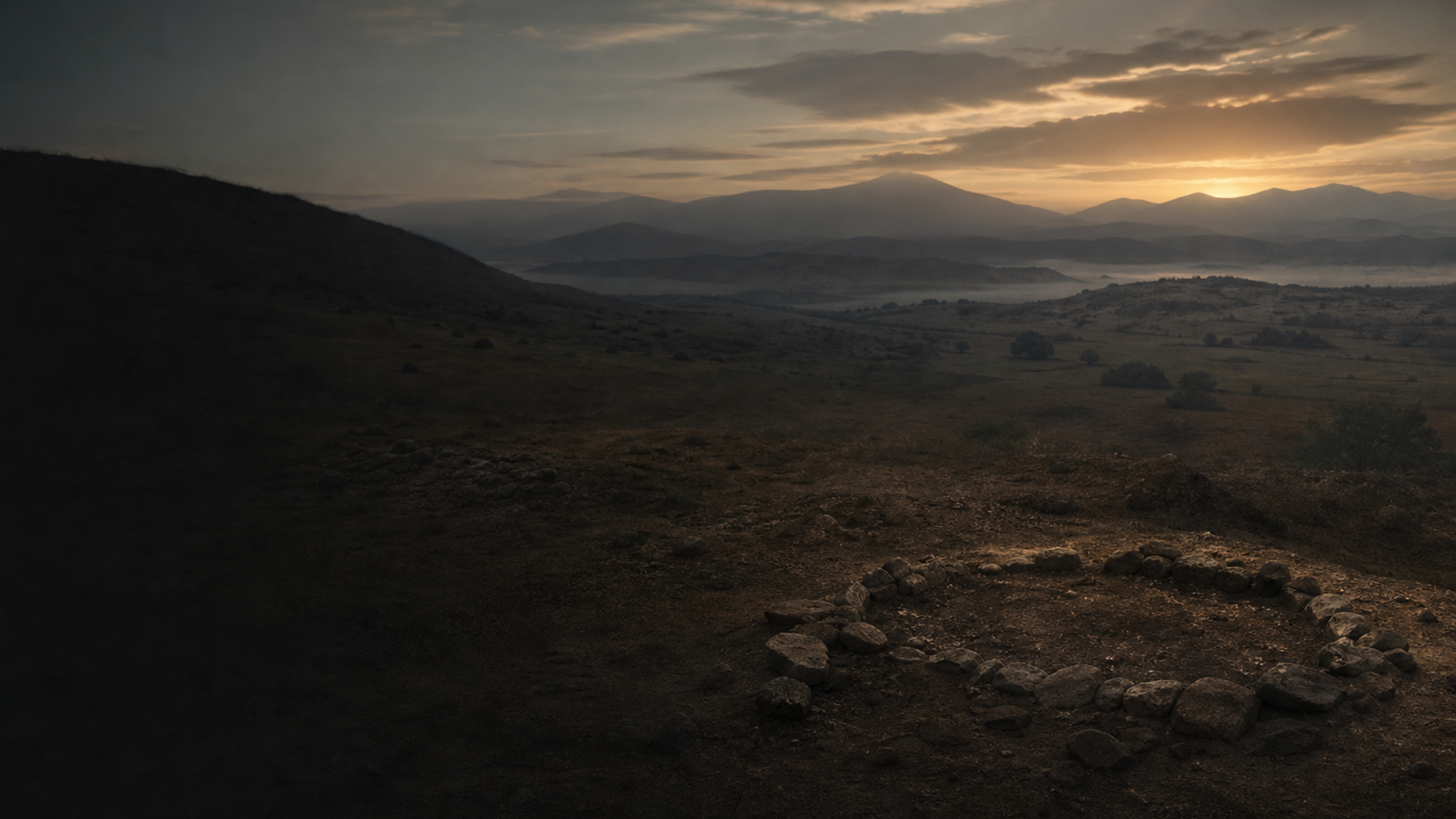
Yunatsite Early Bronze Age Hearth

下载的 PDF 是图像副本。如需可选中文本及更好的辅助技术支持,请使用打印功能。

Yunatsite Early Bronze Age Hearth

揭开一个失落的文明

正在加载考古记录……

正在收集古代记录

跳转到主内容
Yunatsite Early Bronze Age Hearth
文明焦点

Yunatsite Early Bronze Age Hearth

Archaeology and genomes from Yunatsite illuminate life and movement in 3350–2600 BCE

3350 CE - 2600 BCE
Yunatsite, Pazardzhik province, Bulgaria
滚动开始
Chapter I

剧情

了解 Yunatsite Early Bronze Age Hearth 文化

Material and genetic evidence from 12 individuals at Yunatsite (Pazardzhik province, Bulgaria) offers a window into Early Bronze Age lifeways (c. 3350–2600 BCE). Archaeology indicates continuity with late Chalcolithic traditions; DNA reveals maternal diversity and limited male-line signals.

Time Period

c. 3350–2600 BCE

Region

Yunatsite, Pazardzhik province, Bulgaria

Common Y-DNA

CTS (observed in 2/12)

Common mtDNA

T2b (3), W1h (2), H (2), K (2), T (1)

Chapter II

时间线

这种文化历史上的关键时刻

2500 BCE

Flourishing at Yunatsite

Around 2500 BCE Yunatsite shows intensive domestic and craft activity with evidence for on-site metalworking and continued occupation of the tell.

Chapter III

Origins & Emergence

The Yunatsite sequence sits at a hinge of the southern Bulgarian plain, where long-lived tell deposits preserve human occupation from the Chalcolithic into the Early Bronze Age. Archaeological data indicates that between about 3350 and 2600 BCE the site continued to host intensive domestic and craft activities, reworking earlier architectural footprints and pottery traditions. Excavations at Yunatsite (Pazardzhik province) have revealed burned layers, house plans, and metalworking debris that narrate a community adapting to new technologies and social rhythms.

Material culture shows both continuity with local late Copper Age practices and connections to wider Balkan networks: ceramic styles, copper objects, and burial practices point to regional interaction across river valleys and upland corridors. Stratigraphy and radiocarbon series anchor the sequence in the transitional centuries after 3400 BCE, a period of social reorganization in southeastern Europe. Limited evidence suggests episodes of site destruction or restructuring, visible as ash layers and abrupt changes in building plans — these events may reflect localized conflict, ritual closure, or economic shifts.

While archaeological patterns set the scene, the integration of ancient genomes from 12 individuals provides an independent line of evidence to test mobility, kinship, and continuity. Together, material and genetic data foreground Yunatsite as a locus where local traditions met broader Bronze Age currents.

  • Occupied during c. 3350–2600 BCE with persistent domestic and craft activity
  • Archaeology shows continuity from Chalcolithic layers and regional interaction
  • Stratified destruction/ash layers indicate episodes of change or disruption
Chapter IV

Daily Life & Society

Yunatsite’s streets and house plans emerge from the earth like snapshots of daily life: compact dwellings clustered around courtyards, hearths blackened with centuries of cooking, and debris from copper-working nestled beside pottery dumps. Archaeological data indicates a mixed economy of agriculture, animal husbandry, and specialized craft production. Grain processing implements, storage pits, and faunal remains suggest cereal cultivation and domestic herding were staples of subsistence.

Craft evidence — slag, crucible fragments, and small finished metal items — points to on-site metallurgical activities, implying skilled specialists or household-level metalworking. Pottery assemblages reflect both local styles and imported forms, hinting at trade or exchange networks that extended beyond the immediate valley. Burials associated with the site are modest and variable; inhumations and fragmented offerings indicate diverse mortuary practices and possibly shifting social roles.

Spatial patterning of finds implies households managed multiple tasks within confined plots, while communal spaces may have hosted exchanges and ritual activities. The combination of craft debris, agricultural tools, and domestic refuse paints a cinematic tableau: smoke rising from hearths, smiths hammering copper, and everyday gestures shaping a community negotiating continuity and change amid Early Bronze Age transformations.

  • Mixed economy: cereals, herding, and household metalworking
  • Pottery and small metal objects indicate trade and local craft specialization
Chapter V

Genetic Profile

Twelve ancient genomes from Yunatsite provide direct biological insight into the people who lived and labored at the tell. Mitochondrial DNA shows substantial maternal diversity: T2b (3 individuals) is the most frequent mtDNA lineage, supplemented by W1h (2), H (2), K (2), and T (1). These maternal haplogroups are commonly observed across Neolithic and Bronze Age Europe and suggest a continuity of maternal ancestry with broader regional populations, though mitochondrial lineages alone cannot resolve fine-scale ancestry.

On the paternal side, two Y-chromosome genomes carry mutations labeled CTS. "CTS" denotes a phylogenetic marker used in Y-chromosome naming systems; the presence of CTS in 2 of 12 males indicates at least some representation of that paternal lineage within the sampled group. Archaeological data combined with autosomal DNA can test whether male-mediated gene flow or continuity best explains the observed patterns, but autosomal signals in small samples must be interpreted cautiously.

Genome-wide data (from this modest sample of 12 individuals) suggest Yunatsite residents derive ancestry components typical of southeastern European Bronze Age populations: a mix of local Neolithic-derived ancestry with incoming elements associated with steppe-related groups at varying proportions. Because the sample size is limited, conclusions about population turnover, migration pulses, or kinship organization remain tentative; further sampling across the region and chronology will clarify whether Yunatsite reflects continuity, admixture, or episodic influxes.

  • Maternal lineages (T2b, W1h, H, K, T) indicate diverse mtDNA ancestry common in Bronze Age Europe
  • Paternal CTS marker found in 2/12 males; autosomal data point to mixed local and steppe-related ancestry
Chapter VI

Legacy & Modern Connections

Yunatsite’s archaeological and genetic traces form a bridge between prehistoric lives and the deep ancestry of southeast Europe. The maternal haplogroups identified at the site persist in modern populations across the Balkans and beyond, underscoring genetic continuities that can span millennia. At the same time, signals of admixture echo the dynamic movements that shaped the Early Bronze Age — exchanges of goods, ideas, and genes along river corridors and across uplands.

For visitors and descendants alike, Yunatsite offers a resonant narrative: everyday objects, burned floors, and genomes together tell of households adapting to technological change while remaining rooted in local landscapes. Archaeological data indicates that these transformations were complex and regionally varied; genetic results help quantify that complexity but also remind us of the limits of small samples. Ongoing interdisciplinary work will continue to refine how Yunatsite’s people fit into the wider story of Bronze Age Europe.

  • Maternal haplogroups at Yunatsite link to modern Balkan genetic lineages
  • Combined archaeology and genomics highlight both continuity and Bronze Age mobility
AI 电源

AI 助手

就 Yunatsite Early Bronze Age Hearth 文化提问

AI 助手 由DNAGENICS公司制作

解锁此特性
Ask questions about the Yunatsite Early Bronze Age Hearth culture. Our AI assistant can explain genetic findings, historical context, archaeological evidence, and modern connections.
AI 样本分析

Yunatsite Early Bronze Age Hearth 文化是人类历史中值得了解的一章……

遗传分析揭示了与早期种群的联系,同时显示了独特的适应和文化创新的证据。 古代DNA样本提供了对迁徙模式、社会结构以及古代种群之间的生物关系的深刻见解。

这是人工智能分析的预览。 解锁全AI 助手, 以探索关于:

  • 遗传组成和祖先
  • 移徙模式和起源
  • 日常生活和文化习俗
  • 现代遗传遗产

探索更古老的文化

揭开古代世界文明的故事

使用优惠码 可减免 35% • 11月12日 到期