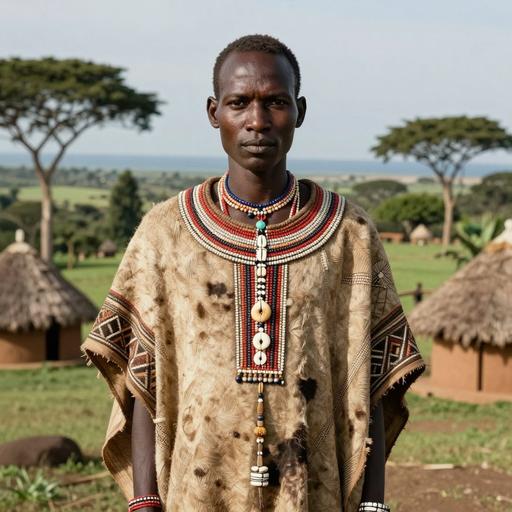
Around 400 years ago, during the 17th century, the region now known as Kenya was inhabited by various ethnic groups, with the Bantu people being one of the most significant in terms of cultural and linguistic impact. The Bantu migrations, which began around 1000 BC, gradually brought these people into East Africa, where they established communities and civilizations that contributed to the rich tapestry of Kenya's history.
Bantu People and Their Migration
The Bantu are believed to have originated from the region around present-day Cameroon and Nigeria, from where they began their great southward and eastward migrations across Africa. By the 17th century, Bantu-speaking communities had firmly established themselves in various parts of Kenya, particularly in the central, western, and coastal regions. Their migration was driven by a combination of searching for arable land, resources, and possibly escaping conflicts.
Society and Culture
Social Structure: The Bantu-speaking communities often organized themselves into clans and kinship groups, which were led by elders or chiefs. Society was typically hierarchical, with clear divisions of labor based on age and gender. Men were generally responsible for herding and clearing land for agriculture, while women took on roles in farming, childcare, and household management.
Agriculture and Economy: Agriculture was central to Bantu life. They cultivated crops like sorghum, millet, and later introduced crops like bananas and yams. They also engaged in animal husbandry, raising cattle, goats, and sheep. Trade was significant, both internally and with neighboring regions, facilitated by the Indian Ocean trade networks. Items such as iron tools, pottery, and textiles were commonly traded, and coastal communities also engaged in trading with Arab and Persian merchants.
Technology: The Bantu brought with them advanced ironworking techniques, which greatly contributed to their agricultural success and ability to clear dense forests for farming. They produced iron tools and weapons, facilitating both their subsistence strategies and defense mechanisms.
Language and Religion
Language: By this time, the Bantu languages had diversified considerably, giving rise to numerous distinct languages and dialects spoken across Kenya. This linguistic diversity is a testimony to the adaptability and cultural richness of the Bantu people.
Religion: Bantu religious beliefs were predominantly animistic, focusing on ancestor worship and the spirits of the natural world. They believed in a supreme creator God, alongside a pantheon of lesser spirits and deities associated with natural phenomena. Rituals, songs, and dances played a crucial role in religious and community life, often used to mark significant life events such as births, initiations, marriages, and funerals.
Interaction with Other Cultures
Coastal Influences: On the eastern coast, particularly in areas like Mombasa and Malindi, Bantu communities came into contact with Arab traders who had established trading posts along the Indian Ocean coast. This interaction led to the development of the Swahili culture and the Swahili language, a Bantu language with significant Arabic influence.
Trade and Exchange: The inland Bantu communities were connected through extensive trade networks with neighboring Nilotic and Cushitic groups. These interactions facilitated the exchange of goods, ideas, and cultural practices.
Challenges and Conflicts
The 17th century also presented challenges for the Bantu communities. Competition for resources, such as fertile land and water, occasionally led to conflicts both within Bantu groups and with other ethnic groups. However, these challenges often resulted in the formation of alliances and the strengthening of societal structures.
Conclusion
The Bantu presence in Kenya 400 years ago laid a significant foundation for the country's cultural, linguistic, and societal development. Their legacy is still visible today, as numerous Kenyan ethnic groups trace their roots to Bantu ancestors. The synthesis of indigenous and foreign influences crafted a unique cultural heritage that continues to influence Kenya's social and political landscapes.