


| Sample ID | Culture/Period | Date | Location | Action |
|---|---|---|---|---|
| I6113 | Harappan Civilization | 2800 BCE | Rakhigarhi, India | View |
| I6113 | 2800 BCE | Rakhigarhi, India | View |
| Sample ID | Culture/Period | Date | Location | Action |
|---|---|---|---|---|
| I6113 | Harappan Civilization | 2800 BCE | Rakhigarhi, India | View |

I6113 - A woman buried in India in the Bronze Age era
Download PDF creates a visual, rasterized copy. Use Print for selectable text and better assistive-technology support.


Preparing your ancestry journey
Connecting to ancient matches...
Preparing your report
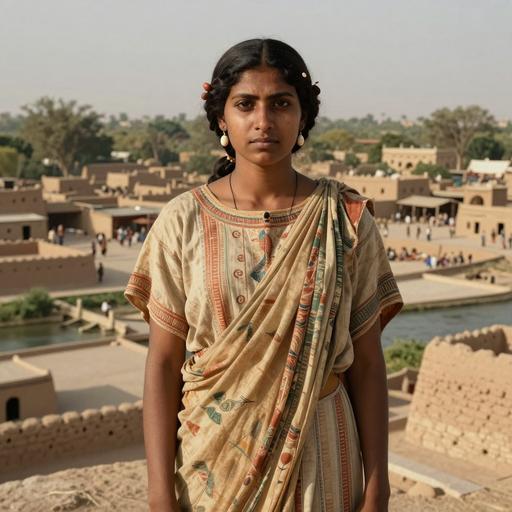
A woman buried in India during the India Harappan
A fragment of the ancient world, preserved across millennia in strands of DNA.
The biological and cultural markers that define this ancient individual
I6113
2800 BCE - 1900 BCE
India Harappan
Female
U2b2
N/A (Female)
Farmer (AI estimate, era-typical)
Where this individual was discovered
When this individual lived in the broader context of human history
These comparisons show genetic similarity, not identity or origin. The populations listed are those whose genomes show statistical alignment to this ancient individual.
Similarity reflects shared history, not shared identity. These are analytical comparisons, not claims about who this person was.
This analysis compares the DNA profile with present-day reference populations, showing statistical similarity to modern reference populations from different regions. The excavation site records where this individual was found, not a fixed modern genetic identity.
These are the modern populations showing the closest statistical alignment to A woman buried in India in the Bronze Age era, ranked by genetic distance. Lower distance values indicate closer statistical similarity. Cross-region similarity can reflect shared ancestry, population movement, continuity, or later admixture.
This individual exists within a broader network of ancient samples. No ancient genome stands alone.
Scientific publications and genetic data that inform this profile.
We report an ancient genome from the Indus Valley Civilization (IVC). The individual we sequenced fits as a mixture of people related to ancient Iranians (the largest component) and Southeast Asian hunter-gatherers, a unique profile that matches ancient DNA from 11 genetic outliers from sites in Iran and Turkmenistan in cultural communication with the IVC. These individuals had little if any Steppe pastoralist-derived ancestry, showing that it was not ubiquitous in northwest South Asia during the IVC as it is today. The Iranian-related ancestry in the IVC derives from a lineage leading to early Iranian farmers, herders, and hunter-gatherers before their ancestors separated, contradicting the hypothesis that the shared ancestry between early Iranians and South Asians reflects a large-scale spread of western Iranian farmers east. Instead, sampled ancient genomes from the Iranian plateau and IVC descend from different groups of hunter-gatherers who began farming without being connected by substantial movement of people.
These coordinates represent a position in genetic space, a tool for comparison, not a conclusion. You can use these to perform custom admixture analysis in G25 Studio.
I6113,0.0523892,-0.04811278,-0.15660424,0.1002601,-0.08207506,0.05626664,-5.778E-05,0.00965968,0.02581524,0.01426292,-0.00584412,0.00223602,-0.00381296,0.0023863,0.0017361,0.00111802,0.00067532,0.00317736,0.00282178,-0.00667984,0.00404226,-0.00135186,0.00175698,0.00107812,-0.0038908