
Menu
Store
Blog
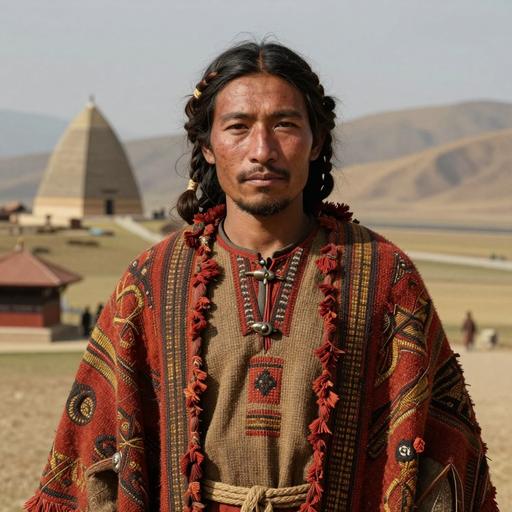
Portrait reconstruction of M240
Ancient Individual

A man buried in Nepal in the Iron Age era

M240
450 BCE - 100 CE
Male
Mebrak 2125BP
Nepal
Scroll to begin
Chapter I

Identity

The biological and cultural markers that define this ancient individual

Sample ID

M240

Date Range

450 BCE - 100 CE

Biological Sex

Male

mtDNA Haplogroup

M9a1a2

Y-DNA Haplogroup

O-M134

Cultural Period

Mebrak 2125BP

Chapter II

Place

Where this individual was discovered

Country Nepal
Locality Mebrak Tomb. Nepal
Coordinates 28.7119, 83.8965
Chapter III

Time

When this individual lived in the broader context of human history

M240 450 BCE - 100 CE
Chapter IV

Story

The narrative of this ancient life

The Mebrak culture, dating approximately to 2125 BP (before present), refers to an ancient civilization that flourished in the region now known as the Mustang District in Nepal. This era marks a significant chapter in the prehistory of the Himalayas, characterized by unique burial practices, architectural developments, and distinct cultural attributes that provide insights into the socio-cultural dynamics of the time.

Geography and Environment

The Mebrak culture was centered around the Mustang region, a high-altitude plateau in the trans-Himalayan region of Nepal. This area is characterized by its rugged terrain, arid climate, and strategic location along ancient trade routes that connected the Indian subcontinent with Tibet and beyond. The harsh environment necessitated adaptations in agricultural practices and resource management.

Archaeological Discoveries

The primary insights into the Mebrak culture come from archaeological investigations, particularly in the caves and cliffside tombs spread across the Mustang region. These tombs, often multichambered and intricately designed, provide a window into the burial customs and beliefs of the time. The discovery of artifacts such as pottery, textiles, tools, and metal objects within these tombs points to a developed material culture.

Burial Practices

One of the most distinctive features of the Mebrak culture is its burial practices. The cliffside tombs, carved into the rock face at significant heights, indicate a complex belief system surrounding death and the afterlife. These tombs often contain multiple chambers with arrangements for secondary burials, suggesting the prominence of ancestor worship and reverence for lineage. The placement of grave goods, including pottery, beads, and weapons, indicates a belief in an afterlife where material possessions retained value.

Socio-Economic Structure

The Mebrak culture likely had a mixed economy based on agriculture, pastoralism, and trade. The Mustang region's location facilitated interactions with neighboring cultures, fostering trade in goods such as salt, textiles, and metalwork. The community's social structure may have been organized into clans or kinship groups, with social stratifications reflected in the complexity and richness of burial artifacts.

Art and Symbolism

Art and symbolism played significant roles in the Mebrak culture. Decorative motifs on pottery and other artifacts often include geometric shapes, animals, and abstract figures, possibly representing cosmological beliefs or clan symbols. Textiles found in the tombs suggest a high degree of skill in weaving and dyeing, indicating the cultural importance of clothing and adornment.

Religion and Belief Systems

The religious beliefs of the Mebrak people remain largely speculative, but the funerary practices and artifacts provide clues. The care in burial preparation and inclusion of grave goods suggest belief in an afterlife and possibly spiritual guardian deities. The presence of certain motifs and symbols might indicate shamanistic practices or nature worship, common in Himalayan prehistoric cultures.

Technological and Architectural Developments

The Mebrak culture demonstrated ingenuity in adapting to its environment through technological and architectural innovation. The construction of cliffside tombs required advanced knowledge of geology and engineering, while tools and weapons found at the sites suggest proficiency in metallurgy and tool-making. Agricultural tools and techniques were adapted for dryland farming, essential for survival in the arid Mustang landscape.

Legacy and Influence

The Mebrak culture's legacy is evident in the subsequent cultural and historical developments in the Mustang region. The enduring traditions of ancestor reverence, trade, and adaptation to the Himalayan environment can be traced back to these early inhabitants. The archaeological findings contribute to understanding the broader prehistoric context of the Himalayan civilizations, highlighting the region's role as a cultural crossroads throughout history.

In conclusion, the Mebrak culture of 2125 BP represents a fascinating period marked by distinctive burial practices, rich material culture, and the ability to thrive in a challenging environment. The archaeological evidence continues to shed light on the complexities of prehistoric Himalayan societies, offering valuable insights into their daily lives, beliefs, and interactions with neighboring cultures.

Chapter V

Context

Other ancient individuals connected to this sample

Sources

References

Scientific publications and genetic data

Scientific Publication

Long-term genetic stability and a high-altitude East Asian origin for the peoples of the high valleys of the Himalayan arc

Authors Jeong C, Ozga AT, Witonsky DB
Abstract

The high-altitude transverse valleys [>3,000 m above sea level (masl)] of the Himalayan arc from Arunachal Pradesh to Ladahk were among the last habitable places permanently colonized by prehistoric humans due to the challenges of resource scarcity, cold stress, and hypoxia. The modern populations of these valleys, who share cultural and linguistic affinities with peoples found today on the Tibetan plateau, are commonly assumed to be the descendants of the earliest inhabitants of the Himalayan arc. However, this assumption has been challenged by archaeological and osteological evidence suggesting that these valleys may have been originally populated from areas other than the Tibetan plateau, including those at low elevation. To investigate the peopling and early population history of this dynamic high-altitude contact zone, we sequenced the genomes (0.04×-7.25×, mean 2.16×) and mitochondrial genomes (20.8×-1,311.0×, mean 482.1×) of eight individuals dating to three periods with distinct material culture in the Annapurna Conservation Area (ACA) of Nepal, spanning 3,150-1,250 y before present (yBP). We demonstrate that the region is characterized by long-term stability of the population genetic make-up despite marked changes in material culture. The ancient genomes, uniparental haplotypes, and high-altitude adaptive alleles suggest a high-altitude East Asian origin for prehistoric Himalayan populations.

Use code for 40% off Expires Feb 27