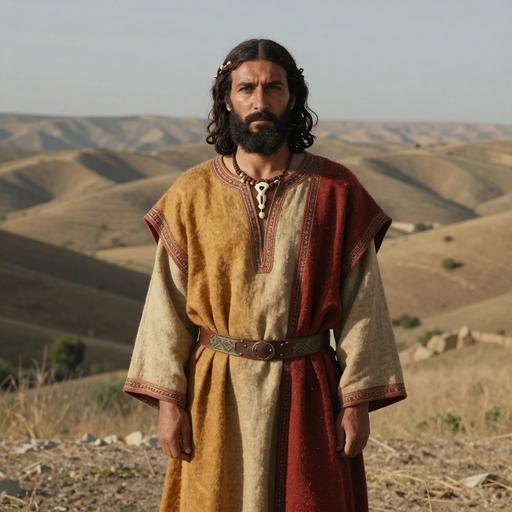
Nevalı Çori is an archaeological site located in southeastern Turkey, primarily associated with the Pre-Pottery Neolithic period, dating back to approximately 8400 to 8000 BCE. Therefore, it is not directly related to the Iron Age or Neo-Hittite culture. However, I can provide a detailed description of the broader region and context during the Iron Age, focusing on the Neo-Hittite city-states, which might be more what you are looking for.
Background and Location
During the Iron Age, the region encompassing modern-day Turkey, Syria, and northern Iraq was a melting pot of emerging and declining civilizations, one of which were the Neo-Hittite city-states. These entities emerged after the fall of the Hittite Empire around 1180 BCE and persisted until their gradual absorption into the Assyrian Empire by the 8th century BCE.
Development of Neo-Hittite City-States
After the collapse of the central Hittite authority, several small kingdoms and principalities sprang up in southeastern Anatolia and northern Syria. These city-states, which included notable centers such as Carchemish, Melid, and Tuwana, maintained many aspects of Hittite culture and language, while also assimilating Aramaean influences over time. They are often referred to as \Neo-Hittite" to distinguish them from the earlier Hittite Empire.
Cultural Characteristics
Language and Writing: The Neo-Hittite states used Luwian, a language closely related to Hittite, recorded in both cuneiform script and Hieroglyphic Luwian script. Over time, many of these states adopted Aramaic due to the influence of Aramaean cultures.
Religion and Mythology: The religious practices continued the traditions of the Hittite pantheon, venerating deities such as the storm god Tarhunza and the sun goddess Hebat. They also featured extensive mythological narratives, which were depicted in carvings and reliefs.
Art and Architecture: Neo-Hittite art is known for its monumental stone sculptures and orthostat reliefs that adorned city gates and public buildings. The art style combined Hittite traditions with Syrian and Mesopotamian influences, resulting in distinctive carvings that often depicted gods, kings, and mythical creatures.
Political Organization: Each city-state was an independent entity governed by a king who claimed Hittite royal descent. The political landscape was characterized by frequent alliances, rivalries, and conflicts, both among themselves and with neighboring states like Assyria and Urartu.
Economic and Social Life
Agriculture and Trade: The fertile lands along river valleys enabled robust agricultural production, which supported these city-states. They engaged in regional trade, exchanging goods like grain, textiles, and metalwork with neighboring areas.
Craftsmanship: The Neo-Hittites continued the Hittite legacy of exceptional metallurgy, including ironworking, which was a significant technological advancement at the time. They are known for producing sophisticated weapons and tools.
Urban Development: Cities were often strategically located on trade routes and featured advanced urban planning, with fortifications, palaces, temples, and evidence of water management systems.
Interaction with Neighboring Societies
Assyrian Influence: The Neo-Hittite city-states maintained a complex relationship with the expanding Assyrian Empire. They were often vassals or allies, paying tribute to avoid direct military confrontation. Assyrian records frequently mention campaigns in the region, reflecting the turbulent political climate.
Cultural Exchange: As intermediaries between the cultures of the Mesopotamian plains and Anatolia, the Neo-Hittites absorbed diverse influences that enriched their culture and facilitated the exchange of ideas and technologies.
Legacy
The Neo-Hittite states represent a transitional culture that preserved and adapted the legacy of the Hittite Empire while blending new influences from emerging powers in the region. Despite their eventual decline and assimilation into the Assyrian Empire, the cultural and artistic contributions of the Neo-Hittite city-states had a lasting impact on the cultural landscape of the ancient Near East, contributing to the complex tapestry of civilizations that preceded classical antiquity."