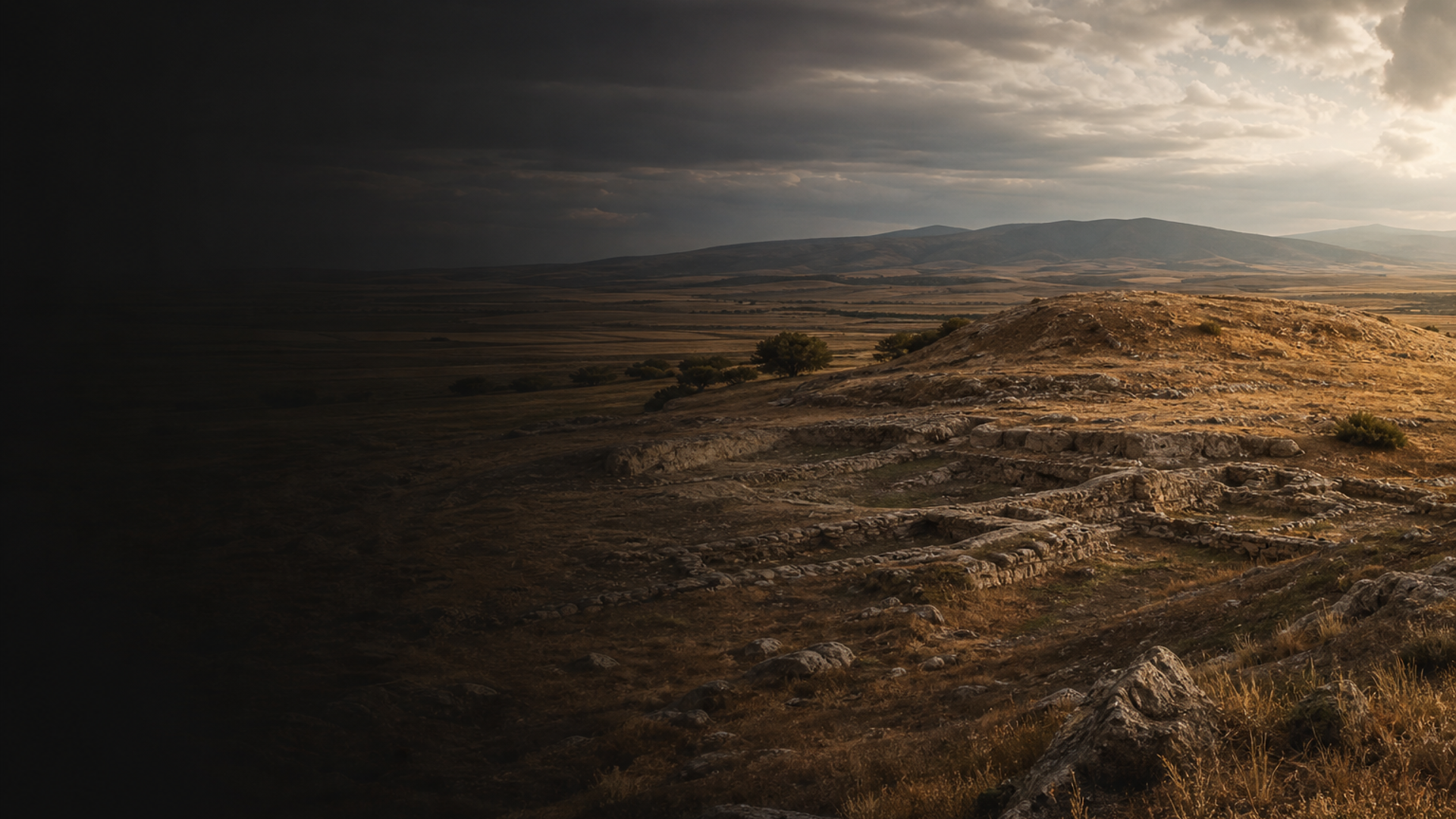
The remains attributed to Bulgaria_BeliBreyag_EBA come from the vicinity of Nova Zagora (Beli Breyag) and sit within the broad Early Bronze Age span of 3400–1600 BCE. Archaeological data indicates this part of the eastern Balkans was a crossroads where local Neolithic traditions intersected with emerging Bronze Age technologies and exchange networks. Landscapes of rolling plains and river valleys funneled people, goods and ideas between the Aegean, Thrace and the Danubian world.
Limited evidence from the site itself means reconstruction is cautious: funerary deposits and settlement traces suggest continuity of local lifeways alongside innovations in metallurgy and mobility. The genetic signal recovered so far — both male individuals carrying Y-haplogroup I — aligns with lineages known in Mesolithic and Neolithic Balkan populations, hinting at regional continuity of male lines into the Early Bronze Age. However, with only two samples available, claims about migration, demographic turnover, or social structure remain provisional. Further excavation and DNA sampling across contemporary sites are needed to resolve whether Beli Breyag reflects a persistent local population, incoming groups, or a mixture of both.