انتقل إلى المحتوى الرئيسي
ملفات الحمض النووي

Kongemose Denmark: Coastal Foragers

Middle Mesolithic coastal communities of Denmark seen through archaeology and DNA

6468 CE - 5072 BCE
Denmark (Zealand, Funen, Falster, Jutland)

القصة

Denmark_MM_Kongemose (6468–5072 BCE): eight Mesolithic individuals from coastal Danish sites link Kongemose archaeology with DNA—Y haplogroup I and mtDNA U/K1e dominate. Limited samples suggest continuity with Western Hunter‑Gatherers and regional coastal adaptations.

Time Period

6468–5072 BCE

Region

Denmark (Zealand, Funen, Falster, Jutland)

Common Y-DNA

I (predominant in samples)

Common mtDNA

U (major), K1e

الخط الزمني

6468 BCE

Earliest dated Kongemose individuals

Radiocarbon dates mark the beginning of the sampled Kongemose horizon in Denmark, around 6468 BCE, tied to coastal foraging sites.

Origins & Emergence

The Kongemose horizon in Denmark unfolds along a drowned shoreline: a weave of sandbanks, lagoons and rich fishing grounds that shaped Mesolithic lifeways from roughly 6500 to 5000 BCE. Archaeological data indicates a continuity of hunter‑gatherer economies following the earlier Maglemosian traditions, with new emphasis on marine resources and specialized microlithic toolkits. Sites sampled here—Orehoved Sejlrende (Falster), Korsør Nor (Zealand), Vedbæk Boldbaner (Zealand), Tybrind Vig (Funen), Tudse Hage (Zealand) and Rønsten (Jutland)—preserve flint scatters, shell middens and, at some localities, burials or inhumation traces.

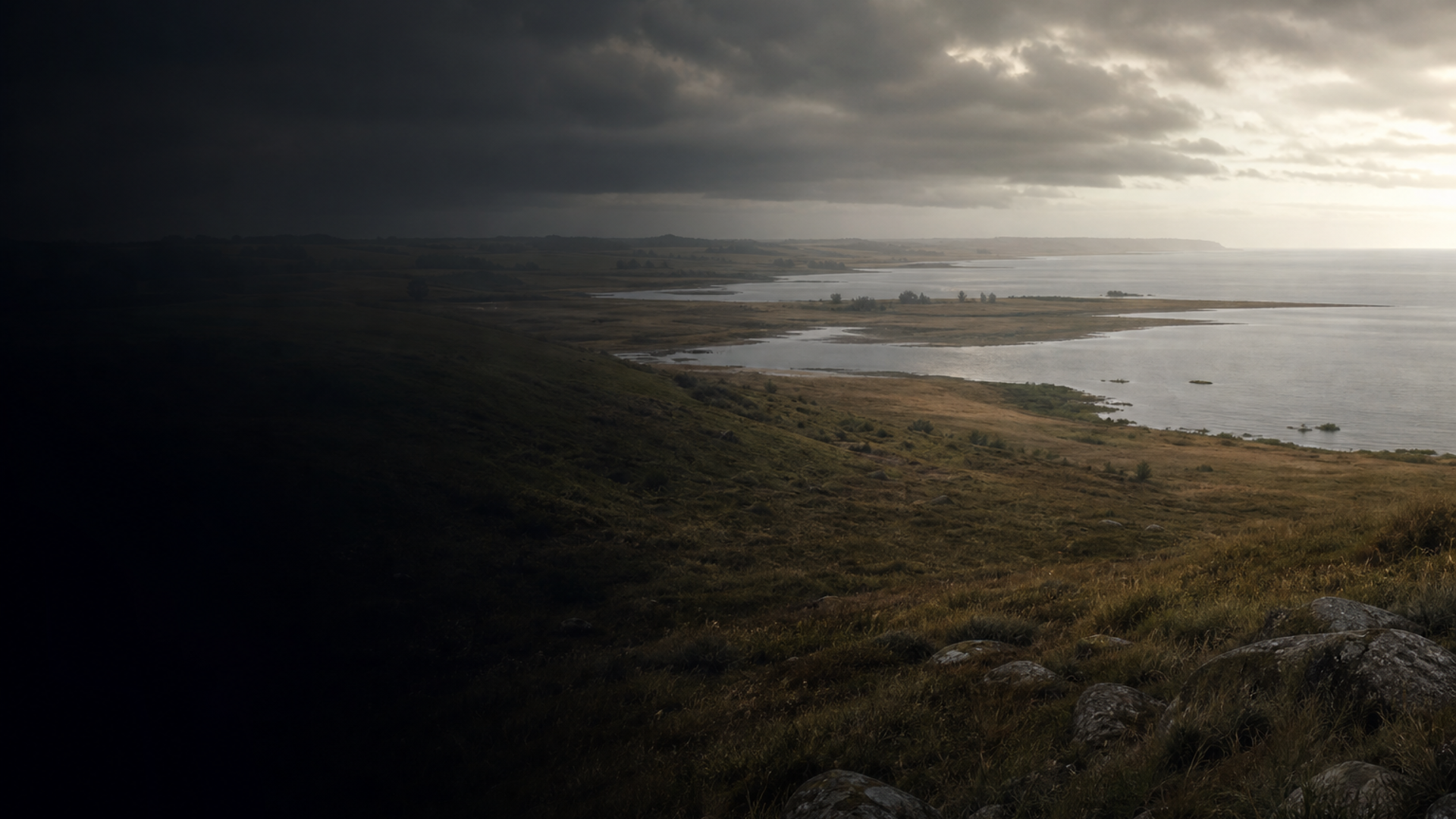
The coastal setting is cinematic: low, forested skerries giving way to tidal flats where seals, fish and migratory birds concentrated. Sea‑level rise and local submergence mean many evidence-rich contexts lie offshore; underwater archaeology (e.g., Tybrind Vig) has revealed well‑preserved organic remains at waterlogged sites. Limited evidence suggests regional networks of raw material exchange and shared tool traditions across the Danish archipelago, but variability between sites shows local adaptations to shoreline microenvironments.

Because the genetic sample set is small, interpretations about population continuity and mobility remain provisional. Archaeological data indicates the Kongemose phenomenon is best understood as a mosaic of coastal foraging lifeways rather than a single uniform culture.

  • Emerges after Maglemosian traditions, active ca. 6468–5072 BCE
  • Centered on coastal and nearshore resources; several submerged sites
  • Local variability with shared microlithic tool traditions

Daily Life & Society

Material traces evoke a daily rhythm attuned to tides and seasons. Shell middens and fish bone concentrations point to diets heavy in marine protein—sea fish, shellfish and seals supplemented by hunted game and gathered plants. Flint tools include small, carefully retouched microliths and axes suited for boat use, hide preparation and woodworking. Wooden platforms and paddles have been recovered from waterlogged contexts elsewhere in the region, suggesting small craft and coastal navigation were integral to subsistence.

Burial practices at affiliated Vedbæk contexts and isolated inhumations indicate social recognition of the dead, sometimes accompanied by ochre and grave goods; preservation varies by site. The spatial distribution of lithic raw materials shows mobility along shorelines and exchange between islands, implying seasonal rounds and inter‑site ties. Artifacts and ecofacts together paint a picture of relatively small, flexible groups with deep ecological knowledge of estuaries and tidal systems.

Archaeological data indicates resilience in the face of environmental change: groups adjusted foraging strategies as shorelines shifted. Still, many site contexts are fragmentary or submerged; therefore reconstructions of social organization and demographic scale remain cautious.

  • Coastal foraging focused on fish, shellfish, seals and seasonal game
  • Small, mobile groups using boats and microlithic toolkits

Genetic Profile

Ancient DNA from eight individuals assigned to the Denmark_MM_Kongemose dataset offers a first molecular glimpse into Middle Mesolithic coastal Denmark. Y‑chromosome results show haplogroup I in four sampled males, consistent with patterns seen among European Mesolithic hunter‑gatherers in northern and western Europe. Maternal lineages are dominated by mtDNA U haplotypes (six individuals) with two carryings of K1e — a distribution that echoes the strong presence of U‑lineages among Western Hunter‑Gatherers (WHG) and occasional branches of K in Mesolithic and early Neolithic contexts.

Genomic profiles indicate substantial affinity to WHG ancestry components; this supports archaeological interpretations of continuity from earlier Mesolithic populations in the region. Because only eight individuals are represented, and Y‑calls cover half of those, conclusions about population structure, sex‑biased mobility, or admixture with incoming Neolithic farmers must remain preliminary. Limited evidence suggests local continuity rather than wholesale population replacement during the Kongemose horizon, but low sample numbers (<10) mean that rare ancestries or transient contacts could be undetected.

Future sampling from additional inland and submerged sites, and higher coverage genomes, are required to resolve questions of kinship, migration rates, and interactions with contemporaneous groups.

  • Y‑DNA: haplogroup I in 4 males — aligns with Mesolithic European hunter‑gatherers
  • mtDNA: U predominant (6), K1e present (2); supports WHG maternal continuity

Legacy & Modern Connections

The Kongemose coastal foragers shaped a deep ecological heritage in the Danish archipelago. Their strategies—maritime mobility, specialized fishing, and intimate knowledge of tidal landscapes—prefigured later coastal economies in northern Europe. Genetically, elements of Mesolithic hunter‑gatherer ancestry persist in the genetic substratum of later European populations, detectable as WHG‑related components in ancient and modern genomes.

While these eight genomes offer tantalizing links between artifact, environment and biology, the picture is still partial. Limited sample size and the patchy preservation of coastal sites mean that connections to modern Danish populations should be portrayed cautiously. Archaeology and aDNA together underline the long human story written along Denmark’s shores: a sequence of adaptation, resilience and exchange that set the stage for subsequent Neolithic transformations.

  • Contributes to the WHG genetic legacy in northern Europe
  • Demonstrates long‑term coastal adaptations that influenced later societies

مساعد الذكاء الاصطناعي

مساعد الذكاء الاصطناعي من DNA Genics

فتح هذه الميزة
اطرح أسئلة عن ثقافة Kongemose Denmark: Coastal Foragers. يمكن للمساعد شرح النتائج الجينية والسياق التاريخي والأدلة الأثرية والصلات بالعصر الحديث.
مثال على تحليل بالذكاء الاصطناعي

لمحة عن ثقافة Kongemose Denmark: Coastal Foragers

تساعد عينات الحمض النووي القديم الباحثين على دراسة أنماط الهجرة والعلاقات الجينية بين المجموعات السكانية القديمة.

هذه معاينة للتحليل. يتيح المساعد الكامل استكشاف الموضوعات التالية:

  • التركيب الجيني والأصول
  • أنماط الهجرة والأصول
  • الحياة اليومية والممارسات الثقافية
  • الإرث الجيني المعاصر