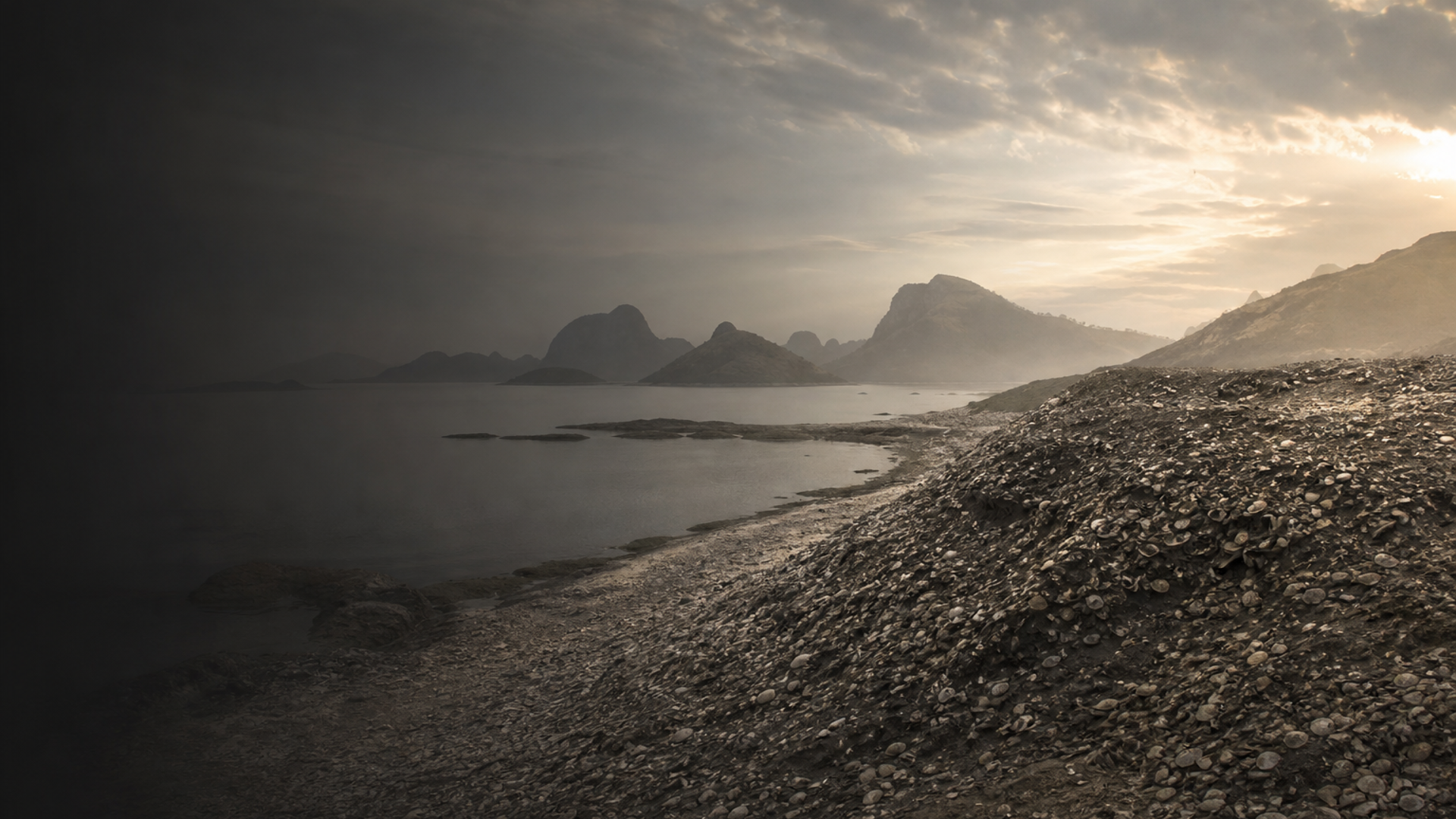
The lives of Limão's inhabitants can be imagined through layers of shell, discarded fish bone and worked stone: a rhythm set by tides and seasons. Archaeological data indicates economies focused on marine resources—fish, mollusks and marine mammals—combined with hunting and gathering on nearby dunes and forest edges. Shell mounds themselves functioned as refuse deposits, landscape markers and, in some cases, cemeteries; human remains recovered in sambaquis preserve clues about diet, health and social practice.
Material culture from regional sambaquis includes worked shell tools, stone implements and, in later horizons, ceramics—each signaling adaptations to coastal life and contacts across the littoral. Spatial patterning within mounds suggests repeated habitation loci, communal processing areas and possibly ritual spaces. Ethnographic analogy and zooarchaeological analysis indicate seasonal scheduling of resource extraction and sharing networks that knitted coastal hamlets together.
Archaeological interpretation must remain tentative: site formation processes, shell acidification and post-depositional mixing can complicate readings of activity areas and social organization. Nevertheless, the sambaqui record at Limão preserves a powerful, tangible story of resilience and intimate knowledge of the sea.