Limão Sambaqui: Coastal Ancestors

Download PDF creates a visual, rasterized copy. Use Print for selectable text and better assistive-technology support.

Skip to main content
Civilization Spotlight

Limão Sambaqui: Coastal Ancestors

Shell-mound people of Brazil's southeast coast, 850 BCE–1650 CE, linked to Native American lineages

850 BCE - 1650 CE
Sambaqui do Limão, Southeast Coast, Brazil

The Story

Archaeological and genetic data from Sambaqui do Limão (SE Brazil) reveal coastal shell-mound lifeways between 850 BCE and 1650 CE. Limited ancient DNA (n=4) shows Y haplogroup Q and mtDNA A, D, C1b, consistent with broader Native American founding lineages.

Time Period

850 BCE – 1650 CE

Region

Sambaqui do Limão, Southeast Coast, Brazil

Common Y-DNA

Q (1 of 4)

Common mtDNA

A (2), D (1), C1b (1)

Timeline

2500 BCE

Sambaqui tradition established in the region (approx.)

Approximate emergence of widespread shell-mound building along parts of Brazil's coast; local practices later produce sites like Sambaqui do Limão. Dating and intensity vary by locality and require finer chronological control.

Origins & Emergence

Along the limestone and sandy curves of Brazil's southeast coast, people accumulated layers of shell, bone and artifact into monumental mounds called sambaquis. Archaeological data indicates that the local Sambaqui of Limão developed within a long coastal tradition of shell-mound building. Radiocarbon dates from nearby sambaqui complexes span millennia, and materials from Sambaqui do Limão sampled in this study fall between 850 BCE and 1650 CE, suggesting long-term use and episodic occupation of the shoreline.

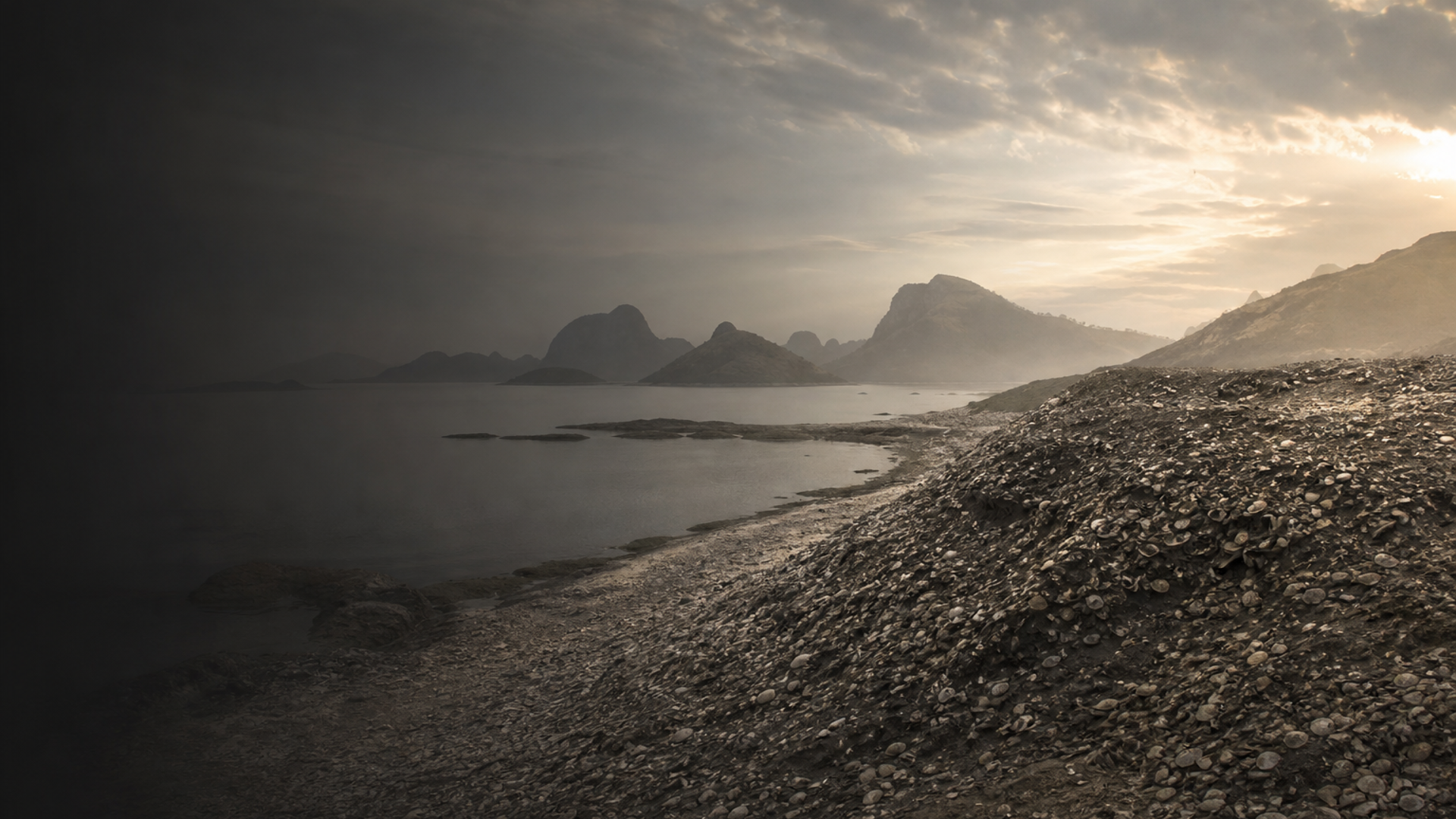
Cinematic scenes of tidal flats and packed layers of shell evoke a daily economy anchored to the sea, but the archaeological record also registers mobility, terrestrial resource use and ritualized burial in some sambaquis. Limited evidence suggests continuity of coastal lifeways alongside episodic interactions with interior groups. Cultural continuity at the site is inferred from stratigraphic accumulation and repeated depositional episodes, though exact cultural affiliations change through time.

Because the sampled assemblage is small and geographically restricted, claims about origins should be cautious. Archaeological data indicates a regional pattern of coastal adaptation rather than a single, uniform society. Ongoing excavation, stratigraphic analysis and additional dating are needed to resolve timing, intensity and cultural connections more precisely.

  • Sambaqui do Limão is part of the broader Sambaqui shell-mound tradition on Brazil's southeast coast
  • Dates for sampled material: 850 BCE – 1650 CE
  • Long-term coastal accumulation reflects repeated occupation and complex depositional practices

Daily Life & Society

The lives of Limão's inhabitants can be imagined through layers of shell, discarded fish bone and worked stone: a rhythm set by tides and seasons. Archaeological data indicates economies focused on marine resources—fish, mollusks and marine mammals—combined with hunting and gathering on nearby dunes and forest edges. Shell mounds themselves functioned as refuse deposits, landscape markers and, in some cases, cemeteries; human remains recovered in sambaquis preserve clues about diet, health and social practice.

Material culture from regional sambaquis includes worked shell tools, stone implements and, in later horizons, ceramics—each signaling adaptations to coastal life and contacts across the littoral. Spatial patterning within mounds suggests repeated habitation loci, communal processing areas and possibly ritual spaces. Ethnographic analogy and zooarchaeological analysis indicate seasonal scheduling of resource extraction and sharing networks that knitted coastal hamlets together.

Archaeological interpretation must remain tentative: site formation processes, shell acidification and post-depositional mixing can complicate readings of activity areas and social organization. Nevertheless, the sambaqui record at Limão preserves a powerful, tangible story of resilience and intimate knowledge of the sea.

  • Economy centered on marine resources with complementary terrestrial foraging
  • Shell mounds served practical and symbolic roles, sometimes containing burials

Genetic Profile

Ancient DNA from four individuals excavated at Sambaqui do Limão provides a preliminary genetic window into these coastal peoples. The small sample (n=4) limits broad inference, but the observed lineages align with pan-American founding haplogroups: one Y-chromosome Q lineage and mitochondrial haplogroups A (2 individuals), D (1) and C1b (1). These haplogroups are widely documented among Indigenous populations across the Americas and are consistent with deep ancestral connections to initial peopling events.

Archaeogenetic patterns suggest continuity with broader Native American genetic diversity rather than clear signals of outside gene flow at the time ranges sampled. However, the temporal span of the samples—covering nearly two millennia—means genetic stability could reflect long-term local continuity or repeated admixture within an already diverse indigenous population. Limited sampling makes it impossible to detect subtle demographic events, sex-biased migration or fine-scale population structure.

Future work integrating isotopic data, additional genomes and comparative datasets from other sambaqui sites will be essential to test hypotheses about coastal mobility, kinship practices and connections to interior groups. For now, the genetic evidence responsibly complements archaeological narratives, reinforcing that the Limão inhabitants carried lineages characteristic of Native American ancestral populations.

  • Observed Y-DNA: Q (consistent with Native American paternal lineages)
  • Observed mtDNA: A (2), D (1), C1b (1); small sample size (n=4) — conclusions preliminary

Legacy & Modern Connections

The sambaquis are not only archaeological features but enduring elements of coastal heritage. Contemporary Indigenous and local communities on Brazil's coast inherit landscapes shaped by past resource management and ritual deposition. Genetic affinities observed at Limão echo broader Indigenous continuities across the Americas, but it is essential to avoid simplistic ancestral claims given the limited samples.

Archaeological outreach and inclusive research partnerships can help translate scientific findings into narratives that respect descendant communities. As more genetic data become available, patterns of kinship, mobility and cultural exchange will emerge with greater clarity, deepening understanding of how coastal peoples adapted and persisted through centuries of environmental and social change.

  • Sambaquis form part of living cultural landscapes and local memory
  • Genetic links align with Indigenous American lineages, but broader conclusions require more samples

AI Assistant

AI Assistant by DNAGENICS

Unlock this feature
Ask questions about the Limão Sambaqui: Coastal Ancestors culture. Our AI assistant can explain genetic findings, historical context, archaeological evidence, and modern connections.
Sample AI Analysis

The Limão Sambaqui: Coastal Ancestors culture represents a fascinating chapter in human history...

Genetic analysis reveals connections to earlier populations while showing evidence of unique adaptations and cultural innovations. The ancient DNA samples provide insights into migration patterns, social structures, and the biological relationships between ancient populations.

This is a preview of the AI analysis. Unlock the full AI Assistant to explore detailed insights about:

  • Genetic composition and ancestry
  • Migration patterns and origins
  • Daily life and cultural practices
  • Modern genetic legacy
Use code for 30% off • Expires Nov 15