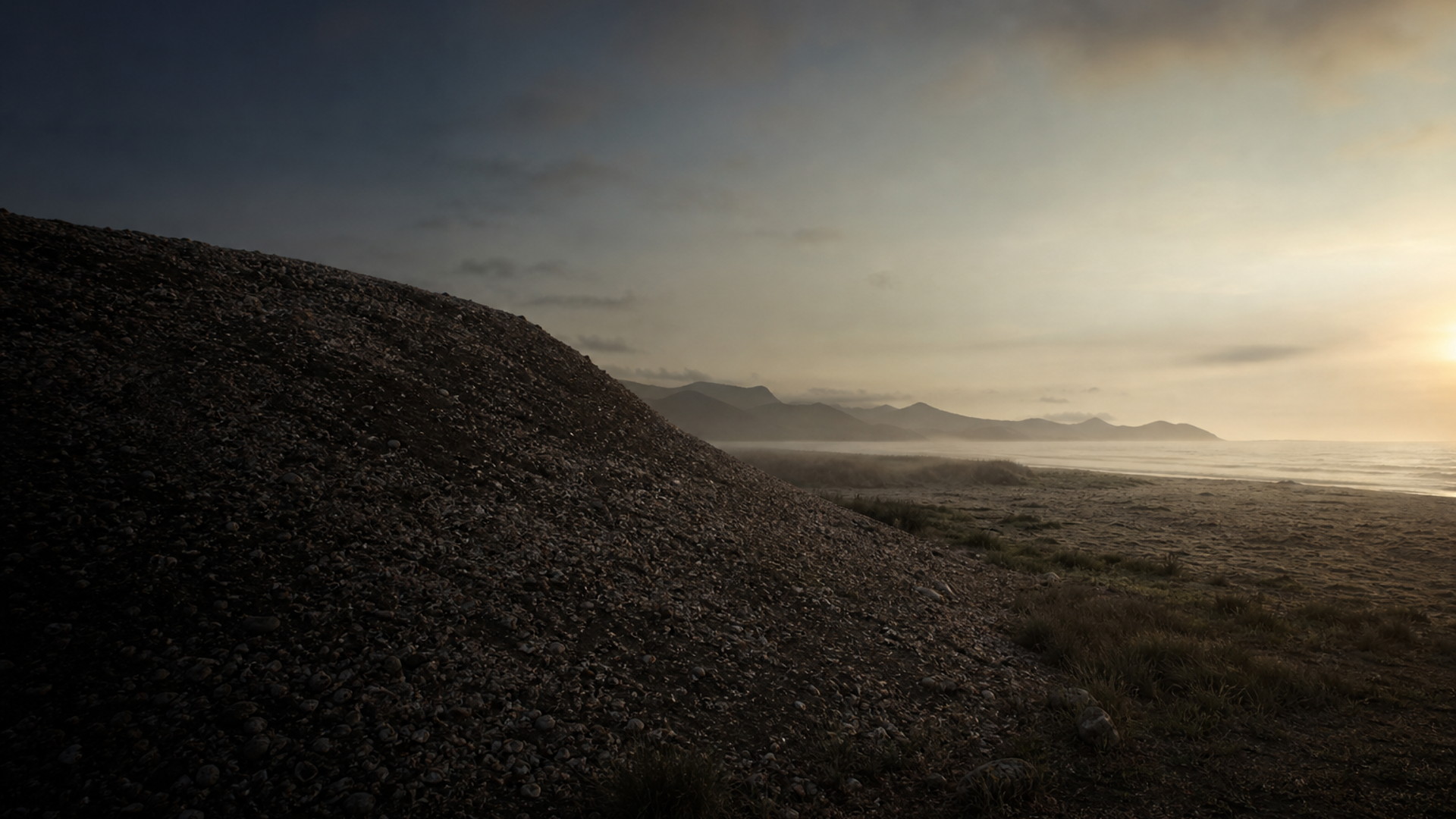
Life at a sambaqui like Limão would have been shaped by the rhythm of tides and seasonal fish migrations. Archaeological remains from sambaqui contexts typically include abundant shellfish remains (mollusks and crustaceans), fish bone, occasional mammal remains, and worked shell ornaments—evidence of both subsistence specialization and craft. Hearths, bone fragments and fragmented lithics preserved within the mounds speak to repeated meals, tool repair and communal activities.
Burials interleaved with midden deposits indicate that these mounds were also places of memory. Human remains found in some sambaquis show intentional placement, sometimes accompanied by shell or bead offerings, suggesting social practices that tied the living to ancestors and to place. Mobility patterns likely combined local coastal foraging with short-range exchange networks; boat use is inferred from the marine-focused economy, though direct evidence (boat remains) is rarely preserved.
Archaeobotanical data are sparse for many sambaqui sites, so the extent of plant use or small-scale cultivation at Limão remains uncertain. Overall, the archaeological picture is of highly skilled maritime foragers whose material culture and monumental middens expressed both daily subsistence and long-term social ties to the shore.