Limão Sambaqui: Coastal Echoes (2700 BP)

Download PDF creates a visual, rasterized copy. Use Print for selectable text and better assistive-technology support.

Zum Hauptinhalt springen
Zivilisations-Spotlight

Limão Sambaqui: Coastal Echoes (2700 BP)

A single ancient genome from Sambaqui do Limão illuminates coastal lifeways and Native American lineages

811 CE - 5712700 BCE
Southeast Coast, Brazil (Sambaqui do Limão)

Die Geschichte

Archaeological evidence from Sambaqui do Limão (811–571 BCE) ties shell-mound builders of Brazil's southeast coast to Indigenous American genetic lineages (Y‑Q, mtDNA‑D). Limited sampling (n=1) makes conclusions preliminary, but this find offers a vivid link between maritime lifeways and ancestral DNA.

Time Period

811–571 BCE (~2700 BP)

Region

Southeast Coast, Brazil (Sambaqui do Limão)

Common Y-DNA

Q (1 sample)

Common mtDNA

D (1 sample)

Zeitleiste

2500 BCE

Widespread sambaqui formation begins in some regions

Shell-mound building becomes a prominent coastal strategy in parts of Brazil, creating long-term habitation and burial sites.

Origins & Emergence

A long scar of shells along Brazil's southeast coast marks the presence of sambaqui builders—communities who accumulated vast middens of shellfish, bone and charcoal that endured as landscape monuments for millennia. Sambaqui do Limão sits within this broader Sambaqui Culture of Limão tradition and dates to roughly 811–571 BCE (radiocarbon-calibrated range for the sampled individual). Archaeological data indicates these mounds functioned as persistent occupation loci, food processing stations and burial places.

The sambaqui phenomenon is not a single event but a mosaic of coastal adaptations: episodic seaside aggregation, intensive shellfish harvesting, and craft production (shell ornaments, simple tools). Limited evidence suggests local variation in mound size and use across the southeast coast, reflecting changing environments and social networks. At Limão, stratified shell deposits and associated cultural debris signal repeated human presence through seasons and generations.

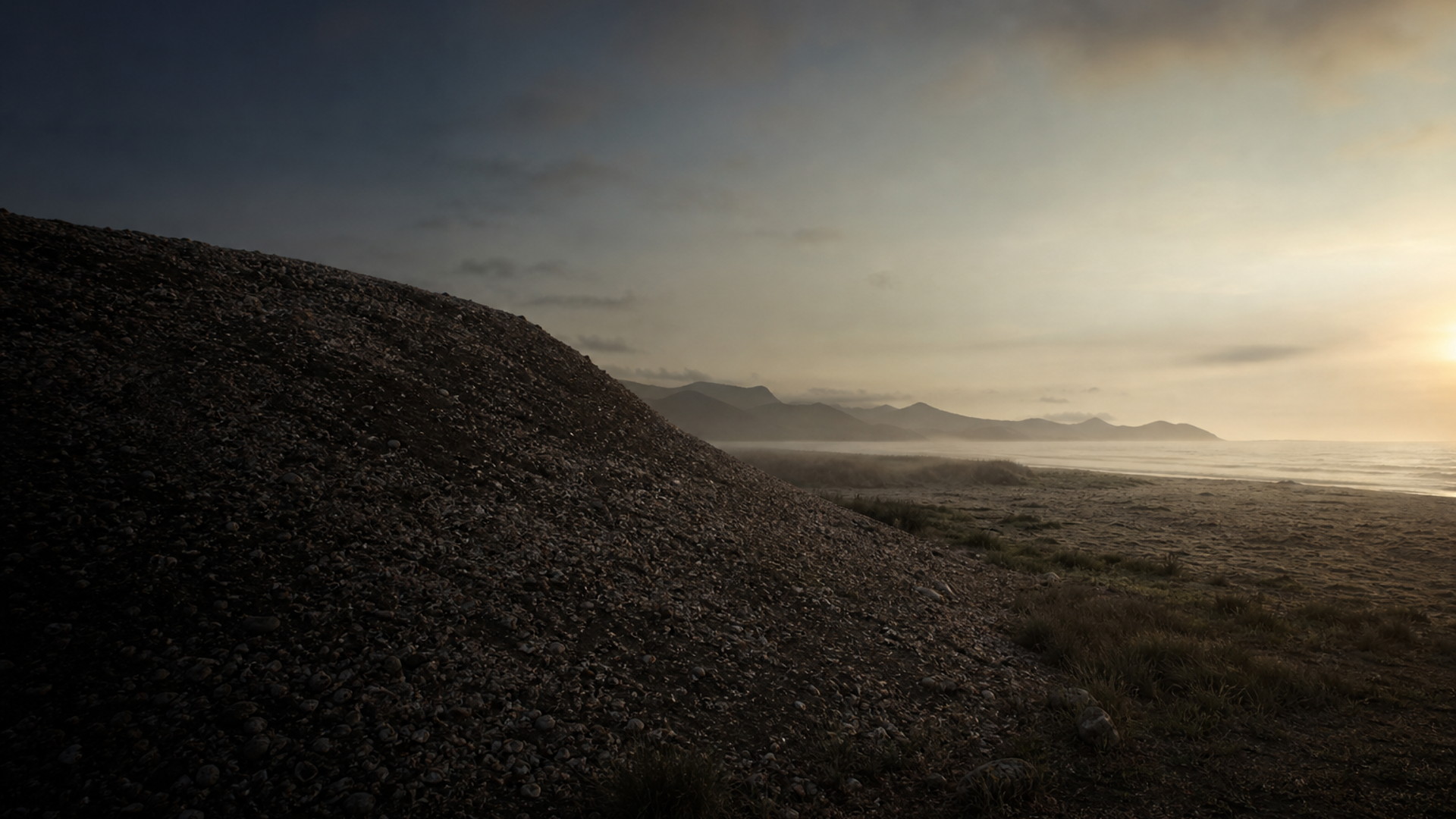
These coastal monuments are cinematic in scale—white-tipped shells layered into artificial hills—and they anchor narratives of endurance and maritime knowledge along Brazil's shoreline. While archaeological traces chart the contours of daily life, ancient DNA from the site provides a complementary, molecular window into ancestry and connection.

  • Sambaqui do Limão: shell-mound site on Brazil's southeast coast
  • Date for the sampled individual: 811–571 BCE (~2700 BP)
  • Sambaqui sites served as occupations, processing areas and burial places

Daily Life & Society

Life at a sambaqui like Limão would have been shaped by the rhythm of tides and seasonal fish migrations. Archaeological remains from sambaqui contexts typically include abundant shellfish remains (mollusks and crustaceans), fish bone, occasional mammal remains, and worked shell ornaments—evidence of both subsistence specialization and craft. Hearths, bone fragments and fragmented lithics preserved within the mounds speak to repeated meals, tool repair and communal activities.

Burials interleaved with midden deposits indicate that these mounds were also places of memory. Human remains found in some sambaquis show intentional placement, sometimes accompanied by shell or bead offerings, suggesting social practices that tied the living to ancestors and to place. Mobility patterns likely combined local coastal foraging with short-range exchange networks; boat use is inferred from the marine-focused economy, though direct evidence (boat remains) is rarely preserved.

Archaeobotanical data are sparse for many sambaqui sites, so the extent of plant use or small-scale cultivation at Limão remains uncertain. Overall, the archaeological picture is of highly skilled maritime foragers whose material culture and monumental middens expressed both daily subsistence and long-term social ties to the shore.

  • Maritime-focused diet: shellfish, fish, and coastal resources
  • Middens functioned as living spaces and burial contexts

Genetic Profile

Ancient DNA from the Limão individual reveals Y‑chromosome haplogroup Q and mitochondrial haplogroup D—both recognized as founding Native American lineages widespread across the Americas. These molecular markers complement the archaeological narrative: the individual from Sambaqui do Limão carried genetic signatures consistent with long-standing Indigenous ancestry on the continent.

Crucially, only a single genome (n=1) is available from this context. When sample counts are low, population-level inferences—such as continuity, admixture, or sex-biased migration—remain highly provisional. Archaeogeneticists therefore present these results as a cautious data point: the Limão genome aligns with broader patterns of Indigenous American haplogroups but cannot alone resolve regional demographic history.

Where larger ancient DNA datasets exist along the South American coast, researchers can begin to test questions about coastal continuity, inland interaction, and the spread of cultural practices like mound-building. For Limão, future sampling across nearby sambaquis and comparative analyses with inland and later-time populations will be essential to determine whether the genetic signal observed here reflects a local lineage, wider coastal ancestry, or episodic gene flow.

  • Y‑DNA: haplogroup Q — a pan‑American founding lineage
  • mtDNA: haplogroup D — matches Indigenous American maternal lineages

Legacy & Modern Connections

Sambaqui do Limão's layered shells and the DNA recovered from a single individual create a poignant bridge between past and present. For modern Indigenous and coastal communities, sambaquis are landmarks of ancestral stewardship of marine landscapes. Archaeological data indicates that these mounds are both ecological archives and cultural monuments, preserving stories of diet, craft and social identity.

Genetic data, while limited in this case, can contribute to broader conversations about ancestry and continuity when used respectfully and in partnership with descendant communities. The Limão genome offers a preliminary molecular echo of coastal lifeways: a reminder that the people who built and inhabited sambaquis were part of expansive Indigenous histories whose living descendants continue to shape Brazil's cultural tapestry. Continued interdisciplinary work—combining archaeology, ancient DNA, and community collaboration—will deepen our understanding of these coastal legacies.

  • Sambaquis remain cultural landmarks and ecological archives
  • Single-sample genetics can inform ancestry but require community engagement and more data

KI-Assistent

KI-Assistent von DNAGENICS

Funktion freischalten
Stellen Sie Fragen zur Kultur Limão Sambaqui: Coastal Echoes (2700 BP). Unser KI-Assistent kann genetische Befunde, historischen Kontext, archäologische Belege und moderne Verbindungen erläutern.
Beispiel einer KI-Analyse

Die Limão Sambaqui: Coastal Echoes (2700 BP)-Kultur ist ein faszinierendes Kapitel der Menschheitsgeschichte...

Genetische Analysen zeigen Übereinstimmungen mit früheren Populationen und Hinweise auf besondere Anpassungen und kulturelle Innovationen. Alte DNA-Proben liefern Einblicke in Migrationsmuster, soziale Strukturen und genetische Verbindungen zwischen Populationen.

Dies ist eine Vorschau der KI-Analyse. Schalten Sie den vollständigen KI-Assistenten frei, um detaillierte Einblicke zu erkunden:
  • Genetische Zusammensetzung und genetische Ähnlichkeit
  • Migrationsmuster und Ursprünge
  • Alltag und kulturelle Praktiken
  • Genetischer Bezug zu heutigen Populationen
Use code for 30% off • Expires Nov 15





