انتقل إلى المحتوى الرئيسي
ملفات الحمض النووي

Roman Anatolian Shores

Lives and maternal lineages from Apollonia to Yatağan in Roman-era Turkey

100 BCE - 476 CE
Turkey (Marmara & Aegean coasts)

القصة

Archaeological and genetic glimpses from four Roman-period burials (100 BCE–476 CE) at Apollonia (Gölyazı) and Yatağan necropole sites. mtDNA points to K, HV4, J lineages; conclusions are preliminary given small sample size.

Time Period

100 BCE - 476 CE

Region

Turkey (Marmara & Aegean coasts)

Common Y-DNA

Undetermined (limited male-line data)

Common mtDNA

K (2), HV4 (1), J (1)

الخط الزمني

100 BCE

Roman-era coastal occupation

Burials at Apollonia (Gölyazı) and Yatağan necropole sites date to the Roman period, reflecting coastal Anatolian communities active in Mediterranean networks.

Origins & Emergence

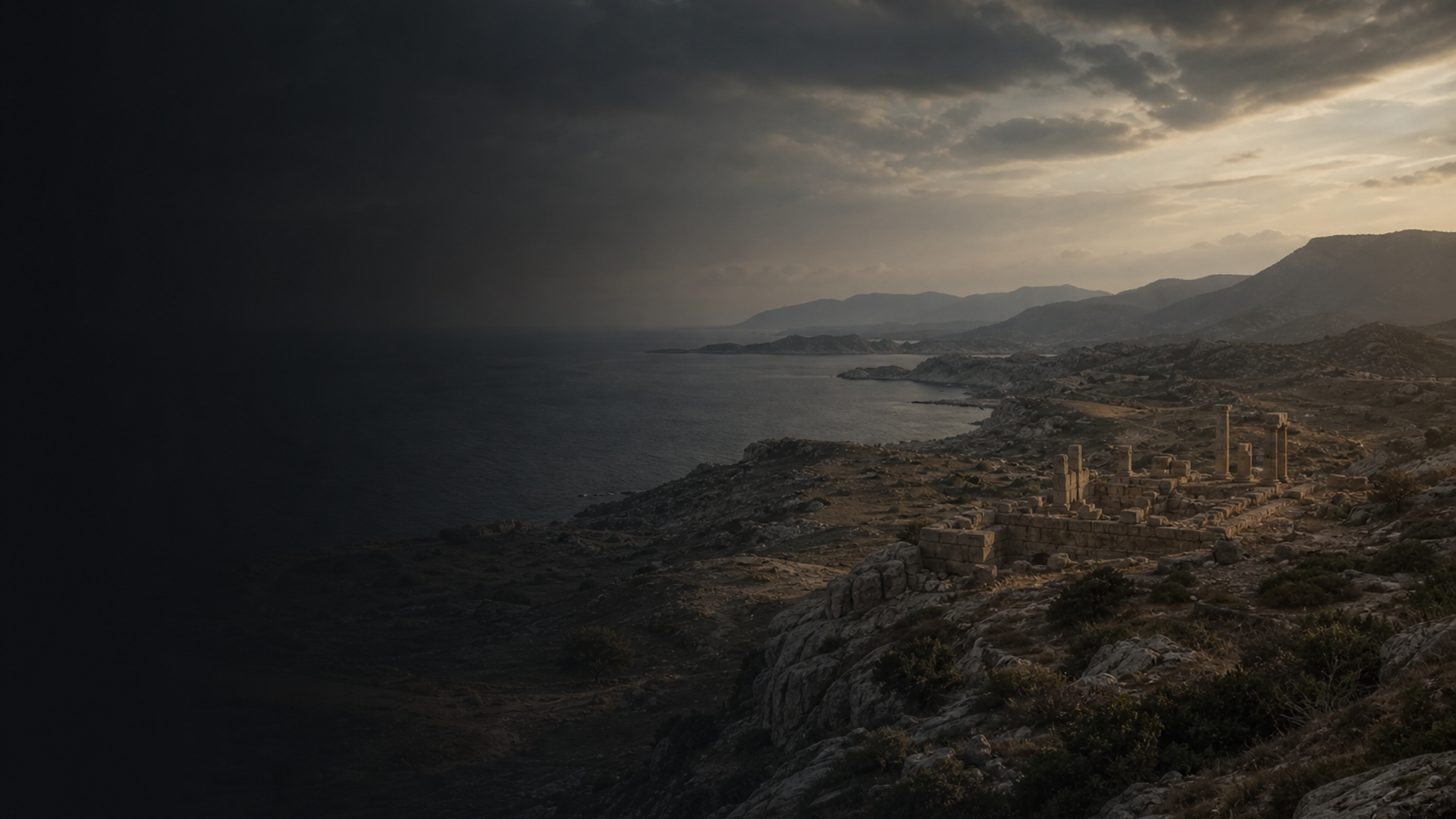
The human stories recovered at Apollonia (Marmara, Gölyazı) and the necropole sites of Camandras and Dalagöz (Yatağan, Muğla) unfold along the busy littoral of Roman Anatolia. Archaeological data indicates these burials date to the Roman Period (roughly 100 BCE–476 CE), a time when imperial administration, trade, and mobility reshaped coastal communities. Excavations at Gölyazı reveal layered occupation on a promontory once threaded with maritime routes; Yatağan’s necropole contexts are small cemetery clusters on the Aegean hinterland.

Material culture — pottery imports, locally produced amphorae, and funerary goods — points to towns plugged into Mediterranean exchange networks. Limited osteological evidence suggests typical Roman-era burial practices in the region, but preservation and small sample sizes constrain firm behavioral reconstructions. Genetic sampling from four individuals provides a delicate thread to trace maternal ancestries back into broader West Eurasian lineages, yet archaeological context remains essential: graves, grave goods, and landscape together narrate lives shaped by seafaring commerce, local traditions, and imperial ties.

Limited evidence suggests continuity of local Anatolian practices blended with Mediterranean influences rather than wholesale population replacement. Archaeological and genetic data together hint at a culturally plural shoreland where identities were negotiated in stone, clay, and bloodlines.

  • Sites: Apollonia (Gölyazı) and Camandras/Dalagöz (Yatağan necropole)
  • Dates: Roman Period, c. 100 BCE–476 CE
  • Evidence: small cemetery assemblages tied to coastal trade networks

Daily Life & Society

Cinematic scenes emerge from the archaeological record: fishermen hauling early-morning nets along the Marmara shoreline, traders bargaining amphorae of oil and wine in crowded harbors, and families gathering at modest homes behind stone-fronted streets. Excavated artifacts — domestic pottery, fishing gear, and imported finewares — imply a mix of subsistence activities and market-oriented exchange. Funerary context at Yatağan and Gölyazı suggests small, perhaps kin-linked burial plots rather than monumental necropoleis; these were communities of modest prosperity, shaped by regional commerce rather than elite display.

Social life in Roman Anatolia was layered. Local elites likely mediated imperial presence, while artisans and rural households maintained older Anatolian economic practices. Epigraphic and architectural parallels across the region indicate bilingual inscriptions and mixed artistic motifs, though such evidence is sparse at the sampled sites. Osteological indicators are limited but do not show extreme nutritional stress, suggesting resilient coastal economies. The archaeological record indicates a landscape of lived continuity: ancestral traditions adapted to the rhythms of Mediterranean trade and Roman administration.


Archaeological interpretations remain cautious: small burial assemblages and taphonomic loss mean many aspects of daily life — gender roles, craft specializations, and exact social stratification at these sites — are only partially visible.

  • Economy: local fishing, agriculture, and trade-linked crafts
  • Burials: modest cemeteries suggesting family or community plots

Genetic Profile

Four individuals sampled from Apollonia (Gölyazı) and the Yatağan necropole (Camandras, Dalagöz) yield mitochondrial DNA lineages that illuminate maternal ancestry patterns in Roman-period coastal Anatolia. The mtDNA haplogroups identified are K (two individuals), HV4 (one), and J (one). These maternal clades are widespread across Europe and western Asia in antiquity and today: haplogroup K is common in Neolithic and later European contexts, HV4 is a West Eurasian branch of HV, and J is frequent in both Near Eastern and Mediterranean populations.

Because Y-chromosome data are not reported or are insufficient for robust male-line inference, maternal lineages provide the primary genetic signal here. Archaeogenetic patterns are consistent with a mixed coastal population shaped by long-standing Anatolian roots and gene flow from Mediterranean and Near Eastern corridors. However, the sample count is very low (N=4). Limited evidence suggests these mtDNA lineages were present locally, but any broader claims about population structure, migration, or admixture during the Roman period in Anatolia must remain provisional.

Genetic and archaeological evidence together underscore Roman Anatolia as a node of connection: maternal lineages reflect regional continuity and mobility driven by trade and imperial networks. Future sampling with larger numbers and nuclear genome data would clarify degrees of local continuity versus incoming gene flow.

  • mtDNA: K (2), HV4 (1), J (1) — maternal links to West Eurasia
  • Sample size is small (N=4); conclusions are preliminary

Legacy & Modern Connections

The whisper of these four individuals reaches into the present in subtle ways. Haplogroups K, HV4, and J persist in modern populations across Anatolia, the Balkans, and the Mediterranean, suggesting threads of maternal continuity that survive centuries of cultural change. Archaeological continuity in settlement patterns along the Marmara and Aegean coasts, combined with genetic signals, supports a model of long-term regional resilience punctuated by episodes of mobility — traders, soldiers, and migrants moving along established routes.

Caution is essential: with only four mtDNA samples, we cannot assert direct descendancy from these particular individuals to any modern group. What emerges instead is a portrait of coastal Anatolia under Rome as both anchored and open — communities rooted in local landscapes yet receptive to people and ideas crossing the sea. Continued interdisciplinary sampling and ancient genome analyses will be needed to turn these preliminary glimpses into a fuller story of ancestry and cultural continuity in the region.

  • Maternal lineages seen here persist regionally but do not prove direct descent
  • Roman-era mobility likely contributed to the genetic tapestry of modern Anatolia

مساعد الذكاء الاصطناعي

مساعد الذكاء الاصطناعي من DNA Genics

فتح هذه الميزة
اطرح أسئلة عن ثقافة Roman Anatolian Shores. يمكن للمساعد شرح النتائج الجينية والسياق التاريخي والأدلة الأثرية والصلات بالعصر الحديث.
مثال على تحليل بالذكاء الاصطناعي

لمحة عن ثقافة Roman Anatolian Shores

تساعد عينات الحمض النووي القديم الباحثين على دراسة أنماط الهجرة والعلاقات الجينية بين المجموعات السكانية القديمة.

هذه معاينة للتحليل. يتيح المساعد الكامل استكشاف الموضوعات التالية:

  • التركيب الجيني والأصول
  • أنماط الهجرة والأصول
  • الحياة اليومية والممارسات الثقافية
  • الإرث الجيني المعاصر