Aonikenk of Magallanes

Download PDF creates a visual, rasterized copy. Use Print for selectable text and better assistive-technology support.

Bericht wird vorbereitet

Verfügbare Informationen und Referenzen werden geladen

Verbindung mit dem archäologischen Quellenbestand...

Alte Quellen werden zusammengestellt

Zum Hauptinhalt springen
Aonikenk of Magallanes
Zivilisations-Spotlight

Aonikenk of Magallanes

A single ancient genome from Cerro Johnny links archaeology and ancestry in southern Chile

141 CE - 1631 CE
Magallanes, Southern Chile (Cerro Johnny)
Scrollen zum Start
Kapitel I

Die Geschichte

Die Aonikenk of Magallanes-Kultur verstehen

One genome from Cerro Johnny (Magallanes, Chile) dated between 141–1631 CE provides a tantalizing glimpse of Aonikenk lifeways. Archaeological data and DNA (Y Q, mtDNA D) hint at continuity with Southern Cone populations; conclusions remain preliminary (n=1).

Time Period

141–1631 CE (sample range)

Region

Magallanes, Southern Chile (Cerro Johnny)

Common Y-DNA

Q (1 sample)

Common mtDNA

D (1 sample)

Kapitel II

Zeitleiste

Zentrale Momente in der Geschichte dieser Kultur

10000 BCE

Early peopling of the Southern Cone

Mobile hunter-gatherer groups spread into Patagonia and Tierra del Fuego, establishing the deep-time backdrop for later Aonikenk societies.

1500 CE

Cerro Johnny occupation (sample window)

The individual sampled at Cerro Johnny dates within this late precontact to early-contact window (141–1631 CE), offering a genomic snapshot of Magallanes ancestry.

Kapitel III

Origins & Emergence

The Aonikenk peoples of the Magallanes region occupy the wind-swept edges of the Southern Cone in both archaeological imagination and material remains. Archaeological data from sites across Tierra del Fuego and continental Patagonia indicate long-term hunter-gatherer occupations with adaptations to cold, open landscapes. Cerro Johnny, on the mainland of Magallanes, produced the single genome in this study dated between 141 and 1631 CE — a late Holocene window that sits within the broader Aonikenk cultural horizon.

Limited evidence suggests Aonikenk groups maintained mobile lifeways oriented around guanaco hunting, seasonal camps, and coastal foraging, though regional variation was substantial. Material culture—stone tools, bone implements, and ephemeral hearths—anchors them to a deep prehistory connected to earlier Southern Cone populations. Genetic continuity with earlier migrants to South America is plausible, but with only one sampled individual the pattern remains tentative. Archaeological context at Cerro Johnny provides the cultural frame; the ancient DNA offers a single thread that must be woven cautiously into the larger tapestry of southern prehistory.

  • Single genome from Cerro Johnny, Magallanes (141–1631 CE)
  • Archaeology indicates mobile hunter-gatherer settlements across Patagonia
  • Conclusions about origins are provisional given n=1
Kapitel IV

Daily Life & Society

Painted against ice-driven winds and open steppe, Aonikenk daily life was likely shaped by mobility, intimate ecological knowledge, and small social networks. Archaeological traces—lightweight stone toolkit fragments, bone points, and ephemeral hearth features—suggest short-term camps used seasonally for hunting and processing guanaco and marine resources. Clothing and technology inferred from ethnographic analogy and regional finds emphasize tailored skins and gear for cold conditions.

Social organization was probably fluid: small bands that aggregated and dispersed with resource availability. Ceremonial life and belief systems are poorly preserved at Cerro Johnny, so interpretations rely on broader regional patterns and Indigenous oral histories from later periods. Archaeobotanical preservation is limited in Magallanes, so plant use remains under-documented. In short, the archaeological record paints an image of resilient, adaptive communities whose material footprint is sparse but rich in behavioral signal.

  • Seasonal mobility and small-band organization inferred from site evidence
  • Material culture dominated by portable stone and bone implements
Kapitel V

Genetic Profile

The Cerro Johnny individual carries Y-chromosome haplogroup Q and mitochondrial haplogroup D — lineages commonly observed in Indigenous populations across the Americas. Haplogroup Q on the Y-chromosome is a recurring signal among Native American male lineages, while mtDNA D sits within the set of founding maternal lineages identified throughout South America. These assignments are consistent with deep ancestry stemming from Pleistocene and early Holocene peopling of the continent.

However, the genetic picture from this locus is necessarily limited. With a sample count of one, population-level inferences (such as continuity, admixture, or microevolutionary change) are highly provisional. Archaeogenetic comparisons to other Southern Cone samples suggest regional affinities but also underscore heterogeneity: coastal, steppe, and Fuegian groups show both shared ancestry and localized differentiation. Future sampling from Cerro Johnny and neighboring sites in Magallanes would be required to test hypotheses about migrations, demographic stability, and contact dynamics. For now, the DNA from Cerro Johnny provides a single, evocative data point that dovetails with archaeological interpretations but stops short of definitive population history.

  • Y-haplogroup Q and mt-haplogroup D align with broader Native American lineages
  • Single-sample (n=1) status makes population-level conclusions preliminary
Kapitel VI

Legacy & Modern Connections

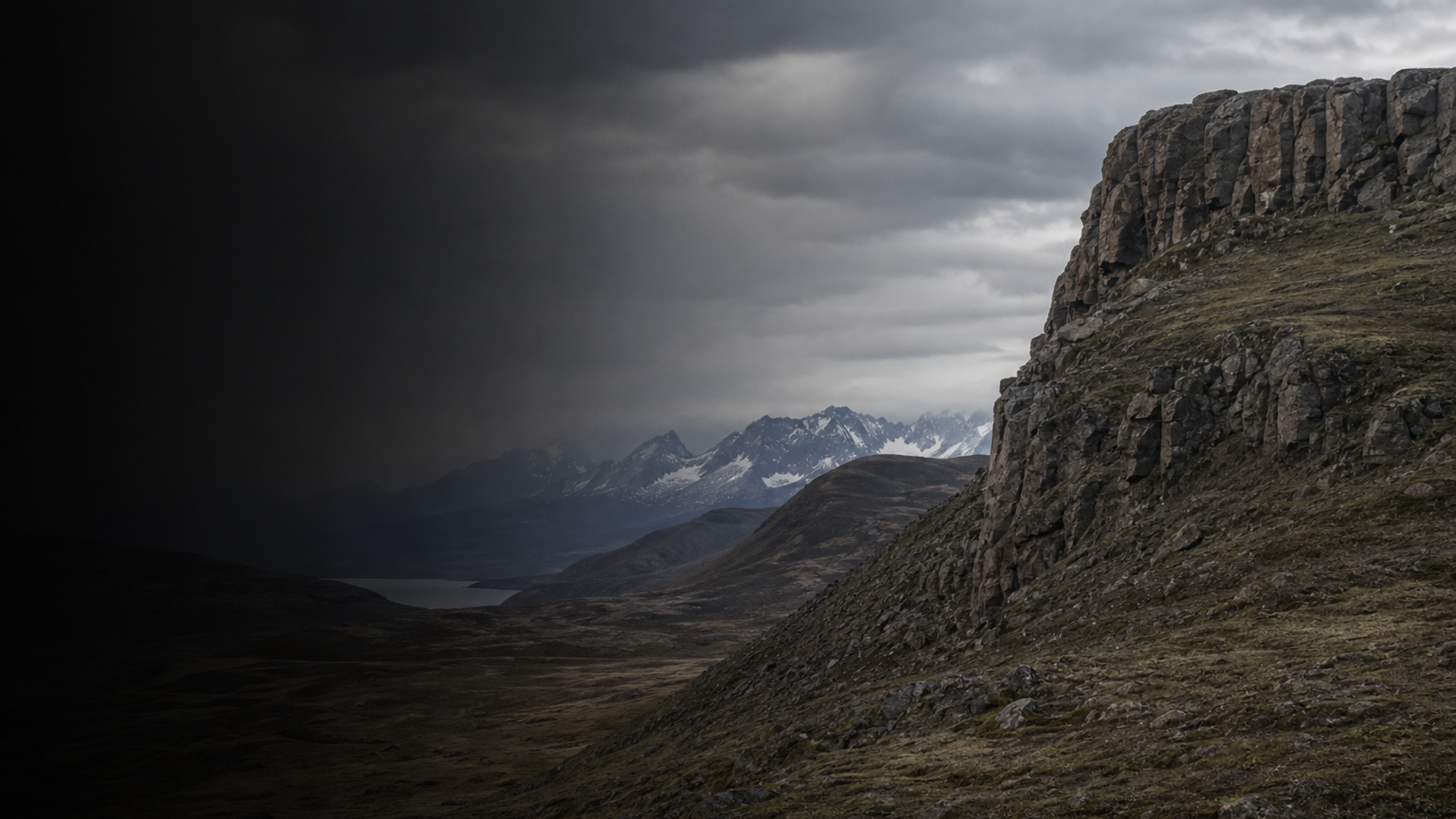
The Cerro Johnny genome ties a human presence to the landscapes of Magallanes and invites reflection on continuity between past and present Indigenous communities. Archaeological continuity in tool forms and foraging strategies, together with genetic markers common across the Southern Cone, suggest threads of ancestry that reach into modern populations—though the strength and direction of those threads require more data.

Respectful engagement with descendant communities, expanded ancient DNA sampling, and integrated archaeological research are crucial to transform this solitary signal into a robust narrative. Until then, the legacy of the Aonikenk at Cerro Johnny remains a powerful reminder of lives adapted to extreme environments, preserved in bone, stone, and a single genome that links past peoples to the genetic landscape of Chile today.
  • DNA hints at ancestral ties to broader Southern Cone populations
  • Further sampling and collaboration with descendant communities are essential
KI-gestützt

KI-Assistent

Stellen Sie Fragen zur Aonikenk of Magallanes-Kultur

KI-Assistent von DNAGENICS

Funktion freischalten
Stellen Sie Fragen zur Kultur Aonikenk of Magallanes. Unser KI-Assistent kann genetische Befunde, historischen Kontext, archäologische Belege und moderne Verbindungen erläutern.

Beispiel einer KI-Analyse

Die Aonikenk of Magallanes-Kultur ist ein faszinierendes Kapitel der Menschheitsgeschichte...

Genetische Analysen zeigen Übereinstimmungen mit früheren Populationen und Hinweise auf besondere Anpassungen und kulturelle Innovationen. Alte DNA-Proben liefern Einblicke in Migrationsmuster, soziale Strukturen und genetische Verbindungen zwischen Populationen.

Dies ist eine Vorschau der KI-Analyse. Schalten Sie den vollständigen KI-Assistenten frei, um detaillierte Einblicke zu erkunden:

  • Genetische Zusammensetzung und genetische Ähnlichkeit
  • Migrationsmuster und Ursprünge
  • Alltag und kulturelle Praktiken
  • Genetischer Bezug zu heutigen Populationen

Weitere antike Kulturen erkunden

Geschichten von Zivilisationen aus der antiken Welt entdecken

Use code for 35% off • Expires Nov 09




