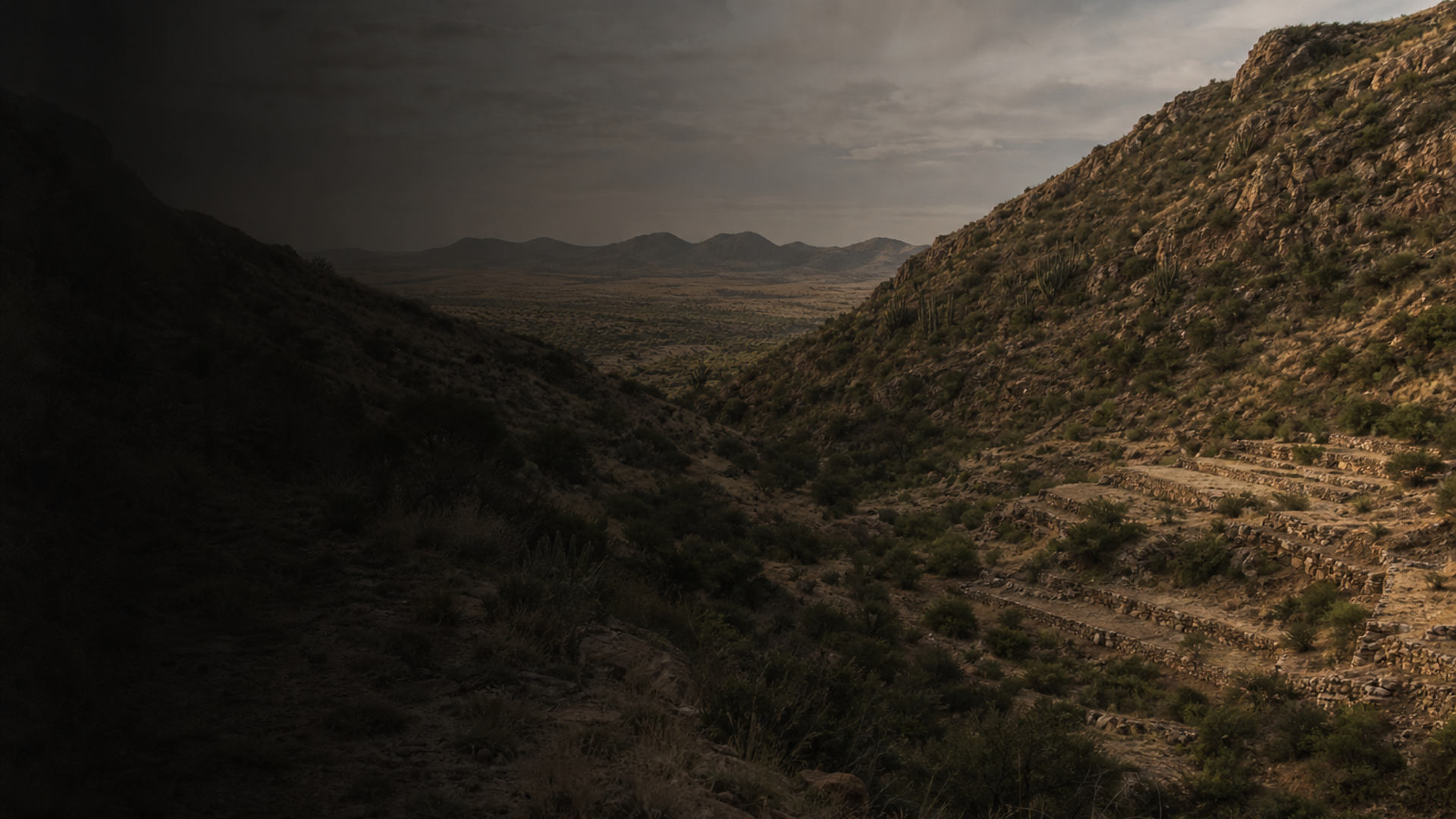
Cañada de la Virgen — Guanajuato Medieval

Download PDF creates a visual, rasterized copy. Use Print for selectable text and better assistive-technology support.

Bericht wird vorbereitet

Verfügbare Informationen und Referenzen werden geladen

Verbindung mit dem archäologischen Quellenbestand...

Alte Quellen werden zusammengestellt

Zum Hauptinhalt springen
Cañada de la Virgen — Guanajuato Medieval
Zivilisations-Spotlight

Cañada de la Virgen — Guanajuato Medieval

A glimpse into 6th–9th century highland life from monuments and tiny DNA traces

540 CE - 870 CE
Guanajuato, Mexico (Cañada de la Virgen)
Scrollen zum Start
Kapitel I

Die Geschichte

Die Cañada de la Virgen — Guanajuato Medieval-Kultur verstehen

Archaeological remains from Cañada de la Virgen (Guanajuato, Mexico; 540–870 CE) reveal a ceremonial highland community. Four ancient genomes hint at native maternal lineages (A, D1m, B2) and a primarily Indigenous paternal signal (Q), though small sample size makes conclusions provisional.

Time Period

540–870 CE

Region

Guanajuato, Mexico (Cañada de la Virgen)

Common Y-DNA

F, Q (each observed in 1/4 samples)

Common mtDNA

A (2), D1m (1), B2 (1)

Kapitel II

Zeitleiste

Zentrale Momente in der Geschichte dieser Kultur

540 CE

Emergence of the site

Local construction and ceremonial use at Cañada de la Virgen begin to appear in the archaeological record around this time.

700 CE

Ceremonial peak

Monumental terraces and plazas appear to reach a construction and ritual intensity, marking a community focal point.

870 CE

Late occupation phase

Archaeological indicators suggest a transition away from the site's major ceremonial role by the late 9th century.

Kapitel III

Origins & Emergence

Rising from the folded valleys of central Mexico, the communities associated with the Mexico_Guanajuato_Medieval designation occupy a transitional era between Late Classic developments elsewhere in Mesoamerica and later regional reorganizations. Archaeological excavations at Cañada de la Virgen (Guanajuato) reveal a carefully constructed ceremonial precinct with terraces, pyramidal platforms and funerary contexts dated by radiocarbon and stratigraphy to roughly 540–870 CE. These constructions suggest sustained investment in ritual architecture and landscape modification, indicating emerging local polities that negotiated ceremonial and economic ties across the highlands.

Material culture — pottery styles, specialized caches, and burial assemblages — points to a community engaged in long-distance exchange and local innovation. Limited evidence suggests interactions with neighboring highland groups rather than direct domination by larger Classic-period states to the south; archaeological data indicates local elites managed ritual centers and controlled access to cosmically aligned plazas. Given the small number of securely dated genomes (four), genetic perspectives remain preliminary and should be read as complementary to the archaeological narrative rather than definitive proof of broad migrations or demographic turnover.

  • Ceremonial architecture and terraces at Cañada de la Virgen (Guanajuato)
  • Occupation window: ca. 540–870 CE, a regional highland florescence
  • Archaeology indicates local elite-led ritual center with interregional ties
Kapitel IV

Daily Life & Society

The everyday world of the Guanajuato Medieval communities would have been shaped by seasonal agriculture on terraced slopes, craft specialization and ritual performance within stone-lined plazas. Excavated household remains and midden deposits at sites like Cañada de la Virgen show diets reliant on maize, complementary native plants, and domesticated dog; stable isotope work elsewhere in the region suggests mixed C3/C4 consumption patterns typical of central Mexican highlands.

Social life likely centered on kin groups embedded within hierarchical ritual networks. Funerary contexts — burials with goods and occasional offerings — reflect differentiated social status and sustained ancestor veneration. Architectural alignment and public plazas imply calendrical ceremonies and public gatherings, where elite actors orchestrated communal rituals. Nonetheless, the material record preserves only partial views: perishable textiles, ephemeral performances and subtler social practices rarely survive. Combining the archaeological picture with genetics can illuminate kinship patterns at burial loci, but with only four ancient genomes from this phase, interpretations of household descent, residence rules or social stratification remain highly tentative.

  • Terraced agriculture, maize-centric diet, and craft specialization
  • Burials and plazas indicate ritual centrality and social differentiation
Kapitel V

Genetic Profile

Genome data from four individuals recovered at Cañada de la Virgen provides a slender but valuable genetic window into this medieval Guanajuato community. Maternal lineages are represented by mtDNA haplogroups A (two individuals), D1m (one), and B2 (one). These mtDNA lineages are well-established in Indigenous American populations: haplogroup A is widespread across North and Central America, B2 is common in Mesoamerica and the Andes, while D1m represents a deeper sub-branch whose interpretation benefits from larger comparative datasets. The predominance of A among these four individuals is consistent with regional maternal diversity, but the sample is too small to infer population-level frequencies with confidence.

Paternal markers show one individual assigned to haplogroup Q — a lineage widely associated with Indigenous peoples of the Americas — and one assigned at a broader level to haplogroup F. The F assignment should be treated cautiously: in some ancient datasets a call to F can reflect low-resolution Y-chromosome data or upstream placement before finer downstream assignment. Contamination, coverage limits, and analytical thresholds can affect Y-chromosome interpretation, especially with few male samples. Overall, the genetic signal aligns with an Indigenous highland population carrying pan-American maternal haplogroups and at least one Q paternal lineage; however, with only four genomes (<10), conclusions about population structure, sex-biased migration, or continuity with later groups remain preliminary and tentative. Future sampling and high-coverage sequencing will be required to test kinship within burials and demographic scenarios suggested by the archaeology.

  • mtDNA: A (2), D1m (1), B2 (1) — consistent with Indigenous American maternal lines
  • Y-DNA: Q (1) typical of Native American males; F (1) is low-resolution and requires caution
Kapitel VI

Legacy & Modern Connections

The visible stones of Cañada de la Virgen and the faint traces of DNA preserved in teeth and petrous bone together weave threads between the medieval past and present-day Indigenous peoples of central Mexico. Archaeological continuity in ritual landscapes and ceramic traditions suggests cultural persistence in the highlands, while genetic affinities — within limits of small samples — point toward maternal lineages that persist among modern Indigenous groups across Mexico.

It is important to emphasize uncertainty: four genomes cannot capture the full diversity or the complex social dynamics of a living people. Still, by pairing archaeological context with even a few ancient genomes, researchers can begin to ask focused questions about kinship at burial, mobility of individuals, and how ritual centers like Cañada de la Virgen anchored communities. Expanding ancient DNA sampling and integrating oral histories and ethnography will strengthen connections between the archaeological record and descendant communities.

  • Archaeology and genetics together hint at continuity with modern Indigenous maternal lineages
  • Small ancient sample size underscores need for broader, community-engaged research
KI-gestützt

KI-Assistent

Stellen Sie Fragen zur Cañada de la Virgen — Guanajuato Medieval-Kultur

KI-Assistent von DNAGENICS

Funktion freischalten
Stellen Sie Fragen zur Kultur Cañada de la Virgen — Guanajuato Medieval. Unser KI-Assistent kann genetische Befunde, historischen Kontext, archäologische Belege und moderne Verbindungen erläutern.
Beispiel einer KI-Analyse

Die Cañada de la Virgen — Guanajuato Medieval-Kultur ist ein faszinierendes Kapitel der Menschheitsgeschichte...

Genetische Analysen zeigen Übereinstimmungen mit früheren Populationen und Hinweise auf besondere Anpassungen und kulturelle Innovationen. Alte DNA-Proben liefern Einblicke in Migrationsmuster, soziale Strukturen und genetische Verbindungen zwischen Populationen.

Dies ist eine Vorschau der KI-Analyse. Schalten Sie den vollständigen KI-Assistenten frei, um detaillierte Einblicke zu erkunden:

  • Genetische Zusammensetzung und genetische Ähnlichkeit
  • Migrationsmuster und Ursprünge
  • Alltag und kulturelle Praktiken
  • Genetischer Bezug zu heutigen Populationen

Weitere antike Kulturen erkunden

Geschichten von Zivilisationen aus der antiken Welt entdecken

Use code for 35% off • Expires Nov 09