Central Sweden — Late Viking Horizon

Download PDF creates a visual, rasterized copy. Use Print for selectable text and better assistive-technology support.

Zum Hauptinhalt springen
Zivilisations-Spotlight

Central Sweden — Late Viking Horizon

Communities around Sigtuna and Uppsala (750–1200 CE) seen through graves, goods, and genomes

750 CE - 1200 CE
Central Sweden (Uppland, Stockholm, Örebro, Västmanland)

Die Geschichte

Archaeological and genetic evidence from 11 Late Viking-era individuals (750–1200 CE) across central Sweden (Sigtuna, Gammelbyn Börstil, Norrsunda, Alsike, Gorla, Sasta, Enbacken, Sala) reveals a Scandinavian core ancestry with traces of eastern contacts and Neolithic maternal lineages.

Time Period

750–1200 CE (Late Viking Age)

Region

Central Sweden (Uppland, Stockholm, Örebro, Västmanland)

Common Y-DNA

I (3), R (1), N (1)

Common mtDNA

J (5), H (2), H1a (1), H1s (1), U (1)

Zeitleiste

750 CE

Start of Late Viking transformations

Regional shifts in settlement, trade and burial practice in central Sweden mark an intensifying Late Viking cultural landscape.

980 CE

Sigtuna emerges as an urban center

Sigtuna develops into a key marketplace and administrative center, reflecting broader urbanization in late 10th-century Sweden.

1200 CE

Transition to High Medieval structures

By the early 13th century, political and ecclesiastical changes reshape settlement and material culture in central Sweden.

Origins & Emergence

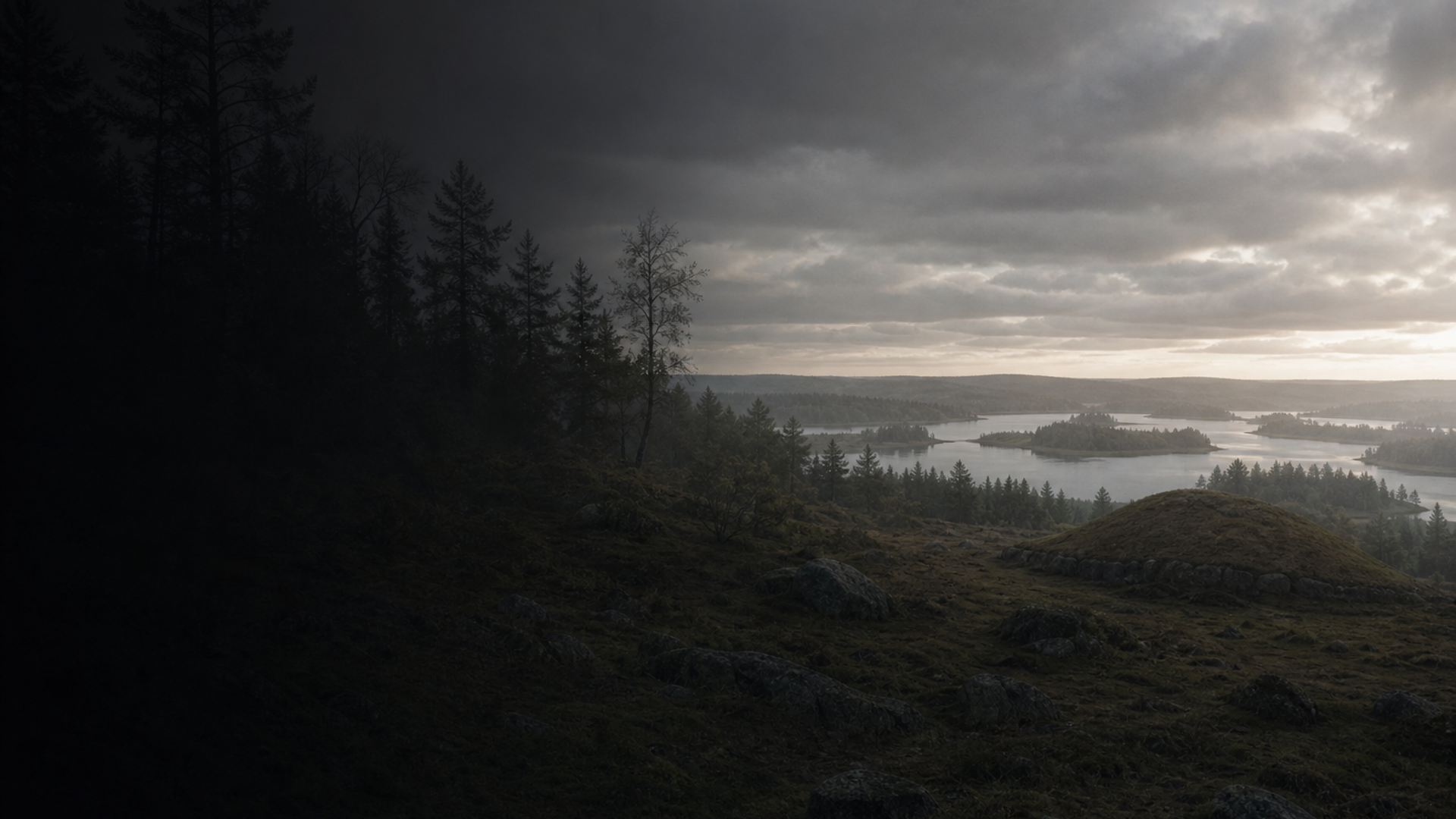
The Late Viking horizon in central Sweden (c. 750–1200 CE) unfolds along a landscape of lakes, fjords and inland plains where small towns and rural parishes grew into focal points of trade and ritual life. Archaeological data indicates that settlements such as Sigtuna and nearby parish cemeteries around Uppsala and Örebro were active nodes in regional exchange networks by the 10th century.

Material traces — metalwork, dress accessories, and funerary assemblages — show continuity with earlier Viking traditions while also reflecting new contacts with the Baltic and beyond. Limited evidence suggests increasing craft specialization and urbanizing tendencies at places like Sigtuna after its foundation in the late 10th century, while rural farmsteads continued long-standing agricultural and maritime subsistence strategies.

The present dataset samples graves and contexts from Gammelbyn Börstil (Östhammar), Norrsunda (Sigtuna), Alsike (Knivsta), Gorla (Norrtälje), Sasta (Täby), Sigtuna (Upplands-Bro), Enbacken (Örebro), and Sala. Together these sites convey a picture of a region negotiating continuity and change, where local traditions persisted even as long-distance connections intensified. The genetic and archaeological snapshots below are drawn from 11 individuals and should be read as a regional but partial window into this dynamic era.

  • Late Viking Age emergence across Uppland and adjacent provinces (750–1200 CE)
  • Key settlement nodes include Sigtuna and parish cemeteries around Uppsala and Örebro
  • Material culture shows both local continuity and increased long-distance connections

Daily Life & Society

Daily life in central Sweden during the Late Viking Age combined farming, animal husbandry, fishing and seasonal movement with craft production and trade. Archaeological contexts from the sampled cemeteries point to communities where households produced textiles, metalwork and tools, and where imported objects — glass beads, foreign silver, and traded ornaments — occasionally entered graves, signaling wide-ranging contacts.

Burial practice varied across the region: simpler inhumations coexist with more richly furnished graves, indicating social differentiation. Written sources and settlement archaeology (especially at urbanizing Sigtuna) imply marketplaces, craft quarters and connections to seafaring routes. Men and women are visible in the mortuary record through their grave goods and biological sex, and isotopic studies from comparable contexts often reveal patterns of childhood mobility and diet variation.

Taken together, the archaeological picture is of vibrant, connected communities where households balanced local agricultural rhythms with participation in a broader Viking-age economy. The eleven individuals sampled here offer glimpses of that mosaic, but they represent only part of the social landscape.

  • Mixed economy: farming, fishing, craft production, and long-distance trade
  • Varied burial practices reflect social differentiation and mobility

Genetic Profile

The genetic data from 11 individuals sampled across central Sweden produces a nuanced picture that complements the archaeological record. On the paternal side, haplogroup I is the most frequent (3/11 males), consistent with longstanding Scandinavian Y-chromosome lineages documented in Mesolithic and later northern Europe. Single occurrences of R and N hint at additional threads: R-lineages are widespread across Europe and can reflect diverse north–south and west–east ancestries, while haplogroup N is often associated with eastern and Uralic-speaking populations, pointing to some eastern connections or ancestry inputs in the region.

Mitochondrial DNA shows a predominance of haplogroup J (5 individuals) with several H subtypes (H, H1a, H1s) and one U lineage. Haplogroup J is commonly tied to Neolithic maternal ancestry in Europe, while H and U are widespread in prehistoric and historic European populations. The maternal profile suggests substantial continuities of European farmer-descended lineages alongside indigenous hunter–gatherer-derived elements in this Late Viking sample.

Caveats: with 11 samples the dataset is modest. Archaeological contexts and sex ratios, potential kin groups in cemetery samples, and the regional patchiness of sampling all mean that broader population inferences should be cautious. Nevertheless, the combined signal—predominantly Scandinavian paternal input with traces of eastern paternal influence and diverse maternal lineages—aligns with other Viking-age genetic studies that document mobility, admixture, and sex-biased patterns of contact.

  • Paternal: I most frequent (3), plus R (1) and N (1) — signals of local Scandinavian roots with eastern connections
  • Maternal: J dominant (5) with H and U lineages — consistent with Neolithic farmer and European maternal continuity

Legacy & Modern Connections

The Late Viking communities of central Sweden left an imprint on landscape, settlement and genetic heritage. Urbanizing centers like Sigtuna became regional hubs whose craft and trade patterns influenced later medieval towns. Genetically, many of the haplogroups observed here persist in the modern Swedish population, reflecting continuity as well as the long-term results of mobility and interaction.

Archaeogenetic research bridges artifacts and genomes: DNA adds individual stories to the archaeological canvas, showing how people moved, married, and mingled. The dataset of 11 individuals is a valuable regional snapshot that underscores the importance of expanding sampling across cemeteries, social classes and chronological phases to better resolve patterns of kinship, migration and cultural change.

For museum and public audiences, these graves and genomes together tell a cinematic story of everyday lives shaped by fields and fjords, trade and kinship — a story still being refined as new excavations and ancient DNA studies deepen our view.

  • Continuity: many haplogroups seen here continue into modern Swedish gene pools
  • Research legacy: DNA and archaeology together reveal mobility, kinship, and long-term cultural change

KI-Assistent

KI-Assistent von DNAGENICS

Funktion freischalten
Stellen Sie Fragen zur Kultur Central Sweden — Late Viking Horizon. Unser KI-Assistent kann genetische Befunde, historischen Kontext, archäologische Belege und moderne Verbindungen erläutern.
Beispiel einer KI-Analyse

Die Central Sweden — Late Viking Horizon-Kultur ist ein faszinierendes Kapitel der Menschheitsgeschichte...

Genetische Analysen zeigen Übereinstimmungen mit früheren Populationen und Hinweise auf besondere Anpassungen und kulturelle Innovationen. Alte DNA-Proben liefern Einblicke in Migrationsmuster, soziale Strukturen und genetische Verbindungen zwischen Populationen.

Dies ist eine Vorschau der KI-Analyse. Schalten Sie den vollständigen KI-Assistenten frei, um detaillierte Einblicke zu erkunden:

  • Genetische Zusammensetzung und genetische Ähnlichkeit
  • Migrationsmuster und Ursprünge
  • Alltag und kulturelle Praktiken
  • Genetischer Bezug zu heutigen Populationen
Use code for 30% off • Expires Nov 15




