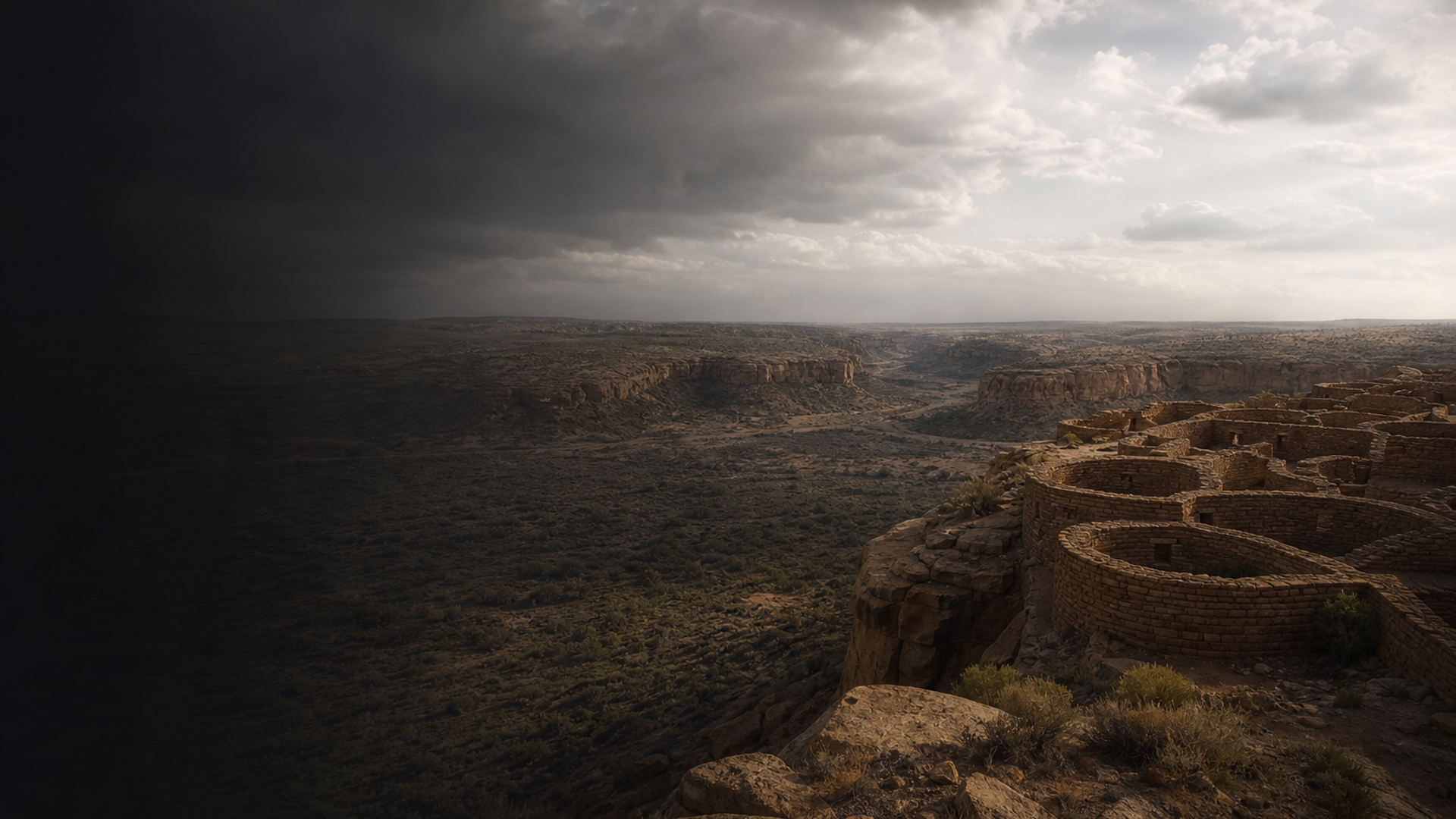
Within the stone corridors and kivas of Pueblo Bonito, daily life likely blended household routines, craft production, and ritual performance. Archaeological excavations reveal hundreds of rooms and numerous kivas clustered around plazas, implying structured social spaces for storage, feasting, craft specialization, and ceremonial gatherings. Maize agriculture, supported by dryland farming and water-conservation strategies, formed the caloric backbone, while ceramics, woven textiles, and intricate jewelry mark skilled artisanry.
Archaeological data indicates differentiation in object assemblages across rooms and buildings, which some researchers interpret as evidence for social ranking or functional specialization. Ceremonial architecture and the alignment of certain buildings suggest cosmological planning and shared ritual calendars. Evidence of trade—obsidian from distant sources, Mesoamerican bird remains, and turquoise—points to Chaco's role as a node in a cosmopolitan frontier of the Southwest.
Material traces preserve fragments of daily life: storage jars stained with maize residue, grinding stones, charred botanical remains, and carefully curated caches. Yet many questions remain about household size, mobility, and the mechanics of political authority. The skeletal and DNA evidence from five individuals provides rare biological insight into the people who inhabited these rooms, but with only a handful of samples conclusions about broader population structure are tentative.