Coastal Voices of Belize, 4,600 Years Ago

Download PDF creates a visual, rasterized copy. Use Print for selectable text and better assistive-technology support.

Bericht wird vorbereitet

Verfügbare Informationen und Referenzen werden geladen

Verbindung mit dem archäologischen Quellenbestand...

Alte Quellen werden zusammengestellt

Zum Hauptinhalt springen
Coastal Voices of Belize, 4,600 Years Ago
Zivilisations-Spotlight

Coastal Voices of Belize, 4,600 Years Ago

Early Belizean communities glimpsed through bones and maternal lineages

2950 CE - 2469 BCE
Belize (Mayahak Cab Pek, Saki Tzul)
Scrollen zum Start
Kapitel I

Die Geschichte

Die Coastal Voices of Belize, 4,600 Years Ago-Kultur verstehen

Archaeological and ancient-DNA evidence from Mayahak Cab Pek and Saki Tzul (2950–2469 BCE) reveal a small, coastal Belizean population with Native American maternal haplogroups. Limited samples (n=5) make conclusions preliminary but point to continuity with pan-American maternal ancestries.

Time Period

2950–2469 BCE

Region

Belize (Mayahak Cab Pek, Saki Tzul)

Common Y-DNA

No common Y-DNA reported / limited data

Common mtDNA

C5b (2), C1c (1), D (1), A (1)

Kapitel II

Zeitleiste

Zentrale Momente in der Geschichte dieser Kultur

2500 BCE

Mid-Holocene coastal occupations

Archaeological and genetic evidence from Belizean sites documents small coastal communities and maternal lineages linked to pan‑American ancestries.

Kapitel III

Origins & Emergence

The Belize_4600BP assemblage sits near the mid-Holocene shorelines of what is now Belize, dated between 2950 and 2469 BCE. Archaeological data indicates human activity in lowland coastal and riverine environments, where shifting wetlands and reefs framed lifeways. The tiny sample set derives from two named sites—Mayahak Cab Pek and Saki Tzul—offering a narrow but vivid window into local populations roughly 4,600 years ago.

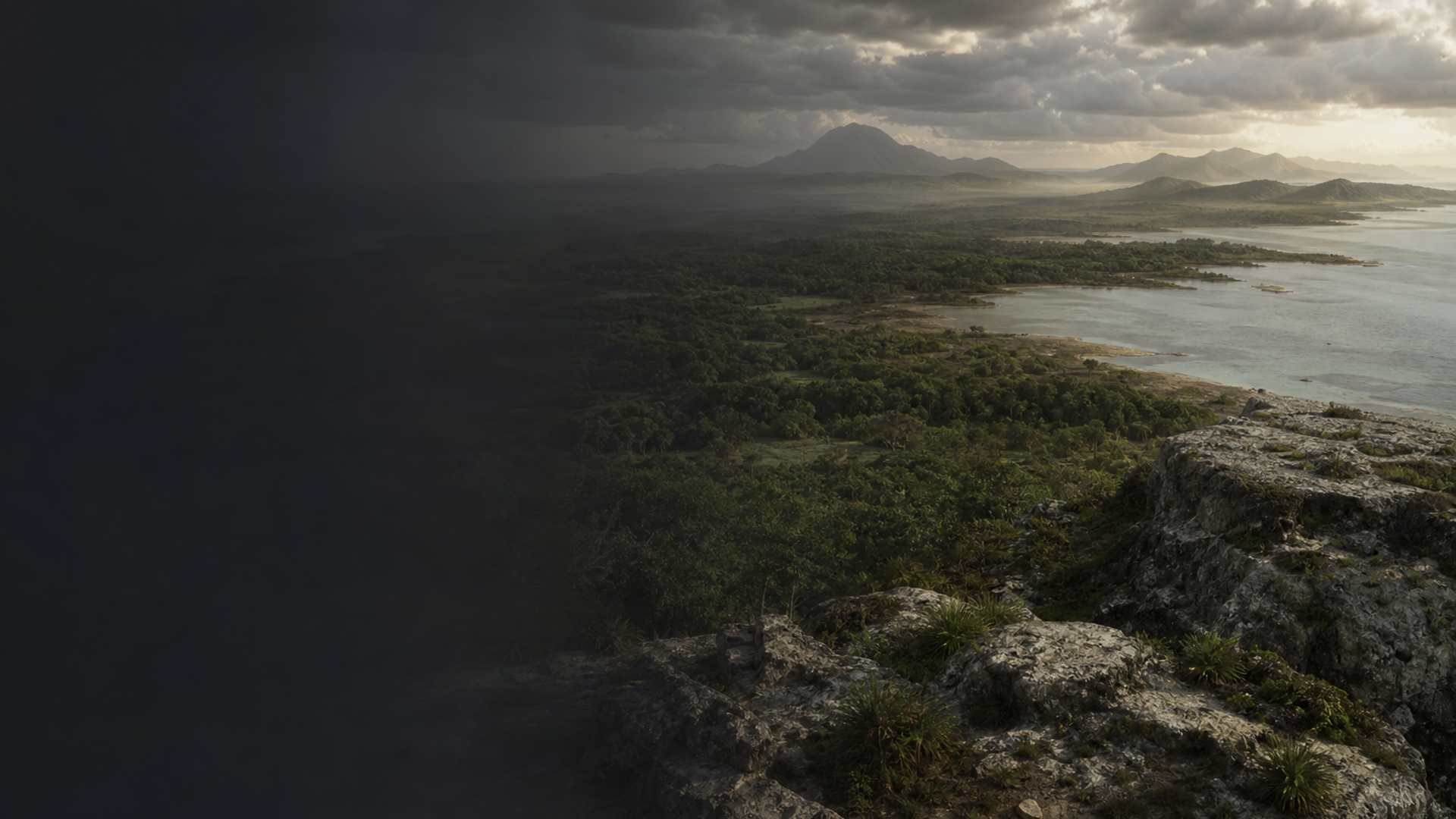
Cinematic landscapes of mangrove and lagoon would have shaped movement, subsistence, and contact. Lithic scatters, ceramic fragments in nearby regional sequences, and shell-rich deposits elsewhere in Belize suggest foraging, fishing, and nascent horticultural practices across the Late Archaic to early Formative transition. Limited evidence suggests these communities were connected to wider Mesoamerican coastal networks that facilitated exchange of goods and genes.

Because the dataset is small, origins narratives remain provisional. Nonetheless, the combination of archaeological context and maternal DNA hints that these people belonged to broader Native American lineages established centuries earlier during initial peopling of the Americas. Future excavation and additional ancient genomes will refine whether these communities were long-term residents or part of mobile coastal groups.

  • Sites: Mayahak Cab Pek and Saki Tzul in Belize (2950–2469 BCE)
  • Coastal and riverine adaptations likely shaped subsistence and mobility
  • Provisional regional ties to wider Mesoamerican coastal exchange networks
Kapitel IV

Daily Life & Society

Archaeological traces from Belize around 4600 years ago evoke a life oriented to water: fishing, shellfish gathering, seasonal foraging, and early plant management in lagoons and river floodplains. Material remains in nearby lowland sites include stone tools for processing fish and plant fibers, and ceramics in contemporaneous strata point toward sedentism increasing over generations.

Socially, small community sizes implied by site distributions would have favored kin-based groups with strong local knowledge of tides, seasonal fish runs, and resource patchiness. Shell and bone artifacts elsewhere in the region imply craft specialization at modest scales, while portable artistic expression—ornaments or pigment use—may have signaled identity or intergroup ties. Mobility along coasts and rivers likely enabled both gene flow and cultural exchange, but the limited archaeological record from the two sampled sites prevents broad generalizations.

Archaeobotanical and zooarchaeological work in Belizean lowlands remains sparse for this period; thus reconstructions of diet and household organization are necessarily cautious. Each new stratigraphic column and dated sample will help transform these evocative sketches into detailed life histories.

  • Subsistence likely focused on fishing, shellfish, and early plant use
  • Small, kin-based communities with seasonal mobility along waterways
Kapitel V

Genetic Profile

Five ancient individuals from Mayahak Cab Pek and Saki Tzul yielded mitochondrial DNA haplogroups dominated by haplogroup C subtypes (C5b ×2, C1c ×1), plus D (×1) and A (×1). These mtDNA lineages fall within the set of founding pan-American maternal clades (A, B, C, D, and X), indicating maternal continuity with broader Native American ancestries that trace deep roots into Beringian and northern Asian source populations.

No consistent Y-DNA signal is reported for this small sample, so paternal lineage patterns remain unresolved. Because the sample count is low (n=5), any inferred demographic patterns must be treated as preliminary: observed frequencies can shift substantially with a few additional genomes. Nevertheless, the concentration of C subclades (notably C5b and C1c) hints at local maternal line continuity or founder effects in coastal Belize during the mid-Holocene.

Genetic data synchronizes with archaeology to suggest these individuals were part of widespread maternal lineages that dispersed throughout the Americas long before 4600 years ago. Future targeted sequencing—more individuals, higher coverage, and nuclear DNA—will be crucial to detect admixture, kinship within burials, and fine-scale population structure across the Belizean Lowlands.

  • mtDNA dominated by American founding lineages: C5b (2), C1c, D, A
  • Small sample (n=5) — conclusions are preliminary; no clear Y-DNA signal
Kapitel VI

Legacy & Modern Connections

The maternal haplogroups recovered at Belize_4600BP tie these ancient inhabitants to long-standing Native American maternal ancestries that persist across Mesoamerica and northern South America. Archaeogenetic continuity in mtDNA does not equate to cultural continuity in every detail, but it provides a molecular thread linking past coastal communities to later populations in the region.

For descendant communities and researchers, these genomes are a reminder that Belize's deep past is both local and hemispheric: shaped by ancient migrations, environmental adaptation, and centuries of cultural transformation. Given the limited dataset, collaborative fieldwork, respectful engagement with local and Indigenous communities, and expanded ancient-DNA sampling will be essential to illuminate how these early coastal groups contributed to the genetic and cultural mosaic of modern Belize.

  • Maternal lineages connect ancient Belize to pan-American ancestries
  • Expanded sampling and community collaboration needed to clarify continuity
KI-gestützt

KI-Assistent

Stellen Sie Fragen zur Coastal Voices of Belize, 4,600 Years Ago-Kultur

KI-Assistent von DNAGENICS

Funktion freischalten
Stellen Sie Fragen zur Kultur Coastal Voices of Belize, 4,600 Years Ago. Unser KI-Assistent kann genetische Befunde, historischen Kontext, archäologische Belege und moderne Verbindungen erläutern.
Beispiel einer KI-Analyse

Die Coastal Voices of Belize, 4,600 Years Ago-Kultur ist ein faszinierendes Kapitel der Menschheitsgeschichte...

Genetische Analysen zeigen Übereinstimmungen mit früheren Populationen und Hinweise auf besondere Anpassungen und kulturelle Innovationen. Alte DNA-Proben liefern Einblicke in Migrationsmuster, soziale Strukturen und genetische Verbindungen zwischen Populationen.

Dies ist eine Vorschau der KI-Analyse. Schalten Sie den vollständigen KI-Assistenten frei, um detaillierte Einblicke zu erkunden:

  • Genetische Zusammensetzung und genetische Ähnlichkeit
  • Migrationsmuster und Ursprünge
  • Alltag und kulturelle Praktiken
  • Genetischer Bezug zu heutigen Populationen

Weitere antike Kulturen erkunden

Geschichten von Zivilisationen aus der antiken Welt entdecken

Use code for 35% off • Expires Nov 09