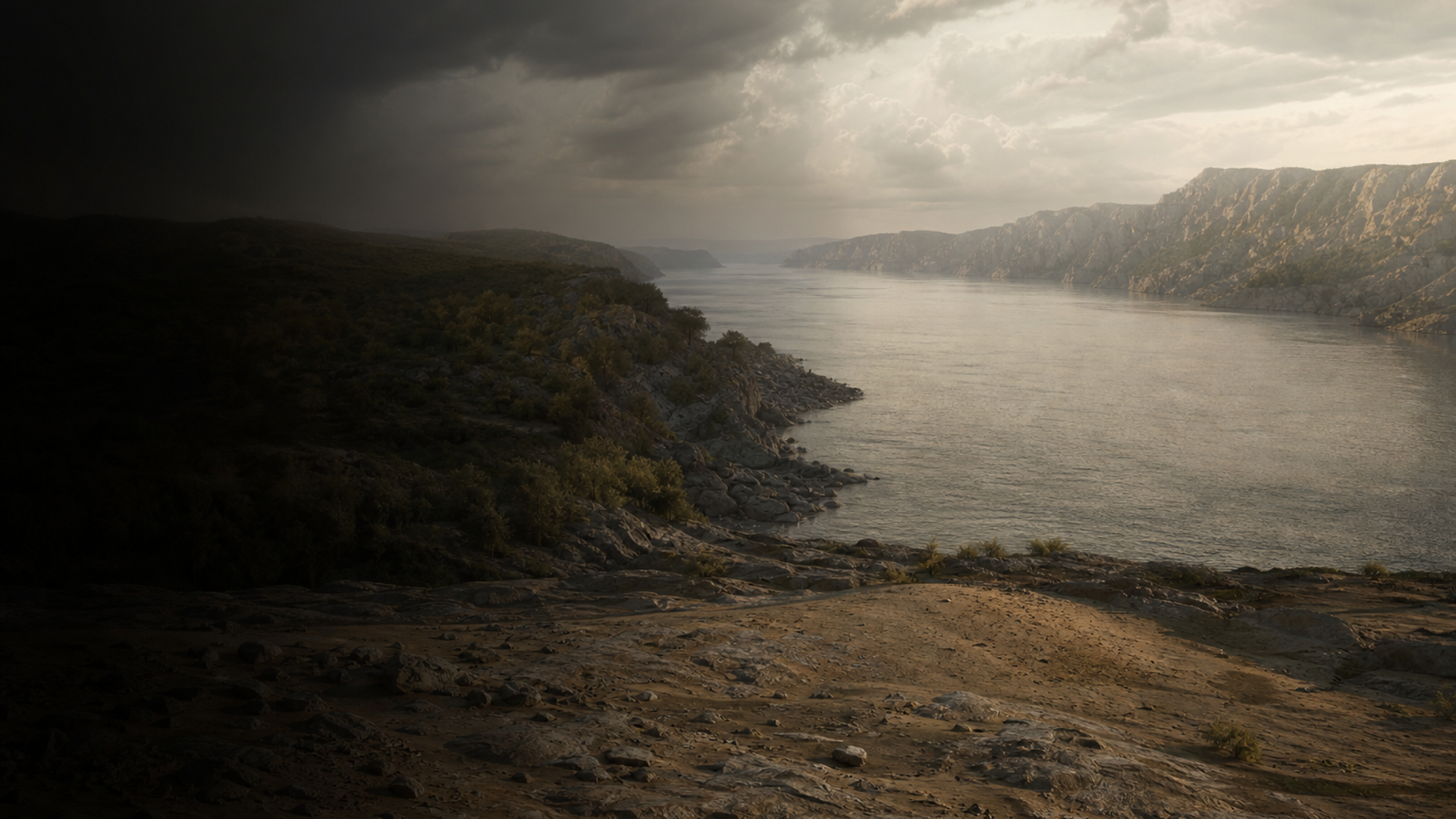
Life at Lepenski Vir appears shaped by the river’s cadence. Archaeological assemblages reveal dense concentrations of fish bone, indicating seasonal or year-round intensification of fishing techniques — likely nets, weirs and specialized hooks — supported by hearth complexes and storage features. Houses built on stone foundations, often aligned and close-packed, imply a degree of sedentism unusual for contemporaneous hunter-gatherers and suggest strong community planning and shared craft traditions.
Burial practices at the site, with varied grave goods and body placements, point to social differentiation and ritual behavior. Stone sculptures and bench-like installations within dwellings suggest that domestic and ceremonial spaces were intertwined. Craft production — flint tools, bone points, and ornamentation — shows skillful exploitation of both river and terrestrial resources.
Archaeological data indicates a society attuned to seasonal rhythms of the Danube, able to concentrate efforts on high-yield resources while maintaining cultural investment in built space and symbolic life. Interactions with neighboring early farming communities were likely episodic at first, introducing new materials, crops or practices that would, over generations, transform local lifeways.