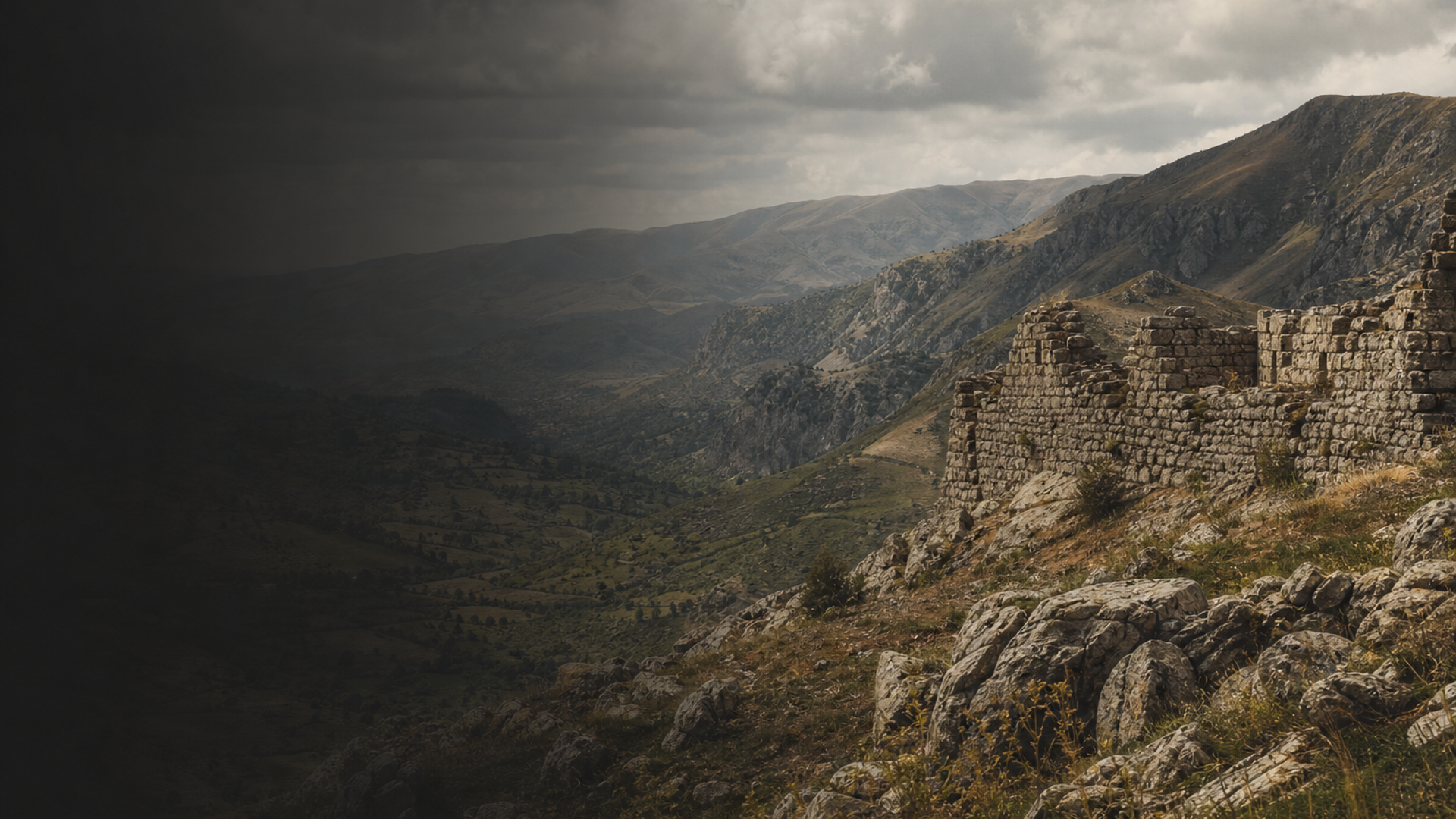
The villages represented by Bardhoc and Pazhok were part of a landscape of mountain pastures, terraced fields, and narrow valley tracks. Archaeological traces from comparable Albanian villages of this period point to mixed agro-pastoral economies: cereal cultivation on low terraces, seasonal shepherding in upland pastures, and household crafts such as wool processing and small-scale metalworking.
Material culture from the region often incorporates long-lived local traditions alongside imported goods — Ottoman ceramics, coins, or glass that reached even remote hamlets through trade and military movements. Local burial practices retained strong community signatures: small, often clustered graves with modest personal items. Such patterns imply kin-based households and tight social networks where marriages, alliances, and mobility were regulated at the village and regional level.
Archaeology indicates resilience: despite political changes in the 15th–17th centuries, many communities show continuity in settlement organization and subsistence strategies. At the same time, periodic population movement — seasonal migration, trade-linked travel, and the forced movements that accompanied military campaigns — likely introduced new cultural and biological inputs into these rural gene pools.