Echoes from Ust'-Ida

Download PDF creates a visual, rasterized copy. Use Print for selectable text and better assistive-technology support.

Zum Hauptinhalt springen
Zivilisations-Spotlight

Echoes from Ust'-Ida

Early Bronze Age lives on the Siberian fringe, revealed by four ancient genomes

3083 CE - 1978 BCE
Ust'-Ida, Russia

Die Geschichte

Archaeogenetic and archaeological data from Ust'-Ida (3083–1978 BCE) reveal a small Early Bronze Age community in Russia with dominant paternal Q lineages and East Eurasian maternal types (C, D, H). Limited samples make conclusions preliminary but suggest deep Siberian continuity.

Time Period

3083–1978 BCE

Region

Ust'-Ida, Russia

Common Y-DNA

Q (4)

Common mtDNA

C (2), D (1), H (1)

Zeitleiste

2500 BCE

Ust'-Ida Early Bronze Age occupation

Archaeological and genetic evidence places human burials at Ust'-Ida in the mid-3rd millennium BCE, reflecting durable local communities on the Siberian landscape.

Origins & Emergence

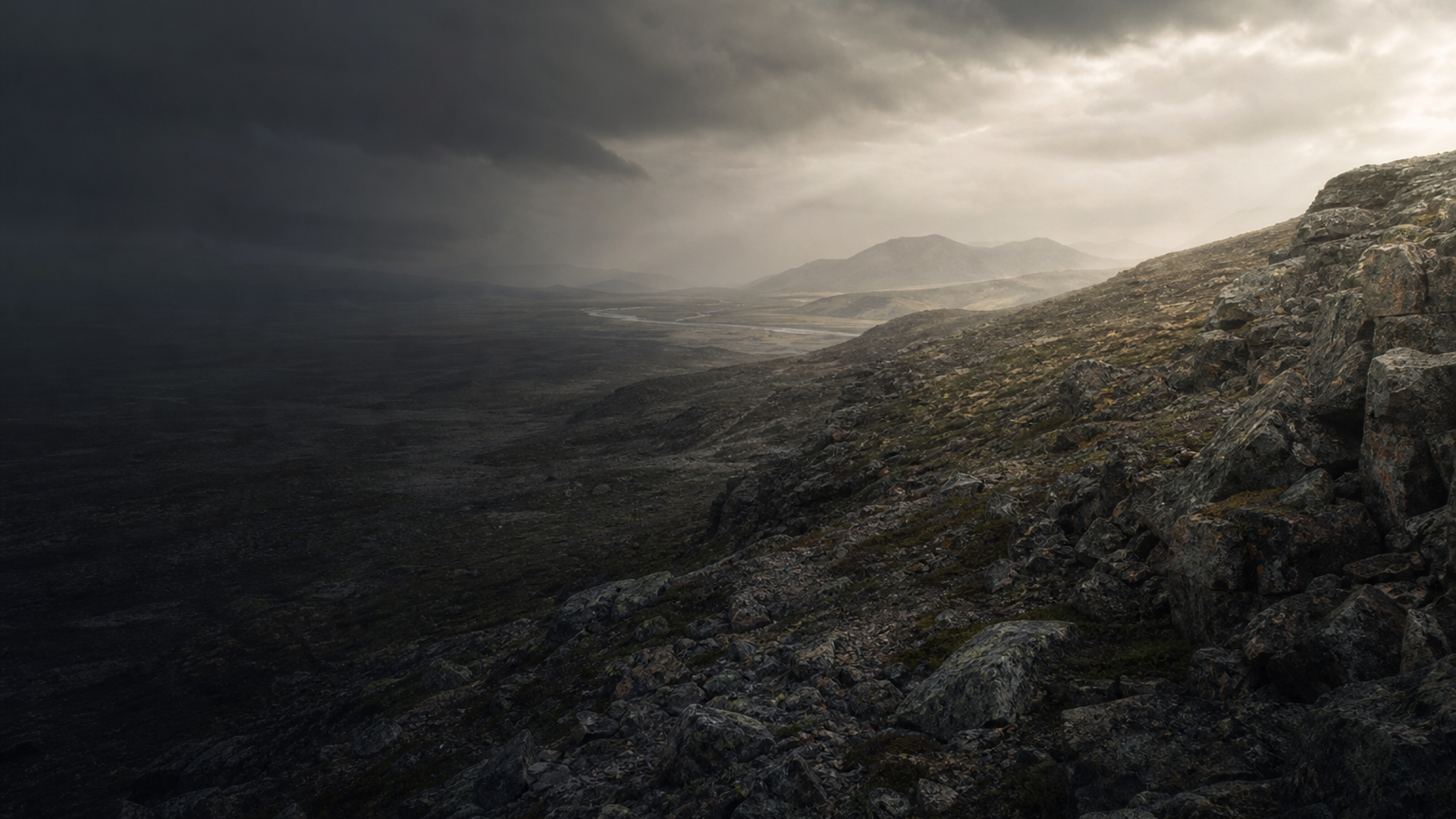
Beneath an austere northern horizon, the Ust'-Ida assemblage emerges in the Early Bronze Age as a small, locally rooted expression of human life. Archaeological data indicates burials and settlement traces at Ust'-Ida, Russia, dated between 3083 and 1978 BCE. The material record at this site is limited in published detail, so landscape inferences remain cautious.

Genetic signals from four sequenced individuals point toward a population whose paternal lines are uniformly haplogroup Q — a lineage widely associated with ancient Siberian and northeastern Eurasian groups. Maternal lineages (mtDNA C, D, and H) are also typical of northern and eastern Eurasia, suggesting ancestry that is closer to Siberian hunter–forager traditions than to contemporaneous western steppe groups.

Limited evidence suggests continuity with regional Late Neolithic and Bronze Age traditions rather than being the product of large, recent migrations. Archaeological and genetic patterns together paint a picture of a community living at the crossroads of tundra and taiga, shaped by long-term local adaptations. However, with only four genomes available, any reconstruction of origins must be treated as provisional. Additional excavations and larger sample sets are needed to test whether Ust'-Ida represents a persistent local lineage, episodic contacts, or more complex population dynamics.

  • Site: Ust'-Ida, Russia; dates 3083–1978 BCE
  • Small sample set (4 genomes) — conclusions preliminary
  • Paternal continuity suggested by high frequency of haplogroup Q

Daily Life & Society

Archaeological traces at Ust'-Ida, though limited, suggest a life attuned to northern ecologies: seasonal movement, exploitation of riverine and forest resources, and craft practices adapted to cold environments. Material culture details are sparse for publication, so reconstructions rely on regional analogies from contemporaneous sites in Siberia and the Baikal region.

Burials at Ust'-Ida provide the primary link between people and place; grave contexts preserve biological remains that enable direct genetic sampling. The everyday world of these communities likely revolved around fishing, hunting, and the selective use of domesticates where climatic conditions permitted. Social organization may have been kin-based and relatively small-scale, consistent with the uniform paternal lineage detected in the genetic sample — one possible indicator of patrilineal descent or founder effects.

Archaeological data indicates durable local practices rather than elaborate monumentalism. Craft items, raw material sourcing, and burial orientation (where reported) show regional affinities but also local variation. These signals together imply resilient lifeways that balanced mobility with attachment to particular river valleys and resource nodes. Caution is warranted: without broader excavation and contextual publication, many aspects of daily life at Ust'-Ida remain conjectural.

  • Economy likely based on fishing, hunting, and seasonal resource use
  • Burials provide both archaeological context and aDNA for kinship study

Genetic Profile

The genetic portrait from Ust'-Ida is concise but revealing. All four male-associated Y-chromosomes are assigned to haplogroup Q, a lineage with deep roots in Siberia and connections across northern Eurasia and into the Americas. This strong paternal signal suggests either a local founding male lineage or a demographic episode that amplified Q in the sampled community.

Mitochondrial diversity among the four individuals includes two C lineages, one D, and one H. C and D haplogroups are common in northeastern Eurasia and are frequently observed in ancient Siberian contexts; H is widespread in Eurasia, and its presence here may reflect broader maternal interchange or ancestry layers. The combination points to a predominantly East Eurasian genetic profile, distinct from contemporaneous western steppe populations that typically carry R1a/R1b paternal markers and different mtDNA spectra.

Archaeological data supports the idea of regional continuity rather than wholesale replacement. However, with only four genomes, statistical power is limited: any allele-frequency inferences or admixture models are provisional. Future sampling could reveal whether the observed patterns represent a localized kin-group, a regional norm, or an unrecognized population mixture. Until larger datasets are available, interpretations should emphasize the preliminary nature of these genetic insights.

  • All four Y-chromosomes = haplogroup Q, suggesting paternal continuity
  • mtDNA mix (C, D, H) indicates predominantly East Eurasian maternal ancestry

Legacy & Modern Connections

The echoes of Ust'-Ida resonate in modern genetic landscapes of northern Eurasia. Haplogroup Q and mtDNA types C and D remain important components of many Siberian and indigenous northern populations today, implying long-standing genetic threads across millennia. Archaeological continuity at the regional scale supports the notion that northern riverine lifeways fostered durable local populations.

That said, modern population structure has been reshaped repeatedly by late prehistoric migrations, historic movements, and recent demographic events. The Ust'-Ida samples offer a snapshot of an Early Bronze Age chapter in this longer story. Because the sample count is small, claims of direct ancestry to specific modern groups must be tentative. Instead, Ust'-Ida is best seen as a window onto the kinds of communities whose lineages contributed to the mosaic of modern Siberian genetic diversity.

  • Genetic affinities align with modern Siberian and northeastern Eurasian lineages
  • Small sample size means direct modern links remain tentative

KI-Assistent

KI-Assistent von DNAGENICS

Funktion freischalten
Stellen Sie Fragen zur Kultur Echoes from Ust'-Ida. Unser KI-Assistent kann genetische Befunde, historischen Kontext, archäologische Belege und moderne Verbindungen erläutern.
Beispiel einer KI-Analyse

Die Echoes from Ust'-Ida-Kultur ist ein faszinierendes Kapitel der Menschheitsgeschichte...

Genetische Analysen zeigen Übereinstimmungen mit früheren Populationen und Hinweise auf besondere Anpassungen und kulturelle Innovationen. Alte DNA-Proben liefern Einblicke in Migrationsmuster, soziale Strukturen und genetische Verbindungen zwischen Populationen.

Dies ist eine Vorschau der KI-Analyse. Schalten Sie den vollständigen KI-Assistenten frei, um detaillierte Einblicke zu erkunden:

  • Genetische Zusammensetzung und genetische Ähnlichkeit
  • Migrationsmuster und Ursprünge
  • Alltag und kulturelle Praktiken
  • Genetischer Bezug zu heutigen Populationen
Use code for 30% off • Expires Nov 15




