
Forest‑Steppe Echoes: Yaroslavl Fatyanovo

Download PDF creates a visual, rasterized copy. Use Print for selectable text and better assistive-technology support.

Bericht wird vorbereitet

Verfügbare Informationen und Referenzen werden geladen

Verbindung mit dem archäologischen Quellenbestand...

Alte Quellen werden zusammengestellt

Zum Hauptinhalt springen
Forest‑Steppe Echoes: Yaroslavl Fatyanovo
Zivilisations-Spotlight

Forest‑Steppe Echoes: Yaroslavl Fatyanovo

Bronze Age communities (2900–2200 BCE) in Yaroslavl linking Corded‑Ware horizons and local forest traditions

2900 CE - 2200 BCE
Yaroslavl region, Central Russian forest‑steppe
Scrollen zum Start
Kapitel I

Die Geschichte

Die Forest‑Steppe Echoes: Yaroslavl Fatyanovo-Kultur verstehen

A genetic and archaeological portrait of 24 Bronze Age individuals (2900–2200 BCE) from Yaroslavl (Naumovskoye, Nikultsino, Goluzinovo, Volosovo‑Danilovo). Archaeological data indicates Fatyanovo ties; DNA shows predominance of Y haplogroup R and diverse maternal lineages (U, T, H, J, N).

Time Period

2900–2200 BCE

Region

Yaroslavl region, Central Russian forest‑steppe

Common Y-DNA

R (predominant), N (rare)

Common mtDNA

U, T, H, J, N (diverse maternal pool)

Kapitel II

Zeitleiste

Zentrale Momente in der Geschichte dieser Kultur

2500 BCE

Frontier consolidation

Archaeological and genetic evidence marks a phase when Fatyanovo‑linked groups became established in the Yaroslavl forest‑steppe, reflecting steppe influence and local admixture.

Kapitel III

Origins & Emergence

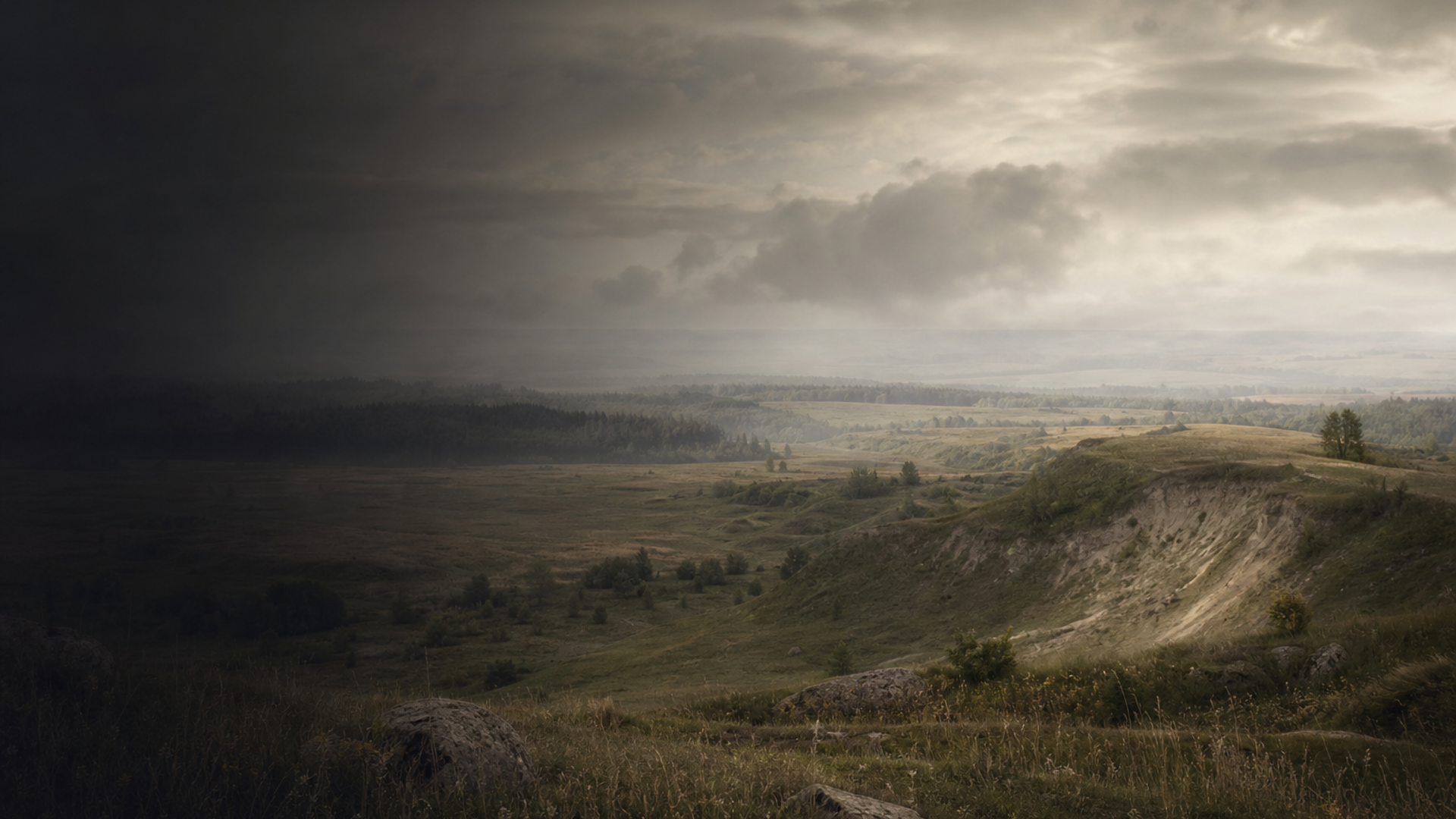
Across the cool, birch‑lined plains north of the Volga, communities tied to the Fatyanovo phenomenon established footholds between ca. 2900 and 2200 BCE. Archaeological data indicates links to the broader Corded‑Ware horizon that swept east from central Europe: distinctive ceramics and mobility patterns suggest incoming pastoralist groups met local forest‑steppe populations. Key sites in this dataset — Naumovskoye, Khaldeevo, Voronkovo, Nikultsino, Goluzinovo and the village complex at Volosovo‑Danilovo (Danilovsky District, Yaroslavl Oblast) — preserve the material traces of this encounter.

Limited evidence suggests that the Yaroslavl Fatyanovo communities were not simple colonists: they appear as frontier groups adapting steppe lifeways to a heavily wooded environment. Radiocarbon dates cluster within the given range, and settlement traces indicate seasonal mobility and resource exploitation of both river corridors and forest margins. While connections to the Fatyanovo archaeological horizon are clear in material culture, the precise processes of migration, admixture and local adoption remain under active study and should be treated with caution.

  • Material culture links to Fatyanovo and Corded‑Ware horizons
  • Sites: Naumovskoye, Nikultsino, Goluzinovo, Volosovo‑Danilovo
  • 2900–2200 BCE radiocarbon cluster; frontier adaptation to forest‑steppe
Kapitel IV

Daily Life & Society

Imagine riverine encampments where woven cord impressions on pottery echo distant craft traditions and bronze blades glitter at dawn. Archaeological assemblages attributed to Fatyanovo groups often include cord‑impressed ceramics, utilitarian tools and occasional prestige items — patterns that archaeological data indicates are also present at the Yaroslavl sites. Subsistence likely combined herding and pastoral practices introduced from the steppe with hunting, fishing and foraging of the forest zone.

Social life on this edgeland probably revolved around small kin groups or households linked by exchange networks. Funerary evidence across Fatyanovo territories suggests structured rites and curated grave goods; at Yaroslavl sites these practices seem to reflect both steppe‑derived and local traditions. Craft specialization and long‑distance exchange (for copper and later bronze) are plausible, but the archaeological record is uneven and interpretations remain provisional.

  • Mixed subsistence: steppe herding plus forest hunting/fishing
  • Material culture blends Fatyanovo motifs with local traditions
Kapitel V

Genetic Profile

The genetic dataset from 24 individuals in the Yaroslavl Fatyanovo group provides a moderately sized window into Bronze Age ancestry on the forest‑steppe frontier. Y‑chromosome lineages are dominated by haplogroup R (9 individuals) with a single instance of N, while mitochondrial diversity includes U (3), T (2), H (2), J (2) and N (1) haplogroups. Archaeogenetic studies elsewhere associate R lineages with steppe‑related ancestry (as seen in Corded‑Ware and Yamnaya‑related populations), so the predominance of R here is consistent with an influx of steppe‑derived males or male‑line continuity tied to Fatyanovo movements.

The maternal pool is more mixed, reflecting admixture with local forager and farming groups: U and H are common in European hunter‑gatherer and Neolithic contexts, while T and J appear in farming communities. The lone N Y‑lineage may signal inheritance from northern or Uralic‑linked groups, but with only one occurrence this remains tentative. Because the sample size is 24 — large enough to detect clear trends but still regional — conclusions about fine‑scale demographic processes (sex‑biased migration, population structure) should be considered provisional. Future sampling across nearby sites will clarify the balance of incoming and local ancestry.

  • Predominant Y‑DNA R (9/24) suggests steppe affinity
  • Diverse mtDNA (U, T, H, J, N) indicates mixed maternal ancestry
Kapitel VI

Legacy & Modern Connections

The Yaroslavl Fatyanovo communities leave an ambiguous legacy: they are part of the tapestry that reshaped northern Eurasia in the third millennium BCE. Genetically, the steppe‑associated R lineages contributed to the broader spread of Indo‑European‑connected ancestry in eastern Europe, while mitochondrial diversity points to ongoing interactions with local populations. Archaeolinguistic links remain debated, but the genetic signal aligns with a model of mobility and admixture rather than wholesale replacement.

In the present day, populations of European Russia carry echoes of these Bronze Age dynamics in both paternal and maternal lineages, but direct continuity is complex. The near absence of haplogroup N here (one sample) cautions against tying these sites directly to later Uralic expansions; instead, the picture is one of layered migrations and local persistence. Continued sampling and ancient DNA from surrounding regions will refine how these frontier communities contributed to the genetic landscape of northern Eurasia.

  • Steppe‑derived R lineages contributed to later eastern European gene pools
  • Maternal diversity shows long‑term mixture; direct continuity is complex
KI-gestützt

KI-Assistent

Stellen Sie Fragen zur Forest‑Steppe Echoes: Yaroslavl Fatyanovo-Kultur

KI-Assistent von DNAGENICS

Funktion freischalten
Stellen Sie Fragen zur Kultur Forest‑Steppe Echoes: Yaroslavl Fatyanovo. Unser KI-Assistent kann genetische Befunde, historischen Kontext, archäologische Belege und moderne Verbindungen erläutern.
Beispiel einer KI-Analyse

Die Forest‑Steppe Echoes: Yaroslavl Fatyanovo-Kultur ist ein faszinierendes Kapitel der Menschheitsgeschichte...

Genetische Analysen zeigen Übereinstimmungen mit früheren Populationen und Hinweise auf besondere Anpassungen und kulturelle Innovationen. Alte DNA-Proben liefern Einblicke in Migrationsmuster, soziale Strukturen und genetische Verbindungen zwischen Populationen.

Dies ist eine Vorschau der KI-Analyse. Schalten Sie den vollständigen KI-Assistenten frei, um detaillierte Einblicke zu erkunden:

  • Genetische Zusammensetzung und genetische Ähnlichkeit
  • Migrationsmuster und Ursprünge
  • Alltag und kulturelle Praktiken
  • Genetischer Bezug zu heutigen Populationen

Weitere antike Kulturen erkunden

Geschichten von Zivilisationen aus der antiken Welt entdecken

Use code for 35% off • Expires Nov 09




