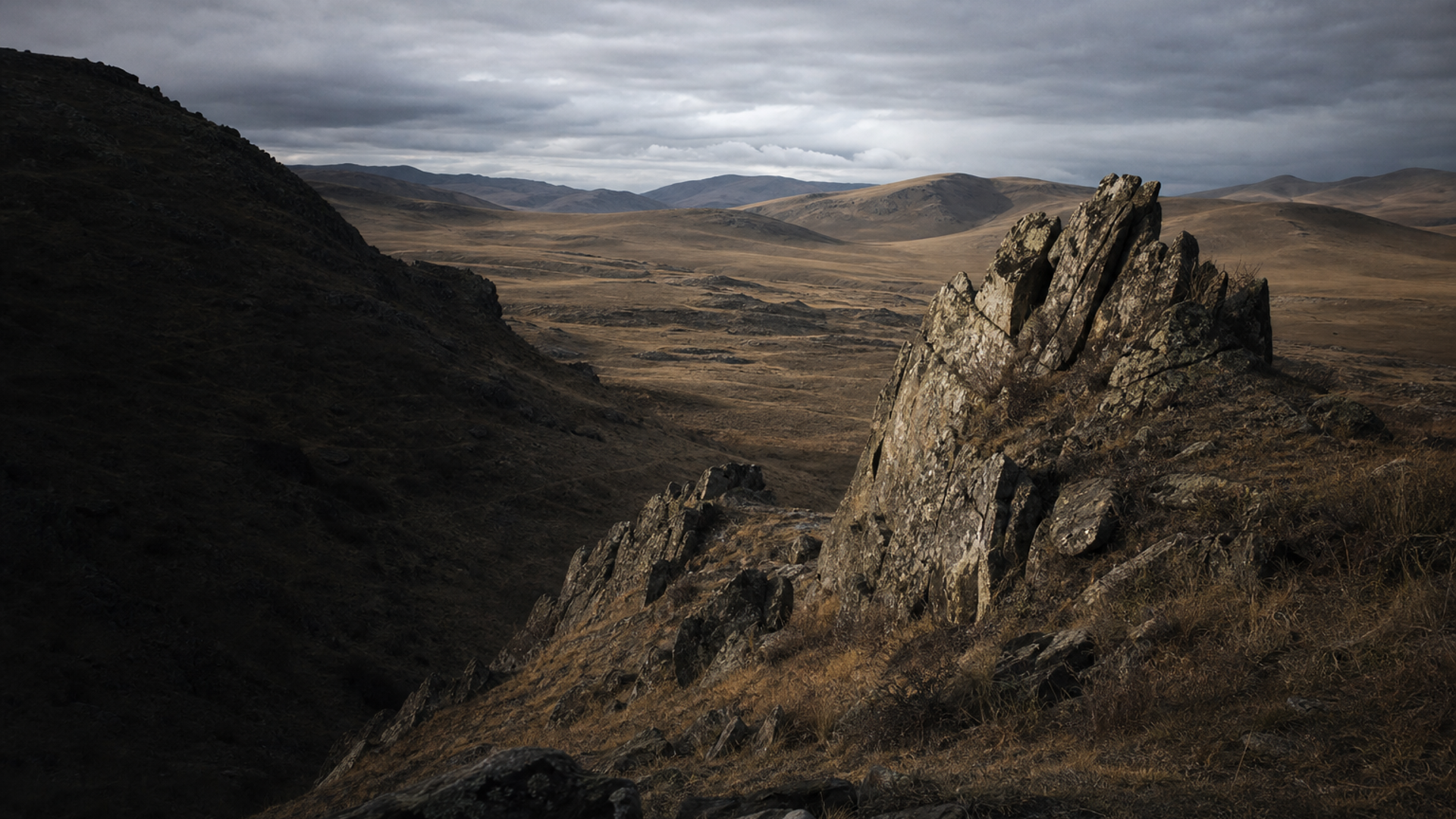
Daily life at Il'movaya Pad can be reconstructed only in broad strokes. Archaeological traces point to a mixed subsistence economy: mobile pastoralism likely dominated, supplemented by hunting, fishing and exploitation of woodland resources typical of the Baikal fringe. Settlement evidence is sparse; burial contexts provide the richest behavioral signals — clothing, harness fittings and portable metal objects often survive as indirect testimony to social roles and craft skills.
Social organization in Xiongnu-period Buryatia appears flexible. Household and camp mobility would have shaped kin networks, seasonal rounds and control of pasture. Grave assemblages hint at status differentiation, but the small number of well-documented burials prevents confident generalizations about hierarchy. The presence of horse-related gear in some burials suggests that mounted mobility and horse economy played an important part in status display and everyday transport.
In cinematic terms, life unfolded as a series of seasonal movements beneath wide skies: tethered flocks, lakeside fishing in summer, metal-smithing near winter encampments, and exchange visits across steppe corridors. Yet each of these images is provisional — archaeology preserves fragments, and those fragments must be read with caution.