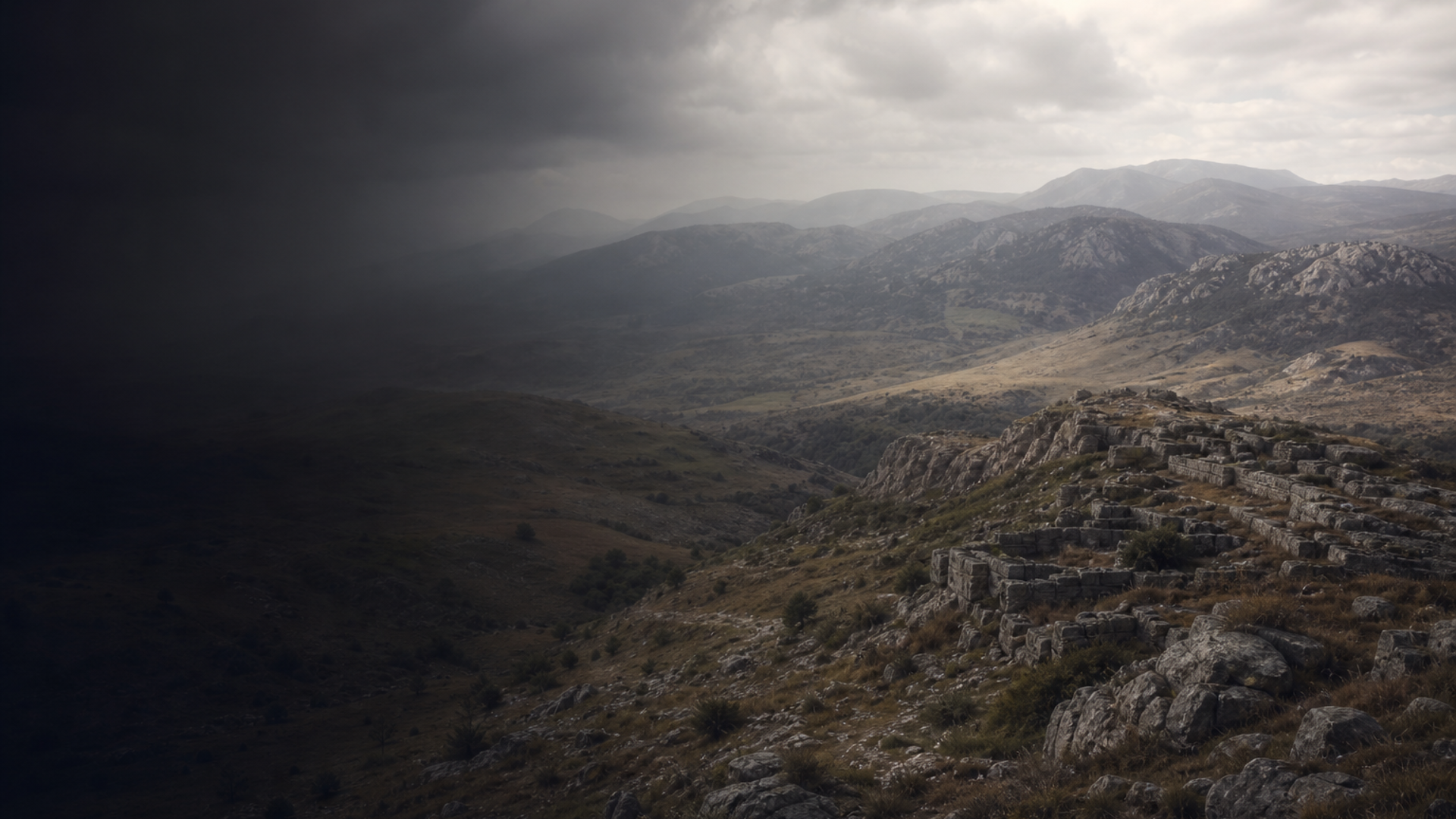
The Bulgaria_EIA designation covers human remains dated roughly between 1100 and 500 BCE from sites in southern Bulgaria — Kapitan Andreevo (South), Stambolovo (Eastern Rhodopes), Diamandovo (Kardzhali) and Svilengrad (Haskovo). Archaeological data indicate communities transitioning from Late Bronze Age social structures into the Early Iron Age: settlements and cemetery stratigraphy show continuity in some traditions alongside new burial gestures and material styles.
Excavations at these locations recover ceramics, metalwork and burial contexts characteristic of the broader Balkans in the first millennium BCE, suggesting both local cultural persistence and increasing regional connectivity. Limited evidence suggests population continuity with Bronze Age inhabitants of the central Balkans, but also hints of incoming influences visible in artifact types and settlement patterns. Genetic sampling offers a complementary window: maternal lineages cluster around haplogroup H, a broadly distributed European lineage, which can reflect long-term local residency of female lines. Because the dataset comprises 16 individuals, conclusions about population dynamics are strengthened compared with very small series but still require cautious interpretation as spatial and temporal coverage is not exhaustive.