Kolyma River Late Neolithic

Download PDF creates a visual, rasterized copy. Use Print for selectable text and better assistive-technology support.

Zum Hauptinhalt springen
Zivilisations-Spotlight

Kolyma River Late Neolithic

Riverine lifeways on Yakutia's Kolyma — archaeology and emerging DNA hints

2000 CE - 1100 BCE
Far Eastern Federal District, Yakutia (Kolyma River)

Die Geschichte

Late Neolithic communities along the Kolyma River (c. 2000–1100 BCE) are known from sites like Kamenka 2 and Pomazkino. Limited archaeological and genetic data (4 samples) suggest deep northeastern Siberian maternal ancestry (mtDNA C) and a highly provisional picture of local population history.

Time Period

2000–1100 BCE

Region

Far Eastern Federal District, Yakutia (Kolyma River)

Common Y-DNA

Not reported / undetermined (limited samples)

Common mtDNA

C (observed in 1 sample)

Zeitleiste

2000 BCE

Late Neolithic occupation begins

Initial Late Neolithic riverine occupations appear along the Kolyma, with hearths, tools, and fish-processing debris at Kamenka 2 and Pomazkino.

Origins & Emergence

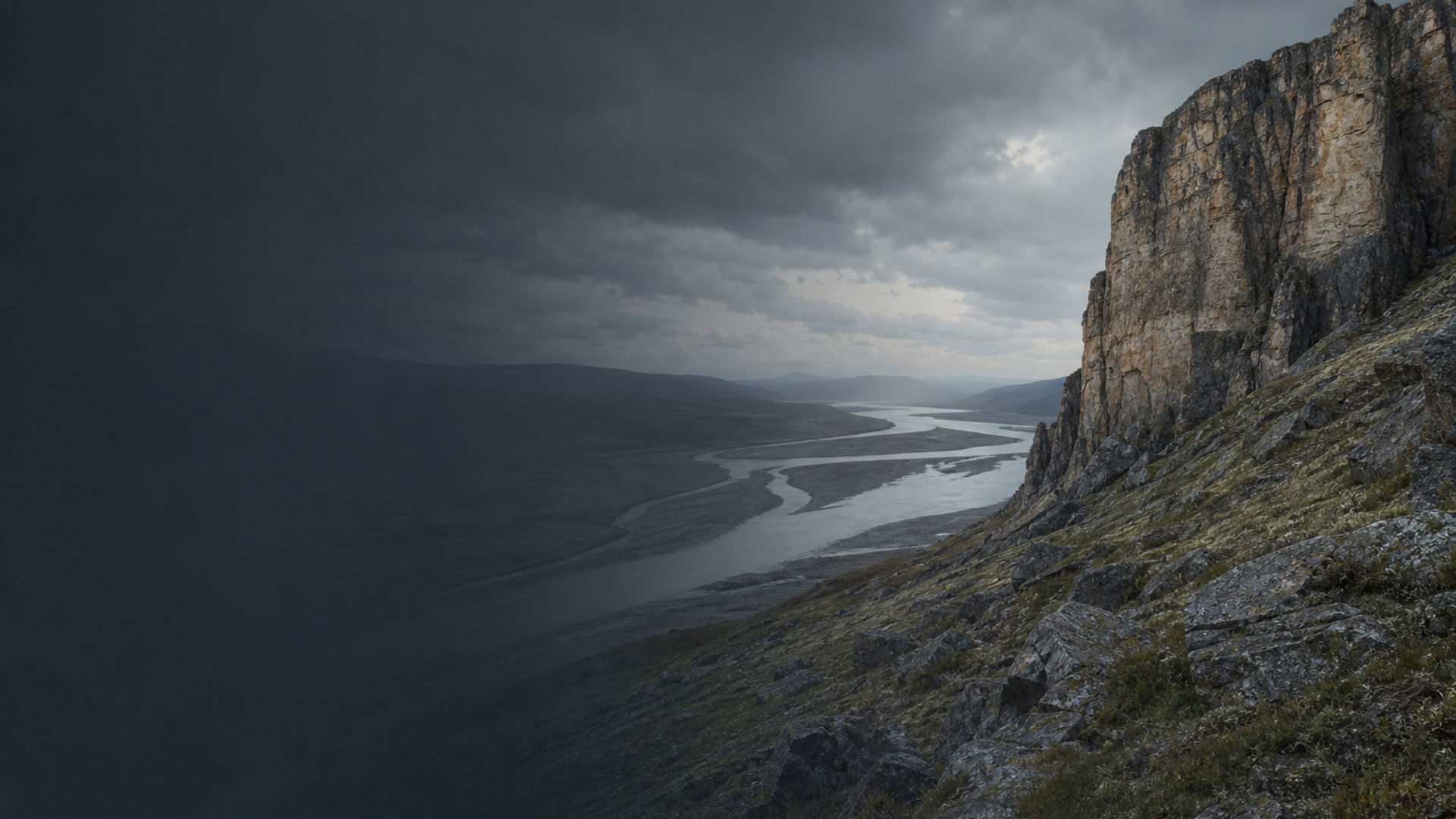
Archaeological traces from the Late Neolithic along the Kolyma River paint a portrait of resilient, river-focused communities adapting to the cold, seasonally dynamic landscapes of northeastern Siberia. Occupation layers dated between roughly 2000 and 1100 BCE at sites such as Kamenka 2 and Pomazkino reveal scatterings of hearths, bone and stone tool debris, and fish and faunal remains that indicate intensive riverine foraging. Archaeological data indicate continuity with earlier Neolithic traditions in the region in terms of subsistence emphasis on salmon and other river resources, combined with hunting of inland mammals.

The material record is fragmentary: perishable structures and ephemeral camps dominate a landscape where preservation is uneven. Limited evidence suggests groups practiced seasonal mobility, establishing repeated camps along floodplains and tributaries rather than large, permanent settlements. This pattern fits broader Late Neolithic adaptations across subarctic Siberia, where small-scale bands exploited rich but seasonally available aquatic and terrestrial resources.

Caution is required: only four genetic samples are currently available from these sites, so models of population origins remain provisional. Nevertheless, the archaeological context frames these people as part of a long-term northeastern Siberian cultural trajectory — shaped by rivers, ice, and a deep-time connection to the Arctic and sub-Arctic ecologies.

  • Sites: Kamenka 2 and Pomazkino on the Kolyma River, Yakutia
  • Period: Late Neolithic to early Bronze Age (c. 2000–1100 BCE)
  • Economy: riverine fishing, hunting, seasonally mobile camps

Daily Life & Society

Daily existence along the Kolyma would have been shaped by the pulse of the river and the rhythm of seasons. Archaeological assemblages — hearths, fish bone concentrations, worked bone implements and flake scatters — suggest communities organized around resource-rich river corridors. Fish processing and storage, the manufacture of bone and stone implements, and the hunting of migratory mammals likely structured seasonal rounds.

Material culture points to small, flexible social units rather than large, hierarchical settlements. Craft production appears to have been household-scale: specialized tools for fishing and hide processing coexisted with general-purpose lithics. Burial evidence in the wider region often shows simple interments; however, preservation at Kolyma localities is uneven and funerary practices at Kamenka 2 and Pomazkino remain only partially documented.

Environmental change and mobility were constants. River ice, spring floods, and seasonal migrations of game required knowledge networks and landscape memory. Archaeological indicators of long-distance connections are subtle but present — exotic raw materials and tool types sometimes suggest contacts along river systems or overland corridors, hinting at social ties that extended beyond single camps.

  • Economy focused on fishing (salmon) and hunting
  • Small, mobile camps with household-level craft production

Genetic Profile

The genetic evidence from the Kolyma River Late Neolithic is very limited: four samples have been reported from the Kamenka 2 and Pomazkino contexts. Among these, only maternal lineage data has a clear signal — mtDNA haplogroup C appears in one individual. Haplogroup C is widely distributed across northeastern Eurasia and is often associated with deep Siberian and Paleo-Siberian maternal lineages; it is also one of the haplogroups found in the ancestral populations that ultimately contributed to Native American lineages.

No consistent Y-chromosome pattern can be established from the current dataset because Y-DNA information is not reported or is lacking for these samples. With only four genomes the conclusions must be cautious: limited sampling can miss diversity and rare lineages. Nevertheless, the presence of mtDNA C aligns archaeologically with a long-standing northeastern Siberian maternal substrate in the region.

Genetic parallels across broader Siberia suggest that Late Neolithic Kolyma groups were part of regional networks that shared deep, autochthonous maternal lineages. Future aDNA sampling with larger sample sizes, better chronological resolution, and autosomal data will be necessary to test hypotheses about continuity with modern Yakut, Yukaghir, Even, or other Siberian groups, and to detect potential interactions with incoming Bronze Age lineages.

  • mtDNA C observed (1 of 4 samples) — a northeastern Siberian maternal lineage
  • Y-DNA undetermined / not reported — conclusions are preliminary

Legacy & Modern Connections

The Kolyma River Late Neolithic represents a chapter in the deep prehistory of northeastern Siberia. Archaeology and the emerging genetic signal suggest continuity of certain maternal lineages in the region, though the small number of samples means links to modern populations are provisional.

If the pattern of northeastern Siberian mtDNA lineages holds, it supports a long-term presence of maternal ancestry that contributed to the genetic landscape of later Siberian and Arctic peoples. Cultural practices adapted to riverine and high-latitude ecologies — seasonal mobility, fish processing, and small-scale craft — echo in ethnographic records of historic-era peoples of Yakutia and the Russian Far East.

Future multidisciplinary work combining more aDNA, improved radiocarbon dating, and detailed excavation at Kamenka 2, Pomazkino, and neighboring sites will clarify how these Late Neolithic communities fit into the broader mosaic of Siberian and circumpolar population history.

  • Potential continuity of northeastern Siberian maternal lineages
  • Modern links remain provisional until larger aDNA samples are available

KI-Assistent

KI-Assistent von DNAGENICS

Funktion freischalten
Stellen Sie Fragen zur Kultur Kolyma River Late Neolithic. Unser KI-Assistent kann genetische Befunde, historischen Kontext, archäologische Belege und moderne Verbindungen erläutern.
Beispiel einer KI-Analyse

Die Kolyma River Late Neolithic-Kultur ist ein faszinierendes Kapitel der Menschheitsgeschichte...

Genetische Analysen zeigen Übereinstimmungen mit früheren Populationen und Hinweise auf besondere Anpassungen und kulturelle Innovationen. Alte DNA-Proben liefern Einblicke in Migrationsmuster, soziale Strukturen und genetische Verbindungen zwischen Populationen.

Dies ist eine Vorschau der KI-Analyse. Schalten Sie den vollständigen KI-Assistenten frei, um detaillierte Einblicke zu erkunden:

  • Genetische Zusammensetzung und genetische Ähnlichkeit
  • Migrationsmuster und Ursprünge
  • Alltag und kulturelle Praktiken
  • Genetischer Bezug zu heutigen Populationen
Use code for 30% off • Expires Nov 15




