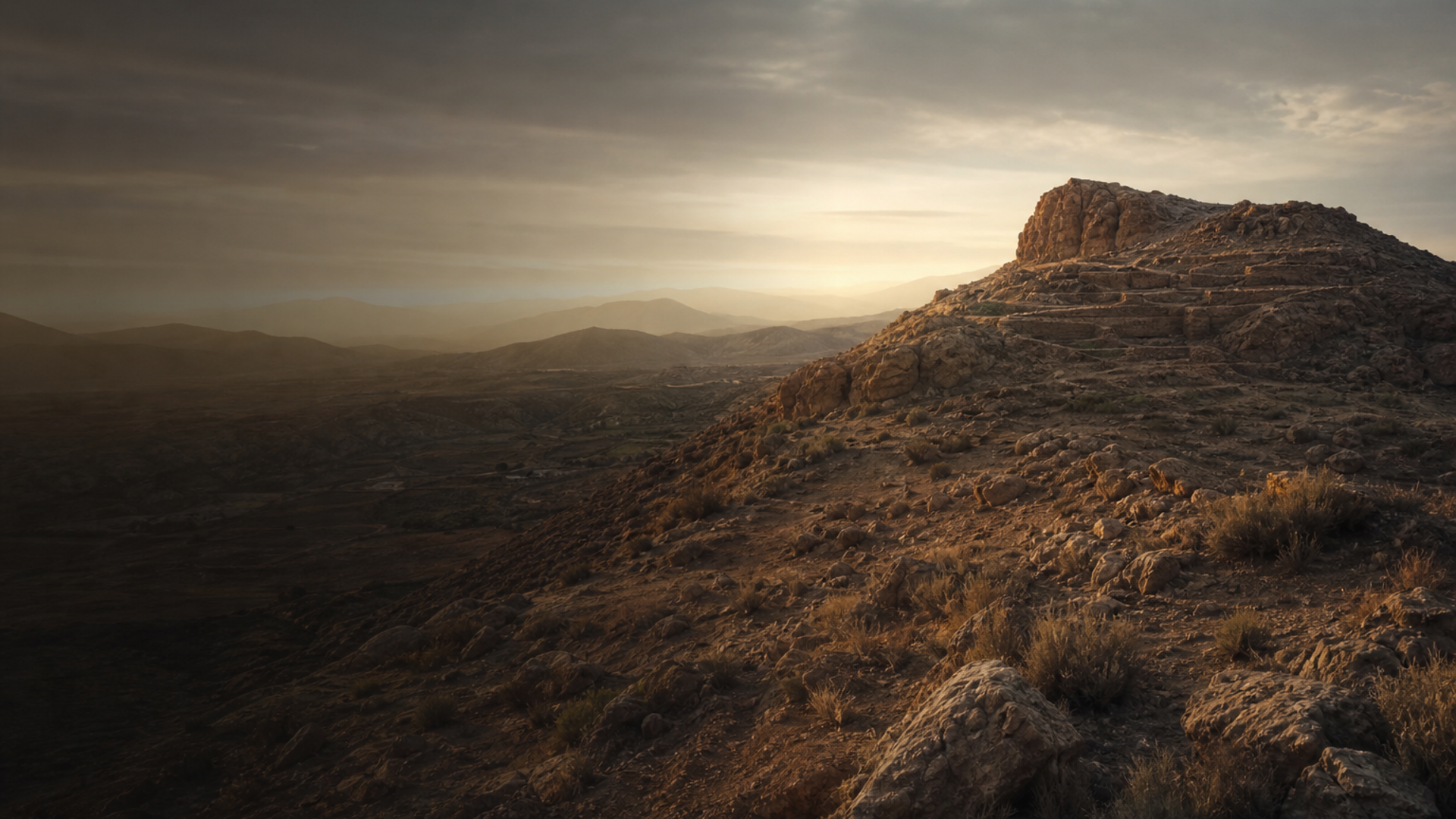
Six ancient genomes from La Bastida (Totana, Murcia) provide an intriguing, though preliminary, genetic snapshot of an Argaric community. Among these small sample numbers there are three individuals carrying Y-chromosome lineages classified broadly as R, and one carrying an E lineage. Mitochondrial diversity includes K (two individuals), H1, U, H, and V3a.
The presence of Y-lineage R is notable because R sublineages are often associated, in broader Eurasian contexts, with populations carrying steppe-derived ancestry introduced into Europe during the Bronze Age. In Iberia this signal can reflect complex admixture dynamics between earlier Neolithic farmers, incoming pastoralist-derived groups, and local hunter-gatherer legacies. The single E lineage hints at Mediterranean or North African connections reported elsewhere in later prehistoric Iberia, but with only one sample this remains speculative.
Mitochondrial lineages such as K, H1, and U are commonly observed across Neolithic and Bronze Age Europe and may reflect continuity of matrilineal ancestry from earlier farming populations with later inputs. V3a is less common and could indicate localized variation or small-scale migration.
Crucially, the small sample count (n=6) limits strong inferences. Archaeological context combined with additional genomes from La Bastida and surrounding Argaric sites will be necessary to test whether the observed haplogroup mix represents long-term local continuity, recent influxes, or social selection in burial practices. Current genetic results are best read as suggestive snapshots that complement the material record.