Okunevo: Voices from the Minusinsk Basin

Download PDF creates a visual, rasterized copy. Use Print for selectable text and better assistive-technology support.

Zum Hauptinhalt springen
Zivilisations-Spotlight

Okunevo: Voices from the Minusinsk Basin

Bronze Age Khakassia communities where Siberian lineages meet steppe influences

2900 CE - 1800 BCE
Minusinsk Basin, Khakassia (Russia)

Die Geschichte

The Okunevo Bronze Age (c. 2900–1800 BCE) in the Minusinsk Basin (Khakassia, Russia) is revealed by 21 ancient genomes. Archaeology and DNA together point to a population with strong Siberian maternal lineages and dominant Y‑DNA Q, suggesting complex local continuity and interactions with steppe networks.

Time Period

2900–1800 BCE

Region

Minusinsk Basin, Khakassia (Russia)

Common Y-DNA

Q (major), R (minor)

Common mtDNA

A, H, C5c, A8a, H6a

Schlagwörter

Zeitleiste

2500 BCE

Okunevo cultural florescence

Okunevo funerary monuments and carved stelae proliferate in the Minusinsk Basin, marking a distinctive Bronze Age regional identity.

Origins & Emergence

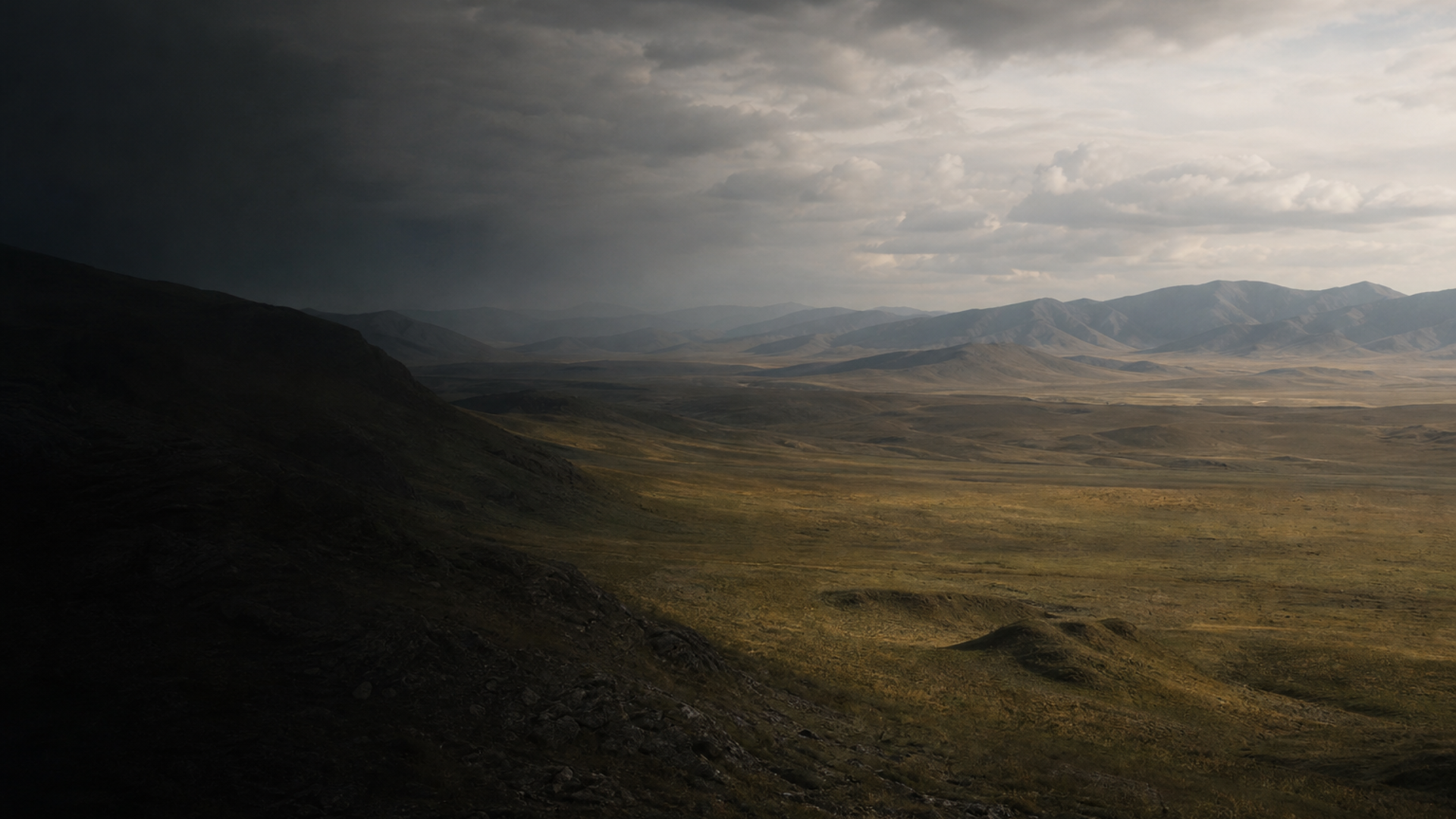
The Okunevo phenomenon arises in the cool, wind-carved intermontane basins of southern Siberia between roughly 2900 and 1800 BCE. Archaeological signatures center on the Minusinskaya Intermountain Basin — sites such as Okunev Ulus, Verkhni Askiz and Syda 5 preserve the culture's funerary architecture: stone cairns, small barrows and anthropomorphic stelae carved in local stone.

Material culture shows a distinct regional identity. Pottery styles, small bronze objects and carved stone markers suggest local development rather than direct transplantation from distant steppe polities. At the same time, the appearance of metalworking and some steppe-style motifs indicate interaction with neighbouring Bronze Age networks, including Afanasievo and later Andronovo-related spheres.

Archaeological data indicate a community rooted in the Minusinsk landscape: river valleys, mountain foothills and seasonal pastures shaped settlement and mobility. Limited evidence suggests both pastoral and foraging strategies, with burials offering the clearest narrative: grave goods, ochre use and stelae point to vibrant ritual landscapes where identity was broadcast in stone and bronze.

  • Centered in the Minusinskaya Basin (Okunev Ulus, Verkhni Askiz, Syda 5)
  • Distinct regional material culture with some steppe contacts
  • Funerary monuments and carved stelae mark communal identity

Daily Life & Society

Life in Okunevo times was shaped by seasonal rhythms of rivers and mountains. Archaeological remains — hearths, pottery shards and burials — suggest small, mobile kin groups exploiting valley pastures, hunting grounds and riverine resources. Ceramic assemblages are modest and utilitarian; bronze items are present but not ubiquitous, indicating limited access to metal or selective use for status objects and ritual.

Burial practices are a primary window into social life. Many graves are small tumuli or stone settings, often with ochre and personal items. The carved stelae that punctuate the landscape carry stylized anthropomorphic and abstract motifs; their placement at grave sites implies ancestor veneration and landscape memory. The presence of decorative objects and differentiated grave goods suggests social differentiation, but the scale of inequality appears limited compared with large steppe chiefdoms.

Mobility and exchange connected Okunevo communities to wider networks. Raw materials and stylistic influences point to contact with neighboring steppe and mountain cultures, while subsistence strategies combined herding, hunting and fishing in a mosaic economy adapted to Siberian conditions.

  • Small kin groups with mixed pastoral and foraging economy
  • Grave goods and carved stelae indicate ritual and social differentiation

Genetic Profile

Genome-wide data from 21 Okunevo-associated individuals (sites including Okunev Ulus, Uybat, Verkhni Askiz and Syda 5) provide a clearer genetic portrait of this Bronze Age population. Y-chromosome results are dominated by haplogroup Q (11/21) with a small presence of R (1/21), indicating a strong paternal continuity with deep Siberian lineages. Maternal lineages are diverse but skew toward East Eurasian types: mtDNA A (6), C5c (4) and A8a (4) are common, alongside West Eurasian-associated haplogroups H (4) and H6a (2).

This combination—East Eurasian-dominant maternal lineages together with frequent Y‑Q—points to a population with strong local Siberian ancestry. The minority occurrence of R and H lineages suggests admixture or contact with west Eurasian steppe groups, plausibly via trade, marriage networks or small-scale migration. Archaeological evidence for steppe-style metalwork corroborates low-to-moderate western genetic input.

These genomes allow us to link material culture to population history: Okunevo communities appear to be primarily descended from local Siberian gene pools that interacted with neighboring steppe peoples. While 21 samples provide a meaningful signal, regional and temporal gaps remain — further sampling will refine the timing and extent of admixture and demographic change.

  • Dominant Y‑DNA Q suggests deep Siberian paternal ancestry
  • mtDNA dominated by East Eurasian haplogroups (A, C5c, A8a) with some West Eurasian H

Legacy & Modern Connections

The Okunevo imprint endures as both stone and sequence. Archaeologically, carved stelae and burial landscapes inform regional identities still resonant in Khakassia and the Minusinsk Basin. Genetically, the prevalence of Y‑Q and East Eurasian mtDNA haplogroups contributes to a broader pattern of Siberian continuity: many modern northern Eurasian and some Native American paternal lineages also derive from deep Q branches, though direct lines of descent must be inferred cautiously.

Together, archaeology and DNA suggest Okunevo populations were local Siberian communities engaged in selective cultural borrowing from steppe neighbors rather than wholesale replacement. Their story illuminates how small, mobile groups maintained distinct identities while participating in wider Bronze Age interaction networks. Continued sampling and interdisciplinary work will clarify how these voices from the stones relate to living genetic landscapes across Siberia and beyond.

  • Archaeological motifs persist in regional cultural memory
  • Genetic signatures point to Siberian continuity with measured steppe admixture

KI-Assistent

KI-Assistent von DNAGENICS

Funktion freischalten
Stellen Sie Fragen zur Kultur Okunevo: Voices from the Minusinsk Basin. Unser KI-Assistent kann genetische Befunde, historischen Kontext, archäologische Belege und moderne Verbindungen erläutern.
Beispiel einer KI-Analyse

Die Okunevo: Voices from the Minusinsk Basin-Kultur ist ein faszinierendes Kapitel der Menschheitsgeschichte...

Genetische Analysen zeigen Übereinstimmungen mit früheren Populationen und Hinweise auf besondere Anpassungen und kulturelle Innovationen. Alte DNA-Proben liefern Einblicke in Migrationsmuster, soziale Strukturen und genetische Verbindungen zwischen Populationen.

Dies ist eine Vorschau der KI-Analyse. Schalten Sie den vollständigen KI-Assistenten frei, um detaillierte Einblicke zu erkunden:

  • Genetische Zusammensetzung und genetische Ähnlichkeit
  • Migrationsmuster und Ursprünge
  • Alltag und kulturelle Praktiken
  • Genetischer Bezug zu heutigen Populationen
Use code for 30% off • Expires Nov 15




