Sabrano: An Early Bronze Age Echo

Download PDF creates a visual, rasterized copy. Use Print for selectable text and better assistive-technology support.

Bericht wird vorbereitet

Verfügbare Informationen und Referenzen werden geladen

Verbindung mit dem archäologischen Quellenbestand...

Alte Quellen werden zusammengestellt

Zum Hauptinhalt springen
Sabrano: An Early Bronze Age Echo
Zivilisations-Spotlight

Sabrano: An Early Bronze Age Echo

Single genome from Sabrano links local archaeology to wider Early Bronze transformations

3092 CE - 2921 BCE
Southeastern Bulgaria (Sabrano, Sliven)
Scrollen zum Start
Kapitel I

Die Geschichte

Die Sabrano: An Early Bronze Age Echo-Kultur verstehen

A single Early Bronze Age genome (3092–2921 BCE) from Sabrano, Sliven province, Bulgaria. Archaeological context reflects regional Early Bronze traditions; genetic data are preliminary but illuminate Neolithic–Steppe interactions in the eastern Balkans.

Time Period

3092–2921 BCE

Region

Southeastern Bulgaria (Sabrano, Sliven)

Common Y-DNA

Not reported (single sample)

Common mtDNA

Not reported (single sample)

Kapitel II

Zeitleiste

Zentrale Momente in der Geschichte dieser Kultur

3000 BCE

Sabrano individual dated

A single individual from Sabrano is dated to 3092–2921 BCE, providing an initial genetic glimpse into Early Bronze Age Sliven province.

Kapitel III

Origins & Emergence

The Sabrano individual comes from a small Early Bronze Age horizon in the Nova Zagora municipality (Sliven province) dated 3092–2921 BCE. Archaeological data indicates continuity with broader Early Bronze Age Bulgarian assemblages: ceramic styles that echo late Chalcolithic forms, evidence for metal use in the landscape, and settlement patterns that reflect increased regional interaction.

Cinematically, this moment is a hinge: the Balkan corridor becomes a stage where longstanding Neolithic farming communities meet new networks of mobility and metallurgy. Limited evidence suggests cultural practices in this region were diverse — rural farmsteads, mobile pastoral activity, and emerging craft specializations — rather than a single uniform ‘‘culture.’’

Because the Sabrano dataset currently rests on one securely dated individual, origin narratives must remain cautious. The archaeological horizon aligns with continental shifts observed across the third millennium BCE, including demographic and technological flux. This single point hints at broader processes — local persistence combined with incoming influences — but cannot alone distinguish whether change was gradual diffusion or punctuated migration.

  • Single securely dated individual from Sabrano (3092–2921 BCE)
  • Archaeological context consistent with Early Bronze Age Bulgarian material culture
  • Suggests interaction along the Balkan corridor between local and incoming traditions
Kapitel IV

Daily Life & Society

Archaeological traces from Early Bronze Age Bulgaria suggest daily life as a textured blend of farming, herding, and craft. In regions like Sliven province, settlements often held modest houses, storage pits, and middens; portable material culture — pottery, worked bone, and early copper items — speaks to household economies and wider exchange networks.

For the people connected to the Sabrano findspot, household activities likely oscillated with seasonal rhythms: sowing and reaping in fertile plains, summer pasturing in nearby uplands, and local craft production that fed both domestic needs and trade. Funerary customs in the broader region include both inhumation and isolated deposits, but specifics at Sabrano remain limited; therefore, reconstructing status or ritual life for this individual is speculative.

Archaeological data indicates increasing long-distance connections in the Early Bronze Age: raw metals and stylistic motifs move across the Balkans, while communities retain strong local traditions. The result is a society both anchored and mobile — intimate domestic routines set against a backdrop of expanding networks.

  • Household economies combining farming, herding, and craft
  • Regional exchange networks introduced new materials and styles
Kapitel V

Genetic Profile

Genetic evidence from Sabrano derives from a single genome dated to 3092–2921 BCE. Because the sample count is one, conclusions are provisional: limited evidence suggests this individual can offer a valuable glimpse into the local genetic landscape, but it cannot define the diversity of the entire Early Bronze Age community in Sliven province.

Archaeogenetic studies across the Balkans show a recurrent pattern in the third millennium BCE: persistence of Anatolian-Neolithic farmer ancestry combined in many cases with an influx of Steppe-related ancestry (often associated with populations from the Pontic–Caspian zone). For Sabrano, archaeological timing overlaps with that regional transition, so the genome may reflect a mixture of local Neolithic-derived lineages and incoming components. However, without reported Y- or mtDNA profiles in the current dataset, specific haplogroup assignments are not available.
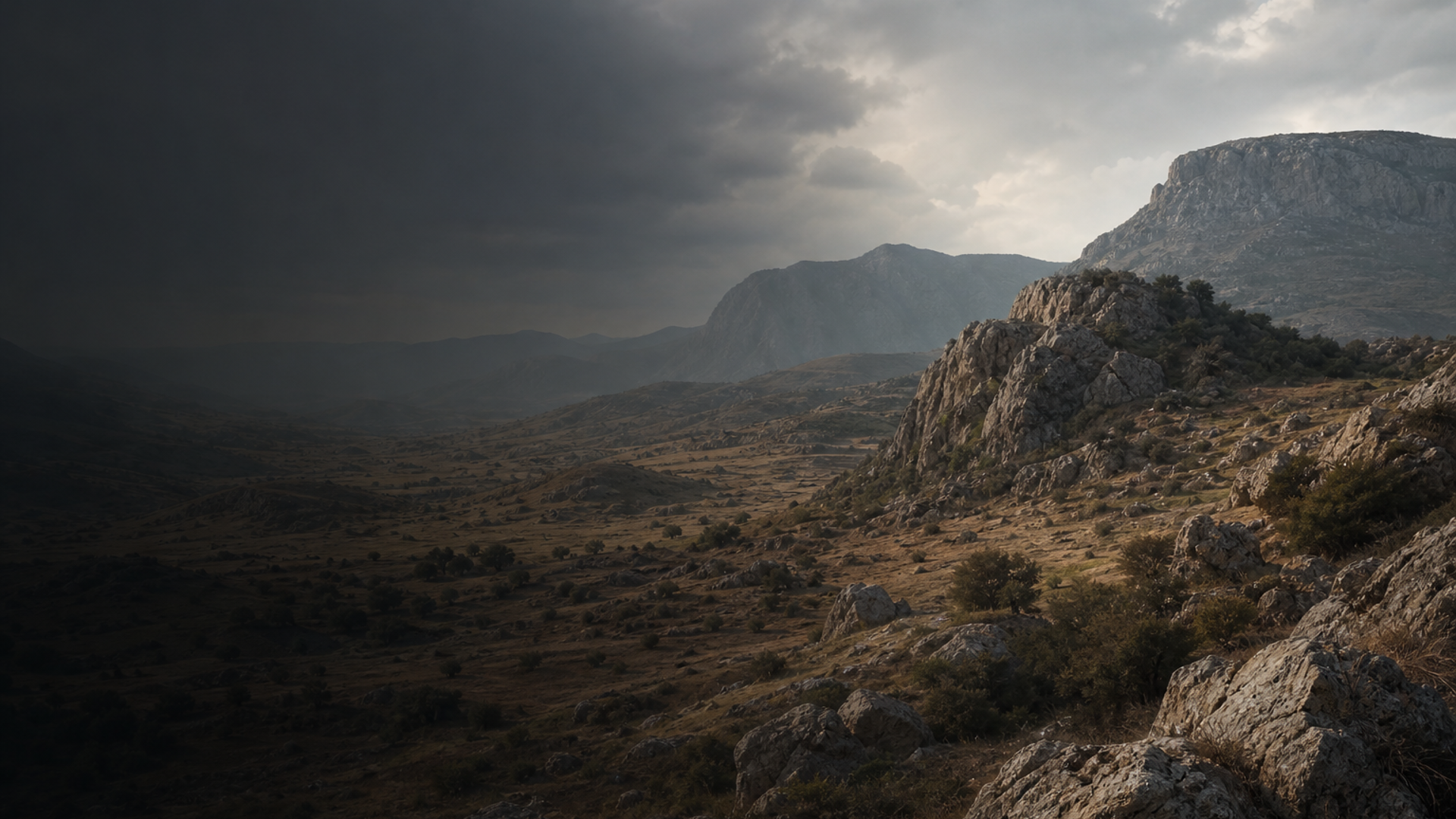

Importantly, a single genome can detect broad ancestry components and affinity to comparative populations, but small sample size (<10) makes population-level inferences unreliable. Further sampling from Sabrano and nearby sites is essential to test hypotheses about mobility, kinship, and the pace of genetic change in the eastern Balkans.

  • Only one genome available — results are preliminary and not population-representative
  • May reflect a mix of Neolithic farmer ancestry and Steppe-related input, consistent with regional trends
Kapitel VI

Legacy & Modern Connections

The Sabrano individual stands as a luminous, if tentative, thread connecting deep past to present landscapes. Archaeologically, Early Bronze Age Bulgaria helped shape settlement patterns and craft traditions that echo into later Balkan histories. Genetically, samples like this one contribute to a growing mosaic used to trace how ancient movements and interactions contributed to modern genetic landscapes.

Because only a single sample is available, any direct link to modern populations is tentative. However, when combined with other Balkan Early Bronze datasets, such genomes help chart long-term shifts: the layering of Neolithic farmer ancestry, Steppe-derived influxes, and subsequent regional admixture events. Together, these patterns illuminate the complex ancestry of contemporary southeastern European populations, while reminding us that rich diversity in antiquity resists simple narratives.

  • Contributes a data point to long-term genetic narratives in the Balkans
  • Highlights the need for more sampling to connect ancient genomes with modern populations
KI-gestützt

KI-Assistent

Stellen Sie Fragen zur Sabrano: An Early Bronze Age Echo-Kultur

KI-Assistent von DNAGENICS

Funktion freischalten
Stellen Sie Fragen zur Kultur Sabrano: An Early Bronze Age Echo. Unser KI-Assistent kann genetische Befunde, historischen Kontext, archäologische Belege und moderne Verbindungen erläutern.
Beispiel einer KI-Analyse

Die Sabrano: An Early Bronze Age Echo-Kultur ist ein faszinierendes Kapitel der Menschheitsgeschichte...

Genetische Analysen zeigen Übereinstimmungen mit früheren Populationen und Hinweise auf besondere Anpassungen und kulturelle Innovationen. Alte DNA-Proben liefern Einblicke in Migrationsmuster, soziale Strukturen und genetische Verbindungen zwischen Populationen.

Dies ist eine Vorschau der KI-Analyse. Schalten Sie den vollständigen KI-Assistenten frei, um detaillierte Einblicke zu erkunden:

  • Genetische Zusammensetzung und genetische Ähnlichkeit
  • Migrationsmuster und Ursprünge
  • Alltag und kulturelle Praktiken
  • Genetischer Bezug zu heutigen Populationen

Weitere antike Kulturen erkunden

Geschichten von Zivilisationen aus der antiken Welt entdecken

Use code for 35% off • Expires Nov 09




