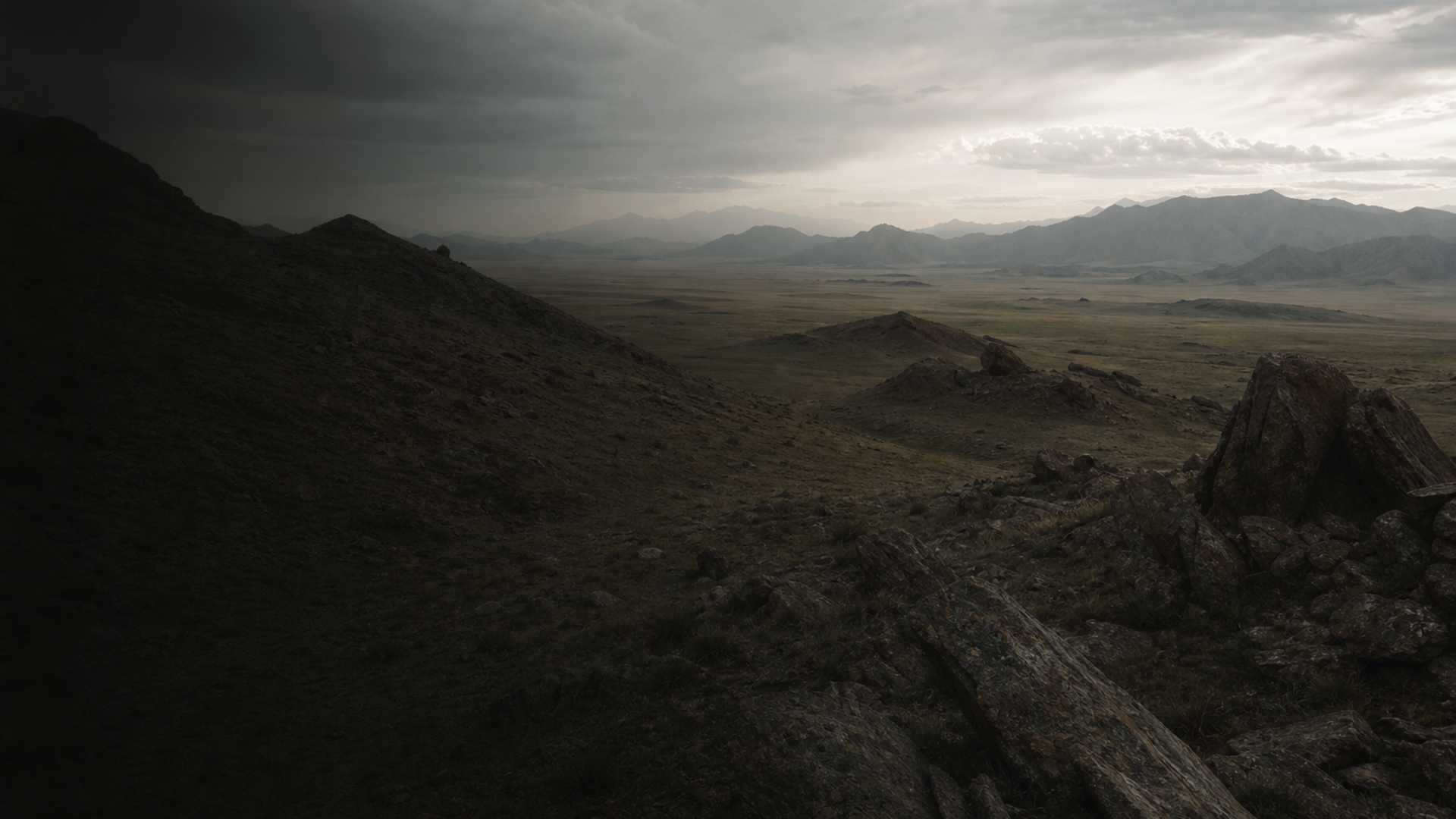
In the shadow of the Chandman Uul ridges, the Ulaangom cemetery yields a cinematic but careful glimpse of a Small-steppe population during the Early Iron Age. Archaeological data indicates funerary activity at multiple graves — including Ulaangom cemetery graves #33, #35, #41, #46–49, and #58 — spanning roughly 405–57 BCE. The material culture recovered aligns with what archaeologists classify as the Sagly cultural horizon (Sagly Culture 4), a regional expression in western Mongolia that shows ties to broader steppe traditions.
Burials combine modest grave goods, deliberate body placement, and landscape-oriented cemetery planning, suggesting locally rooted communities with shared mortuary practices. Limited evidence suggests cultural interactions across the western Mongolian steppe: stylistic parallels in metalwork and horse gear point toward exchanges with neighboring groups to the west and south. The dataset comes from a single cemetery cluster in Ulaangom; while dense within that locus, it remains spatially limited. Archaeological interpretation therefore treats these burials as representative of a local community within the wider Sagly phenomenon rather than a comprehensive portrait of all eastern steppe populations.