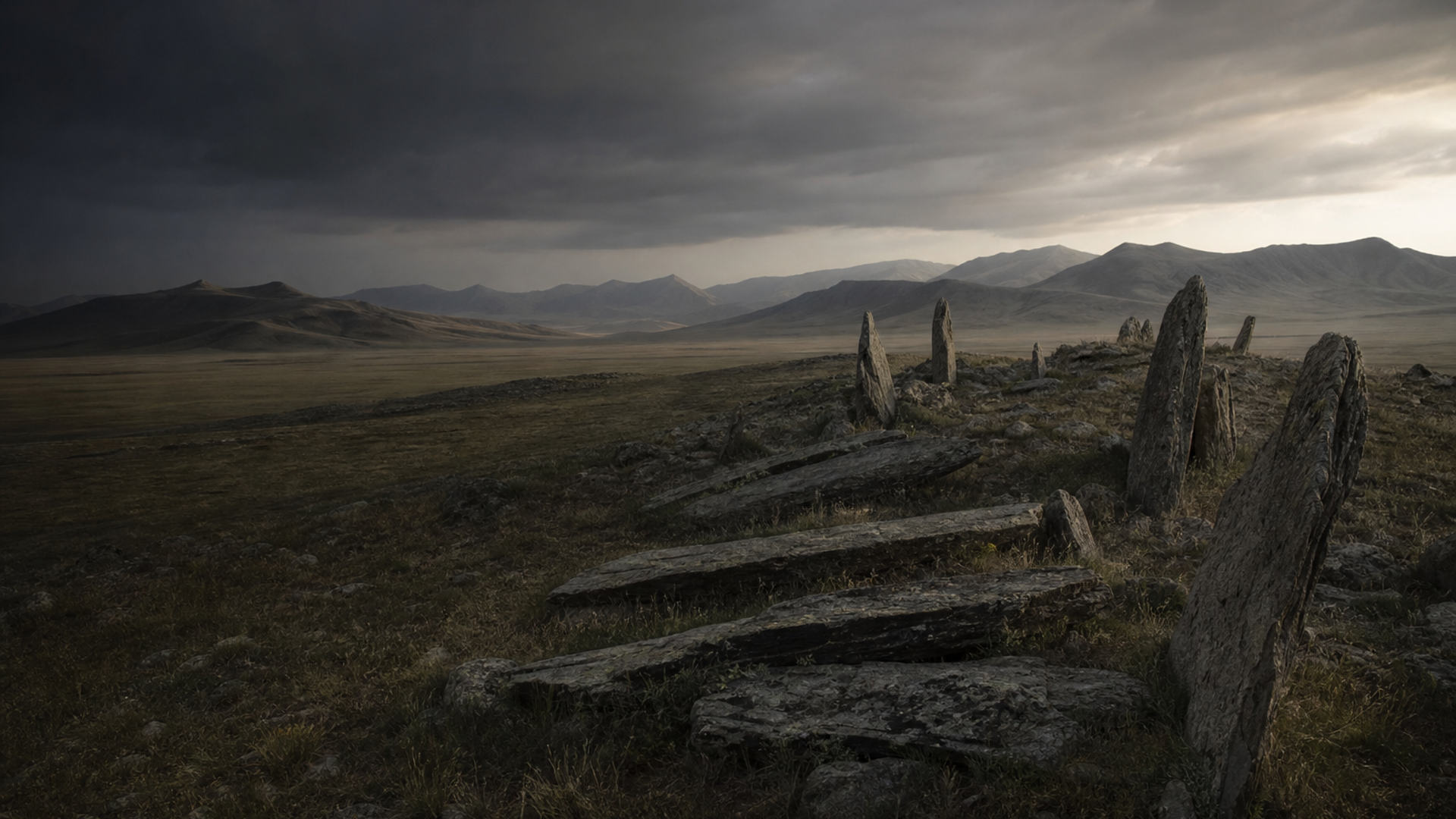
Archaeological evidence paints a cinematic scene of seasonal movement and resilient adaptation. The Slab Grave dead were often interred without elaborate tomb architecture, implying communities focused on mobility and herd management rather than monumental urbanism. Faunal remains from nearby habitation sites and regional surveys indicate reliance on domestic sheep, goats, and horses — a pastoral economy tuned to Mongolia’s wide steppe and forest-steppe ecotones.
Grave assemblages in this sample set are generally modest; where objects occur they include utilitarian items and personal ornaments rather than large metal hoards. This pattern suggests social life centered on household and herd, with status perhaps expressed through livestock wealth and ephemeral displays rather than durable, portable treasures. Archaeological data indicates seasonal camps and transhumant routes linked the upland lakes of Khuvsgul with the river valleys of Khentii and the plains of Tuv and Sükhbaatar. Climate variability and wetland resources (for example, near Erhel nuur) would have structured mobility, grazing, and seasonality.
Cultural identity appears bound to landscape and memory — the slabs themselves become a communal script, readable across generations — but many specifics of social hierarchy and ritual remain poorly resolved without larger, context-rich excavations.