Srubnaya‑Alakul at Nepluyevsky

Download PDF creates a visual, rasterized copy. Use Print for selectable text and better assistive-technology support.

Zum Hauptinhalt springen
Zivilisations-Spotlight

Srubnaya‑Alakul at Nepluyevsky

A Late Bronze Age necropolis where timber‑grave rites meet mixed genetic ancestries

1950 CE - 1622 BCE
Southern Urals, Russia (Chelyabinsk Oblast)

Die Geschichte

Nepluyevsky barrows (Chelyabinsk Oblast) preserve Srubnaya‑Alakul burials dated 1950–1622 BCE. Thirty‑two genomes reveal a dominant Y‑DNA Q signal alongside West Eurasian maternal lineages, illuminating steppe lifeways and complex east–west connections.

Time Period

1950–1622 BCE

Region

Southern Urals, Russia (Chelyabinsk Oblast)

Common Y-DNA

Q (majority), R

Common mtDNA

U, H, T, K, H2b

Zeitleiste

1950 BCE

Nepluyevsky barrow usage begins

Initial phase of timber‑chamber burials at Nepluyevsky, marking local participation in Srubnaya‑Alakul funerary traditions.

Origins & Emergence

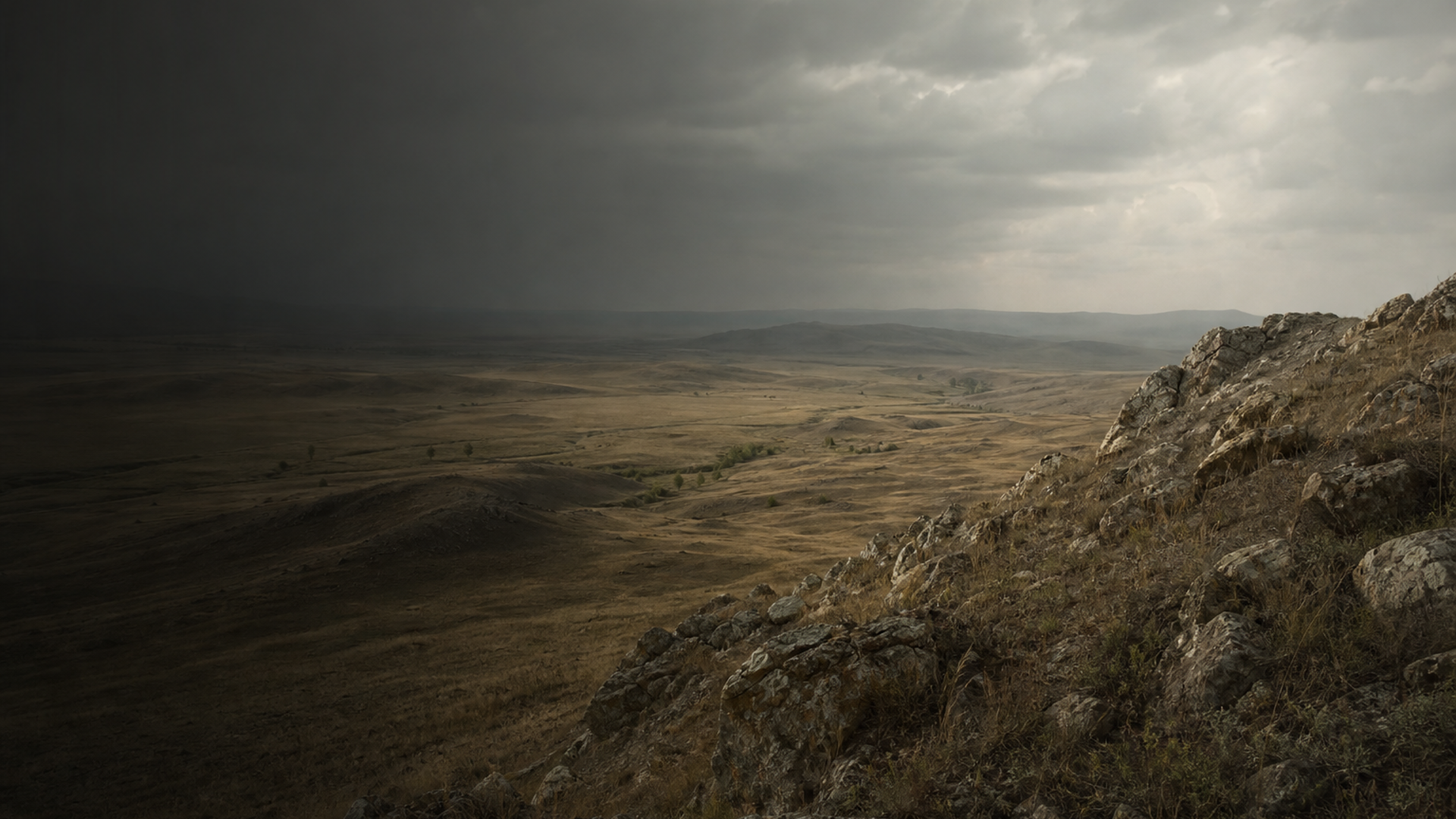
The Nepluyevsky Barrow Necropolis sits on the western fringe of the Ural foothills, in modern Kartaly district (Nepluyevka). Archaeological data indicates use of timber‑framed graves and earthen mounds consistent with the Srubnaya‑Alakul horizon, a Late Bronze Age cultural mosaic dated here between 1950 and 1622 BCE. The burial architecture — rectangular timber chambers beneath low barrows — echoes the broader timber‑grave tradition of the Pontic‑Caspian and Ural steppe.

Material traces from the site suggest mobile pastoralism anchored by seasonal herding, with communities exploiting river valleys and upland pastures. Pottery styles and metalwork show affinities both westward toward the Pontic steppe and eastward into the Siberian forest‑steppe, implying networks of exchange rather than simple isolation. Archaeological parallels point to interactions with contemporaneous Sintashta‑Andronovo cultural spheres, although direct continuity is complex and regional.

Genetic data from 32 sampled individuals from Nepluyevsky provide a new lens on emergence: they document a mixture of paternal and maternal lineages that complements the material record. While the assemblage illuminates a moment of cultural convergence on the southern Urals, limited geographic sampling means broader patterns across the Srubnaya‑Alakul world remain provisional.

  • Nepluyevsky Barrow Necropolis: timber graves beneath barrows
  • Dates: 1950–1622 BCE, Late Bronze Age Srubnaya‑Alakul horizon
  • Cultural affinities with both Pontic steppe and eastern forest‑steppe zones

Daily Life & Society

Life for communities represented at Nepluyevsky was likely shaped by mobility, herd management, and seasonal rhythms. Archaeological evidence typical of Srubnaya‑Alakul contexts — animal bone assemblages, hearth features, and portable craft debris — points to pastoral economies dominated by sheep, cattle, and horses, supplemented by hunting and riverine resources. The landscape offered both grazing plains and wooded shelter, fostering mixed subsistence strategies.

Burial practice emphasizes social identity: timber chambers, arranged grave goods, and articulated inhumations indicate attention to lineage and place. Grave assemblages commonly include pottery, worked bone, and metal items, suggesting status differences and the circulation of prestige objects. Spatial clustering of barrows hints at family or kin groups maintaining ancestral plots across generations.

Seasonal mobility need not imply political fragmentation; pastoral networks could support wide exchange of goods, ideas, and mates. Ethnoarchaeological analogies and regional comparisons help reconstruct daily routines, but direct evidence for household architecture and craft specialization at Nepluyevsky is limited, so reconstructions remain partly inferential.

  • Pastoral economy with sheep, cattle, and horses; seasonal mobility
  • Timber‑chamber burials and grave goods reflect lineage and status

Genetic Profile

Thirty‑two genome samples from Nepluyevsky offer a moderate‑scale window into the Srubnaya‑Alakul genetic landscape. The most striking feature is the predominance of Y‑DNA haplogroup Q (16 out of 32 males reported), with fewer R lineages (2). On the maternal side, haplogroups are dominated by U (13), followed by H (8), T (5), K (2), and two instances of H2b.

This paternal skew toward Q is notable because haplogroup Q is often associated with eastern Eurasian and Siberian branches in later periods; its prominence here suggests either local persistence of an eastern‑affiliated male lineage or gene flow from more easterly populations into the southern Ural steppe during the Late Bronze Age. Maternal lineages, dominated by U and H, are common across West Eurasia and the steppe, indicating strong continuity of West Eurasian maternal ancestry.

Taken together, the data hint at sex‑biased processes: a marked male lineage composition that contrasts with a broadly West Eurasian maternal pool. Such patterns can result from patrilocal marriage systems, male‑mediated migrations, or founder effects. Because comparative sampling across neighboring sites and time slices remains incomplete, these interpretations are provisional. Future genomic comparisons with Sintashta, Andronovo, and later Iron Age groups will be essential to resolve the directionality and timing of east–west genetic exchanges.

  • Y‑DNA dominated by Q (16) with fewer R lineages (2)
  • mtDNA dominated by U and H, indicating West Eurasian maternal continuity

Legacy & Modern Connections

The Nepluyevsky assemblage captures a moment when the southern Urals functioned as a crossroads. Archaeological continuity in burial forms feeds a narrative of local traditions persisting alongside waves of interaction. Genetically, the mix preserved in these burials contributes to the deep mosaic of Eurasian ancestry, one strand in the complex web that later peoples inherited.

Some modern populations in the Ural and Siberian borderlands retain fragments of these Bronze Age ancestries, but connecting ancient genomes directly to contemporary groups requires dense temporal sampling. The conspicuous Y‑DNA Q signal at Nepluyevsky is a reminder that eastern genetic threads were already woven into steppe communities by the Late Bronze Age. Ultimately, Nepluyevsky highlights how funerary landscapes can preserve both cultural performance and biological histories, while underscoring the need for broader regional sequencing to map durable legacies versus transient episodes.

  • Contributes to the Eurasian genetic mosaic, especially male lineage diversity
  • Funerary continuity suggests cultural persistence; modern links require more sampling

KI-Assistent

KI-Assistent von DNAGENICS

Funktion freischalten
Stellen Sie Fragen zur Kultur Srubnaya‑Alakul at Nepluyevsky. Unser KI-Assistent kann genetische Befunde, historischen Kontext, archäologische Belege und moderne Verbindungen erläutern.
Beispiel einer KI-Analyse

Die Srubnaya‑Alakul at Nepluyevsky-Kultur ist ein faszinierendes Kapitel der Menschheitsgeschichte...

Genetische Analysen zeigen Übereinstimmungen mit früheren Populationen und Hinweise auf besondere Anpassungen und kulturelle Innovationen. Alte DNA-Proben liefern Einblicke in Migrationsmuster, soziale Strukturen und genetische Verbindungen zwischen Populationen.

Dies ist eine Vorschau der KI-Analyse. Schalten Sie den vollständigen KI-Assistenten frei, um detaillierte Einblicke zu erkunden:

  • Genetische Zusammensetzung und genetische Ähnlichkeit
  • Migrationsmuster und Ursprünge
  • Alltag und kulturelle Praktiken
  • Genetischer Bezug zu heutigen Populationen
Use code for 30% off • Expires Nov 15