Västerbjers: Pitted Ware Meets Battle Axe

Download PDF creates a visual, rasterized copy. Use Print for selectable text and better assistive-technology support.

Bericht wird vorbereitet

Verfügbare Informationen und Referenzen werden geladen

Verbindung mit dem archäologischen Quellenbestand...

Alte Quellen werden zusammengestellt

Zum Hauptinhalt springen
Västerbjers: Pitted Ware Meets Battle Axe
Zivilisations-Spotlight

Västerbjers: Pitted Ware Meets Battle Axe

Coastal hunters and axe-bearing newcomers on Gotland (3092–2457 BCE)

3092 CE - 2457 BCE
Gotland, Sweden (Västerbjers)
Scrollen zum Start
Kapitel I

Die Geschichte

Die Västerbjers: Pitted Ware Meets Battle Axe-Kultur verstehen

Archaeogenetic and archaeological evidence from 13 samples at Västerbjers, Gotland, illuminates interactions between Pitted Ware coastal communities and Battle Axe influences between 3092–2457 BCE. Maternal lineages point to strong hunter‑gatherer continuity with traces of Neolithic admixture.

Time Period

3092–2457 BCE (radiocarbon range)

Region

Gotland, Sweden (Västerbjers)

Common Y-DNA

Undetermined / limited data

Common mtDNA

U (9), K (2), HV (1), T (1)

Kapitel II

Zeitleiste

Zentrale Momente in der Geschichte dieser Kultur

2500 BCE

Peak interaction on Gotland

Västerbjers and nearby sites show intensified contact between Pitted Ware marine communities and Battle Axe influences, reflected in mixed artifacts and burial practices.

Kapitel III

Origins & Emergence

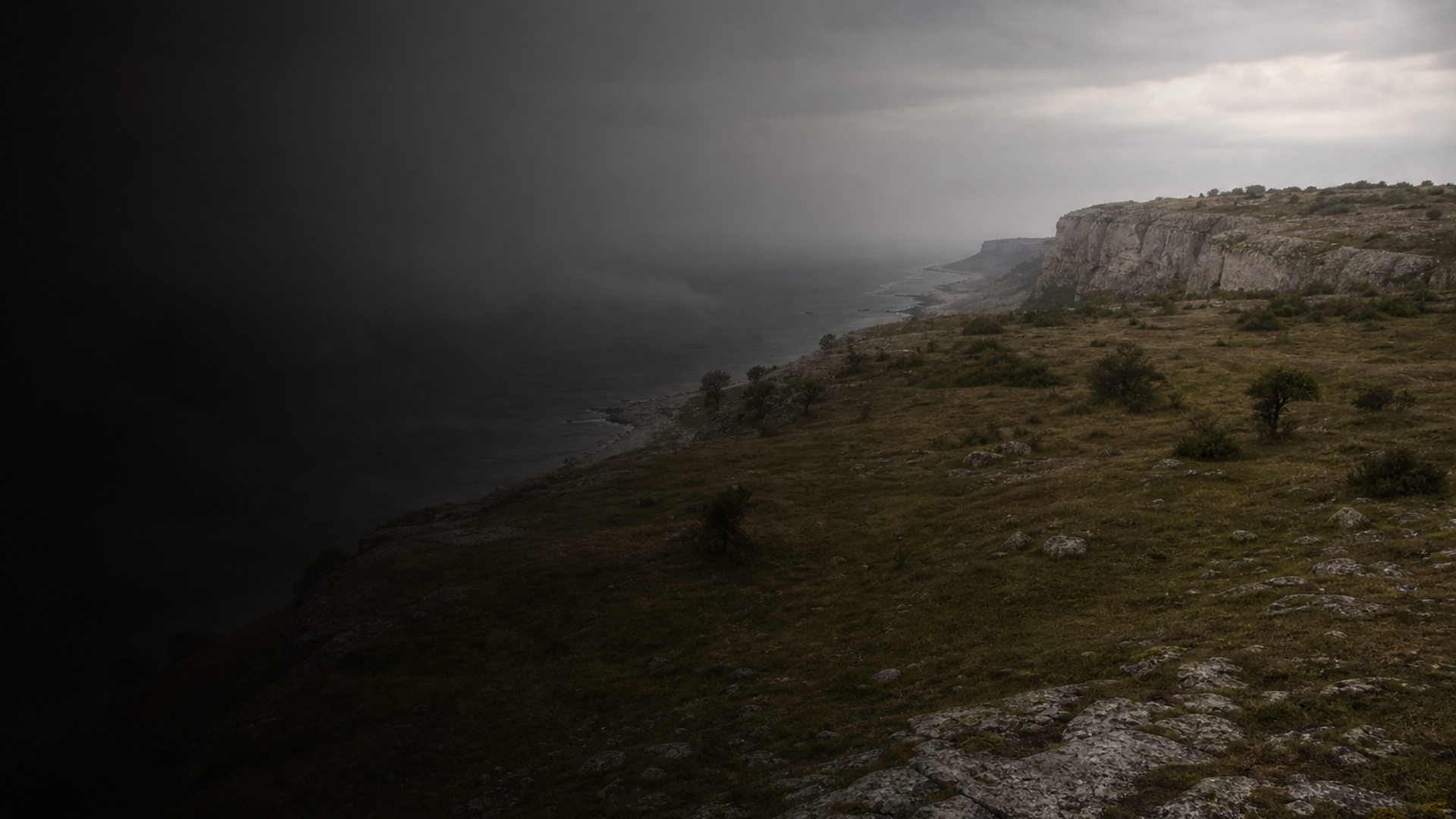
On the wind‑scoured limestone shores of Gotland, the Västerbjers assemblage stands where two cultural currents meet. Archaeological deposits dated between 3092 and 2457 BCE contain classic pitted‑ware ceramics — coarse, combed and punctuated vessels used by maritime hunter‑gatherers — alongside implements and burial traits that evoke the wider Battle Axe horizon. Västerbjers sits within a broader Pitted Ware landscape in the Baltic, where communities exploited rich marine resources year‑round.

Archaeological data indicates incremental contact rather than a single invasion: pottery styles, toolkits and burial goods show a mosaic of adoption, exchange and selective continuity. Radiocarbon dates from bone and charcoal at Västerbjers anchor these interactions in the late 4th to mid 3rd millennium BCE, a period of intensified mobility across the Baltic. Material culture evokes specialized seafaring economies, seasonal aggregation sites, and indexical markers of identity such as pitted decoration and axe forms.

Limited evidence suggests that some elements associated with Battle Axe groups — notably long flint daggers and certain burial orientations — appear in local graves, implying cultural borrowing or the movement of people. However, the archaeological record at Västerbjers emphasizes continuity: many burial practices and subsistence traces remain distinctly Pitted Ware in character, suggesting complex networks of contact rather than wholesale replacement.

  • Västerbjers dated 3092–2457 BCE on Gotland
  • Material mix of Pitted Ware ceramics and Battle Axe elements
  • Evidence points to contact and cultural exchange rather than simple replacement
Kapitel IV

Daily Life & Society

Västerbjers evokes a maritime rhythm: small communities anchored to bays and skerries, where boats, nets and spears sustained a diet rich in fish, seal and seabirds. Zooarchaeological remains from Pitted Ware contexts on Gotland consistently show a reliance on marine protein, and midden deposits suggest seasonal aggregation for communal feasting and exchange. Shellfish beds and coastal wetlands provided predictable resources that structured settlement and mobility.

Craft traditions are visible in the pottery — pitted and combed surfaces that may have aided handling and drying — and in finely made bone and antler implements. Social life likely centered on kin groups with flexible cooperation for seafaring and hunting. Graves at Västerbjers, where present, sometimes contain personal items and weapons, hinting at individual status or roles within maritime economies. Interaction with Battle Axe-associated groups introduced new objects and perhaps new social practices: axes, certain flint tool types, and possibly changes in exchange networks.

Archaeological data indicates households were small and maritime specializations prominent, but communal ritual and intergroup interaction appear important. The coastal landscape is both a lifeway and a stage for cultural negotiation, where identities were performed through pottery, boatcraft and burial practice.

  • Economy centered on marine hunting and seasonal aggregation
  • Pottery, bone tools and graves reflect maritime identities and social ties
Kapitel V

Genetic Profile

Thirteen ancient individuals from Västerbjers provide a measurable, though still modest, genetic window into this frontier of cultural interaction. The maternal lineages are dominated by mtDNA haplogroup U (9 of 13), with smaller counts of K (2), HV (1) and T (1). High prevalence of U is consistent with broader Pitted Ware and hunter‑gatherer maternal continuity in the Baltic region, reflecting long‑standing local female ancestry.

The presence of K, HV and T — haplogroups also observed in Neolithic farming populations — points to low-level maternal admixture from farmer‑associated groups or increased mobility linking inland and coastal communities. Y‑DNA data for these Västerbjers samples is not robustly reported here, so paternal lineages remain undetermined; this limits reconstructions of male‑mediated migrations or the extent of Battle Axe male influx.

Archaeogenetic patterns elsewhere show Pitted Ware individuals carrying high Western Hunter‑Gatherer (WHG) ancestry, while Battle Axe and Corded Ware groups often carry steppe‑related ancestry and different Y‑haplogroup profiles. At Västerbjers the mtDNA mix suggests predominantly local maternal continuity with measurable touches of Neolithic-related lineages, consistent with archaeological evidence for contact and selective incorporation. Given the sample count (13), these conclusions are informative but should be treated as part of a growing dataset rather than definitive.
  • mtDNA dominated by U (9); K, HV, T present in smaller numbers
  • Maternal profile indicates strong hunter‑gatherer continuity with some Neolithic admixture
Kapitel VI

Legacy & Modern Connections

The Västerbjers assemblage captures a pivotal Baltic moment when maritime hunter‑gatherer lifeways met new material forms and mobile networks. Maternal haplogroups such as U remain detectable in present‑day Northern Europe, so people testing mtDNA U may trace part of their deep maternal ancestry to lineages common among ancient Baltic foragers. At the cultural level, the pitted ware aesthetic and seafaring tradition shaped regional identities that endure in island archaeology and folklore.

For modern genetic ancestry seekers, Västerbjers emphasizes nuance: DNA can reveal maternal continuity and incoming threads, but it rarely maps one‑to‑one onto cultural labels like “Pitted Ware” or “Battle Axe.” Archaeology and genetics together show patchwork encounters — exchange, coexistence, and selective assimilation — rather than simple replacement. As more samples are analyzed, Västerbjers will continue to refine our picture of how coastal communities navigated change millennia ago.

  • mtDNA links (e.g., U) connect ancient Gotlanders to broader Northern European lineages
  • Combining archaeology and DNA highlights contact, continuity, and cultural blending
KI-gestützt

KI-Assistent

Stellen Sie Fragen zur Västerbjers: Pitted Ware Meets Battle Axe-Kultur

KI-Assistent von DNAGENICS

Funktion freischalten
Stellen Sie Fragen zur Kultur Västerbjers: Pitted Ware Meets Battle Axe. Unser KI-Assistent kann genetische Befunde, historischen Kontext, archäologische Belege und moderne Verbindungen erläutern.
Beispiel einer KI-Analyse

Die Västerbjers: Pitted Ware Meets Battle Axe-Kultur ist ein faszinierendes Kapitel der Menschheitsgeschichte...

Genetische Analysen zeigen Übereinstimmungen mit früheren Populationen und Hinweise auf besondere Anpassungen und kulturelle Innovationen. Alte DNA-Proben liefern Einblicke in Migrationsmuster, soziale Strukturen und genetische Verbindungen zwischen Populationen.

Dies ist eine Vorschau der KI-Analyse. Schalten Sie den vollständigen KI-Assistenten frei, um detaillierte Einblicke zu erkunden:

  • Genetische Zusammensetzung und genetische Ähnlichkeit
  • Migrationsmuster und Ursprünge
  • Alltag und kulturelle Praktiken
  • Genetischer Bezug zu heutigen Populationen

Weitere antike Kulturen erkunden

Geschichten von Zivilisationen aus der antiken Welt entdecken

Use code for 35% off • Expires Nov 09




