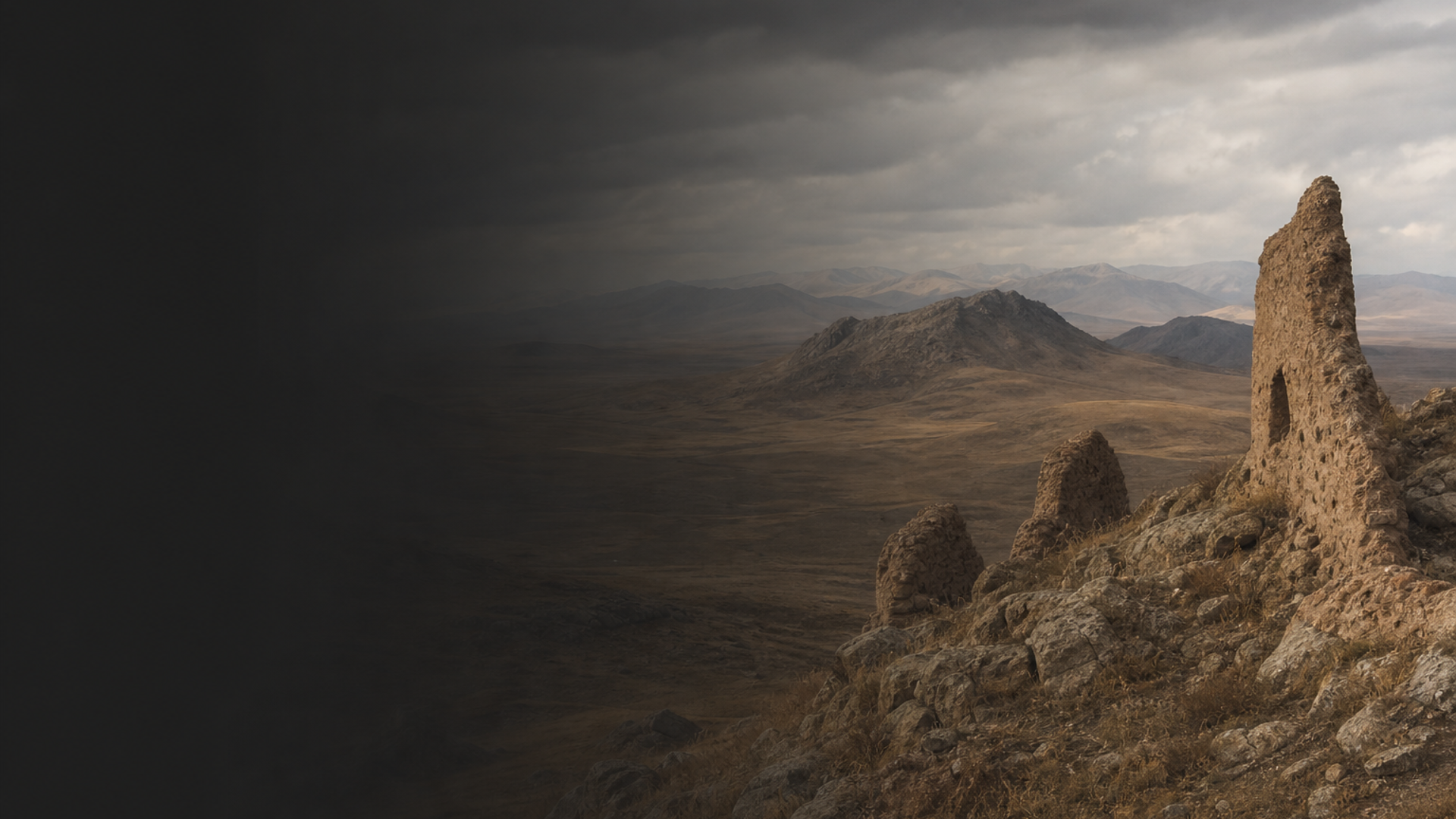
Emergence in a modern landscape
The dataset represents individuals living in Kazakhstan in the year 2000 CE, sampled across several administrative regions: Aktyubinsk (Aktobe area), Akmola (central Kazakhstan, with emphasis on the Argyn clan), East Kazakhstan (Naiman clan), and West Kazakhstan (Bayuli clan). Archaeological evidence for modern populations is often indirect — museum collections, recent cemetery contexts, and ethnographic records — and must be read alongside historical sources that record centuries of migration, tribal confederations, and Soviet-era population movements.
Material traces from the recent past are subtle: family grave markers, household assemblages, and archival photographs rather than monumental tombs. These materials tell of continuity in pastoral lifeways, settlement scattering across steppe plains, and social organization around clans (e.g., Argyn, Naiman, Bayuli). Archaeological data indicates persistence of certain cultural practices, while also reflecting rapid social change in the 20th century.
Genetic sampling of 15 individuals offers a snapshot rooted in this living historical context. Limited sample size and the modern date mean conclusions about ancient origins are indirect: genetic affinities measured today reflect both deep ancestry and recent demographic events (migration, urbanization, intermarriage). As such, interpretations must remain cautious, integrating ethnographic nuance with genetic patterns to reconstruct the complex formation of modern Kazakh identities.