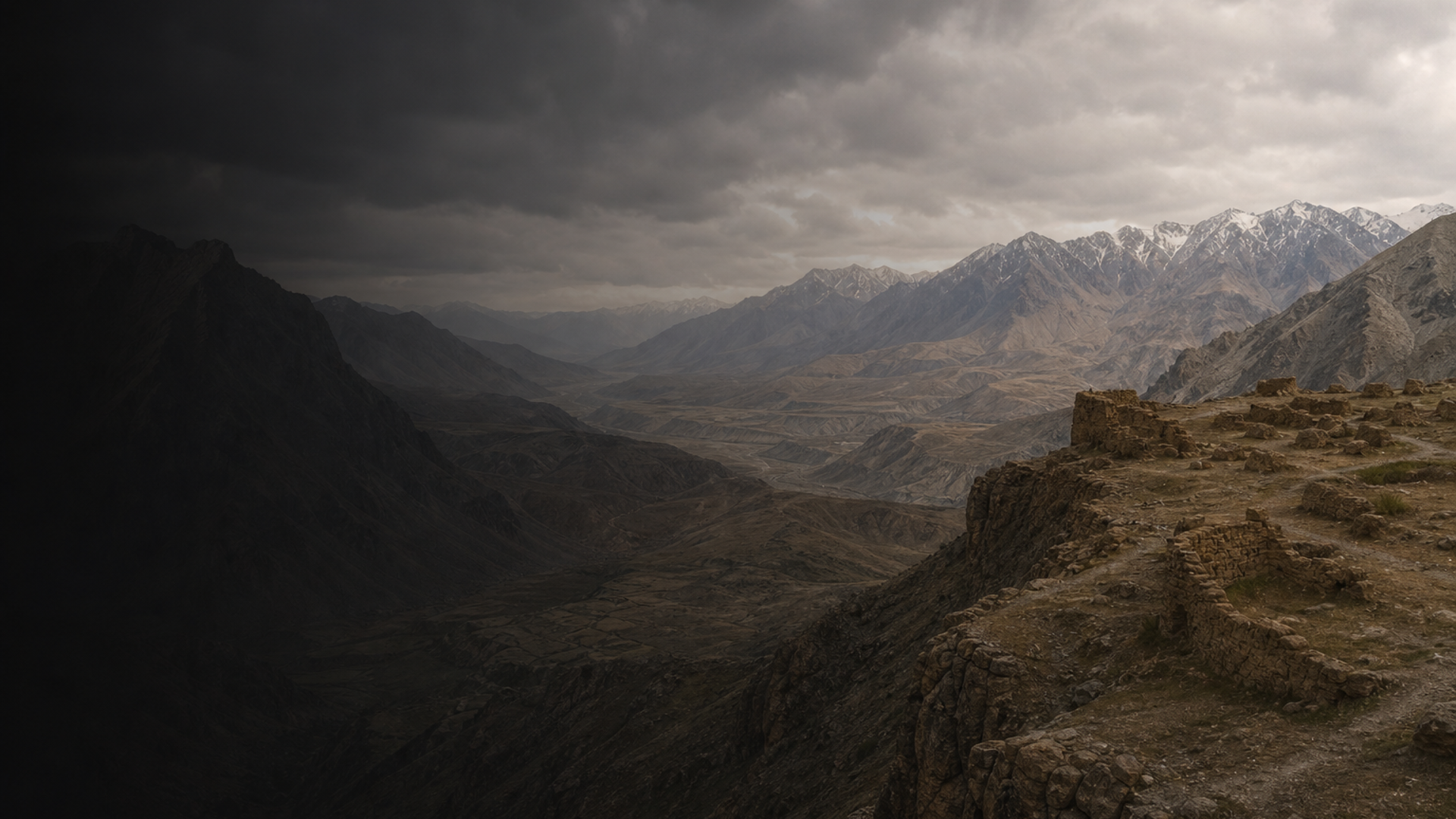
The genetic dataset for this Modern_Tajikistan grouping comprises 41 contemporary samples drawn from across Tajikistan, including sites in Shughnon District, Rushan, Ishkasim, Aininsky, Murgab, Kulyab and Gissar. While 41 samples provide a meaningful regional snapshot, they remain geographically uneven and cannot capture the full diversity of all Tajik and Pamiri subgroups.
Genomic signals in Tajikistan reflect a mosaic heritage. Archaeogenetic research in Central Asia more broadly documents major ancestral components: an Iran-related (West Eurasian) substratum associated with early agricultural and urban societies, contributions linked to Bronze Age and Iron Age steppe populations, and varying inputs from South and East Asian sources over millennia. Modern Tajik genomes typically show admixture of these elements; in mountainous locales greater continuity with local lineages is often detectable due to reduced gene flow.
Specific Y‑DNA and mtDNA haplogroup summaries are not reported here as dominant single-lineage patterns are not evident in the dataset; instead, the samples show varied paternal and maternal lineages consistent with a history of migration and local continuity. Interpretation should remain cautious: population movements, recent historical events (medieval trade, Mongol-era upheavals, and Russian/Soviet-era mobilities) all reshaped genetic landscapes. Future, denser sampling and ancient DNA from regional archaeological layers would refine models of timing and source contributions.