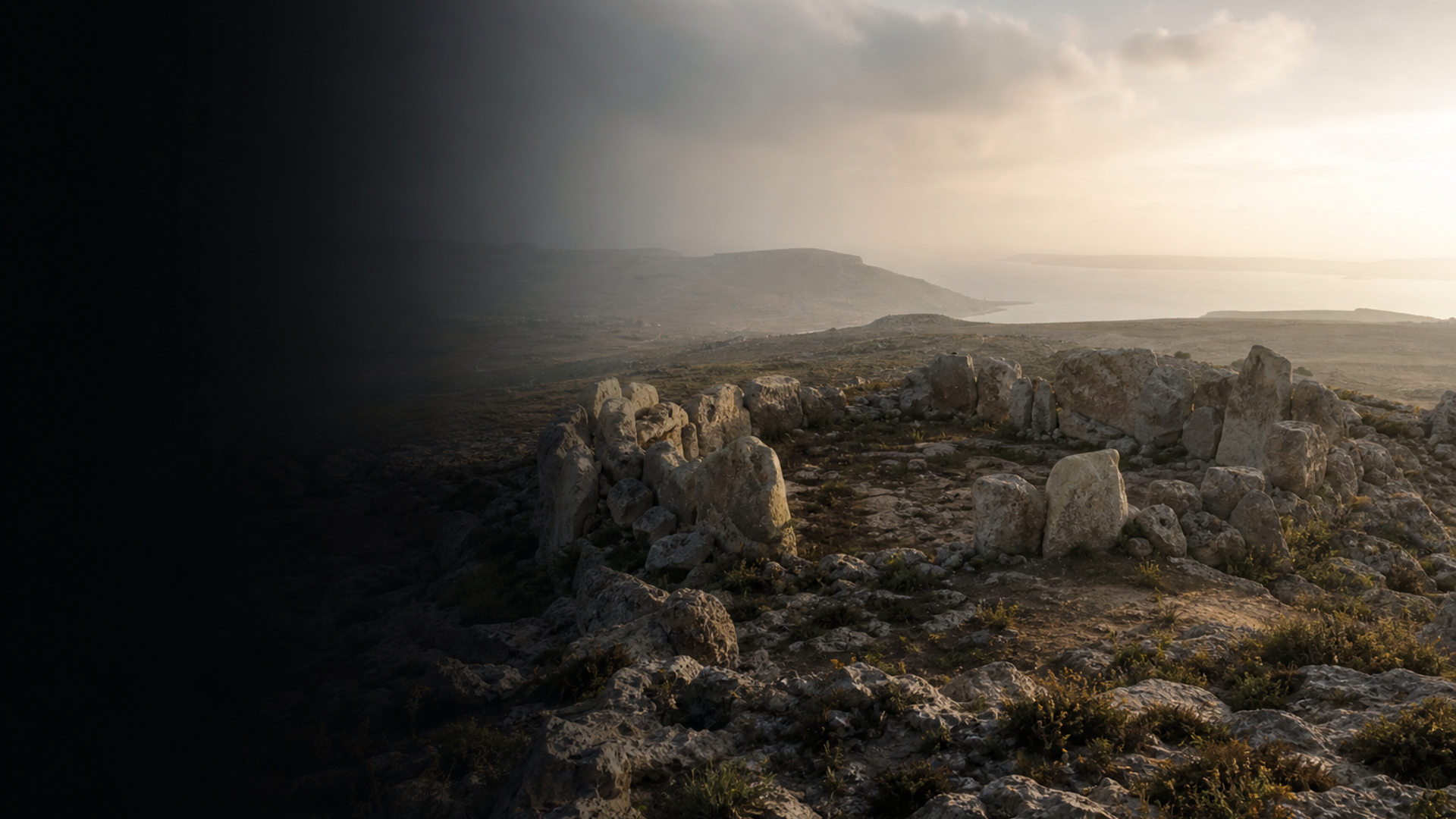
Archaeological evidence from the Xagħra Circle and surrounding sites paints a picture of island life organized around mixed subsistence, craft specialization, and intense ritual. Farmers cultivated cereals and kept livestock adapted to island conditions; maritime resources supplemented diets. Material remains — worked stone, polished tools, and portable art — suggest skilled craftsmanship and symbolic production tied to communal rites.
The monumental architecture of Xagħra implies organized labor and social investments in shared sacred places. Funerary deposits and curated human remains indicate complex beliefs about ancestry and community identity. At the same time, artifacts with non‑local raw materials imply exchange across the central Mediterranean, linking Gozo to Sicily, southern Italy, and perhaps farther afield via seafaring routes.
Because direct household contexts for the three sampled individuals are limited, reconstructions of everyday identity must remain cautious. The archaeological record, however, supports a vision of small, tightly knit island communities that balanced subsistence, craft, and ritual life against the backdrop of shifting networks in the Bronze Age Mediterranean.