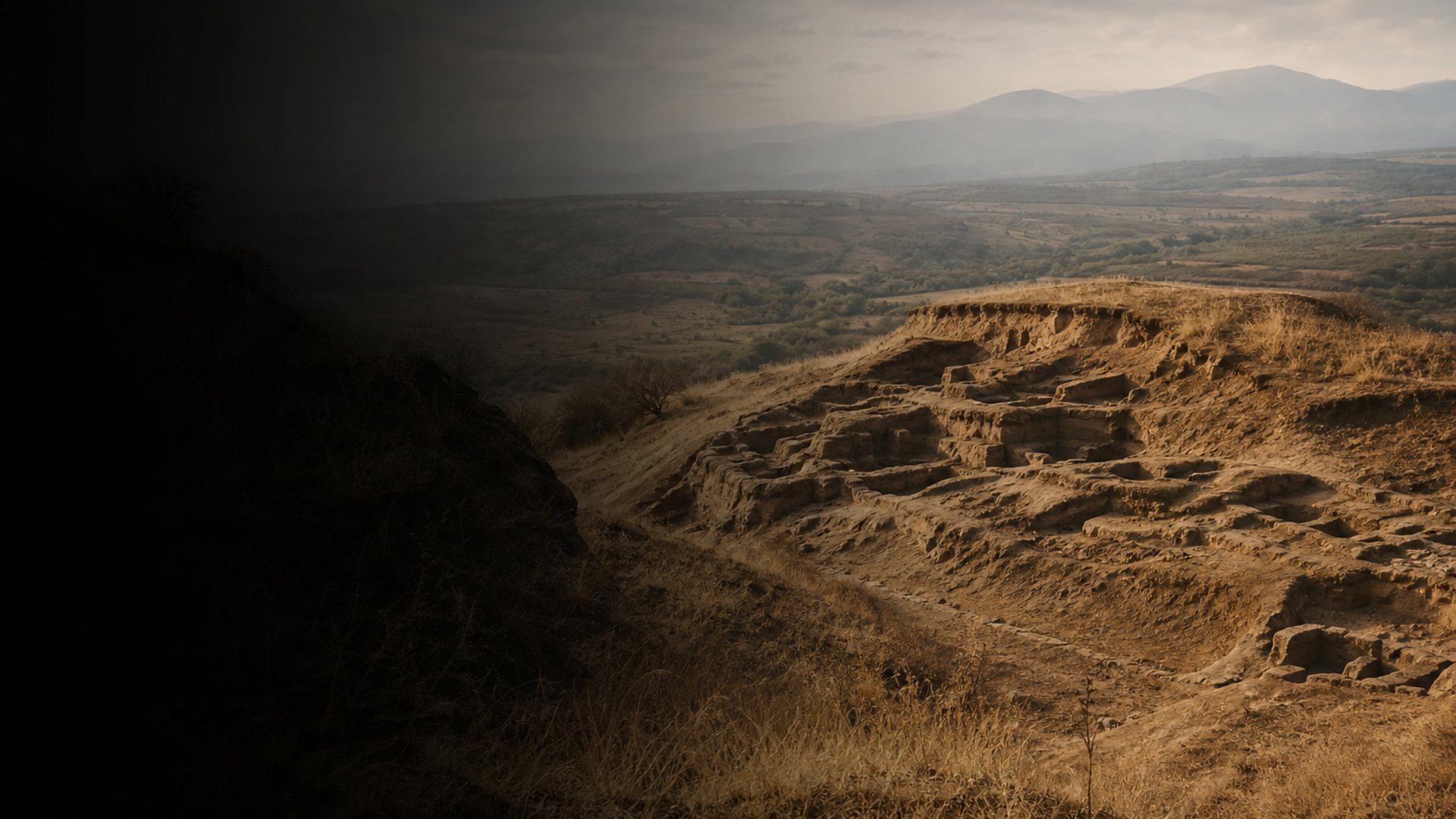
Life at Yunatsite was tactile and communal: packed earth floors, hearths, storage pits and craft areas record routines of food preparation, repair and ceremony. Archaeobotanical and zooarchaeological remains indicate mixed farming—emmer and barley, pulses, cattle, sheep and goats—supplemented by hunting and wild plant foraging. Pottery and personal ornaments, often finely painted or incised, attest to aesthetic traditions and social signaling.
Evidence for copper working—small ingots, tools, and slag—places Yunatsite in the early chapters of Chalcolithic metallurgy in southeastern Europe. Workshops and specialized tool assemblages suggest craft specialization and likely craft households. Burials and domestic deposition patterns imply complex social structures: some houses show high investment in architecture or assemblage wealth, pointing to emerging status differentiation, while figurines and ritual deposits indicate communal beliefs and rites.
Archaeological data indicates episodes of burning and collapse in the late Chalcolithic levels at Yunatsite; whether these reflect conflict, ritualized abandonment, or accidental destruction remains debated. Combining material culture and genetic snapshots offers a richer sense of daily life—families rooted in agriculture, mobile exchange networks, and evolving social hierarchies.