部门背景
mtDNA 谱系分支 J1D2 的历史背景
Origins and Evolution
mtDNA haplogroup J1d2 is a downstream branch of J1d, itself nested within the broader haplogroup J1. The parent clade J1d most likely arose in the Near East in the early Holocene (~9 kya) as part of a cluster of J1 lineages that expanded with post-glacial and early farming populations. J1d2 appears to have emerged after the initial diversification of J1d — plausibly in the early to mid-Holocene (~7 kya) — reflecting additional population structuring associated with the spread of Neolithic cultural packages and coastal/maritime dispersals around the eastern Mediterranean.
As a mitochondrial lineage, J1d2 represents maternal ancestry and behaves as a marker of female-mediated demographic processes. Its phylogenetic position as a derived branch of J1d implies a Near Eastern origin followed by diffusion into neighboring regions rather than an origin within Europe or North Africa.
Subclades (if applicable)
Compared with some major mtDNA clades, J1d2 is a relatively fine-scale lineage and shows limited but detectable internal substructure in full mitogenome surveys. Targeted mitogenome sequencing occasionally resolves further sublineages within J1d2 (reported in the literature as rare, geographically localized branches). Because these subclades are low-frequency and often discovered only with complete mitogenomes, many population-level surveys report J1d2 as a single clade without well-established named subbranches.
Geographical Distribution
J1d2 is concentrated around the eastern Mediterranean with spillover into adjacent regions. Modern sampling and a small number of ancient DNA hits indicate the following broad pattern:
- Near East / Anatolia / Levant: Highest frequencies and diversity, consistent with a Near Eastern origin and local continuity.
- Southern Europe (Mediterranean coastlines of Italy, Spain, Greece): Present at low to moderate frequency, consistent with Neolithic maritime dispersals (Cardial/Impressed Ware expansion) and later historical gene flow.
- North Africa (Maghreb coastal areas): Detected at low to moderate levels, plausibly arriving by prehistoric Mediterranean contacts and subsequent historical mobility (including Phoenician/Carthaginian and later movements).
- Caucasus and parts of Central Asia: Occasional occurrences reflecting long-distance connections and secondary dispersals.
- Jewish populations: J1-derived maternal lineages, including members of the J1d sub-clade, appear in some Jewish diaspora maternal lineages (both Sephardi and other Levantine-derived groups), reflecting Near Eastern maternal ancestry in these communities.
Only a very small number of ancient samples have been confidently assigned to J1d and its subclades in published paleogenomic datasets; this limited aDNA record is consistent with the lineage's relatively low frequency and the uneven geographic and temporal coverage of ancient sampling.
Historical and Cultural Significance
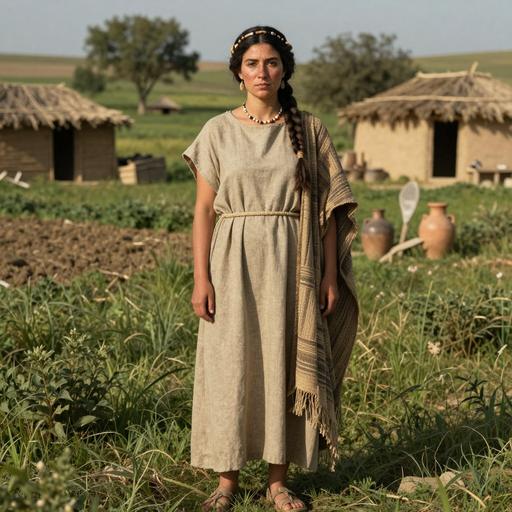
Because of its timing and geographic pattern, J1d2 is best interpreted as part of the maternal legacy of Neolithic farmer expansions from the Near East into the Mediterranean and parts of Europe and North Africa. Its presence along Mediterranean coasts aligns with archaeological evidence for early maritime Neolithic cultures (e.g., Cardial/Impressed Ware) that moved along the Mediterranean shoreline. Later historical processes (Bronze Age trade networks, Phoenician colonization, and classical-era mobility) likely contributed to additional dispersal and low-level gene flow of J1d2 into coastal North Africa and Mediterranean Europe.
In modern populations, J1d2's moderate presence among some Levantine and Mediterranean groups — and its occasional appearance in Jewish maternal lineages — underlines continuity of Near Eastern maternal ancestry across a range of cultural histories. However, because J1d2 remains uncommon, it is not usually associated with a single archaeological culture or ethnic identity but rather with broader patterns of prehistoric and historic connectivity.
Conclusion
mtDNA haplogroup J1d2 is a Near Eastern-derived maternal lineage that expanded at low to moderate frequencies with early Holocene demographic processes and Neolithic maritime dispersals into the Mediterranean, with secondary spread into North Africa, the Caucasus, and parts of Europe. Its low frequency in most modern populations and limited representation in ancient DNA make it a useful marker for tracing certain Near Eastern maternal contributions but not a dominant signature in any single modern population.
关键点
- Origins and Evolution
- Subclades (if applicable)
- Geographical Distribution
- Historical and Cultural Significance
- Conclusion