部门背景
mtDNA 谱系分支 L0D2A 的历史背景
Origins and Evolution
mtDNA haplogroup L0D2A sits within the ancient African macro-haplogroup L0, a lineage often cited as one of the deepest maternal branches in modern humans. L0 lineages (including L0d and L0k) have long been associated with southern African Khoe‑San groups; subclades such as L0D2A likely arose during the Late Pleistocene as part of population structure within southern Africa. Coalescence estimates for L0 sublineages vary between studies, but an origin for L0D2A on the order of tens of thousands of years ago (here provisionally ~50 kya) is consistent with its position as a derived yet still deep branch of L0D2.
Subclades (if applicable)
L0D2A functions as an intermediate clade in phylogenies that include downstream local sublineages observed in modern and ancient southern African samples. Because L0D2A'B'D (the intermediate grouping) has been used in Phylotree-style notations, precise subclade resolution depends on dense sampling and full mitogenome sequencing. Some child lineages under the L0D2 series appear geographically restricted to southern Africa and show limited diversity compared with more widespread African haplogroups, consistent with long-term local continuity and population structure.
Geographical Distribution
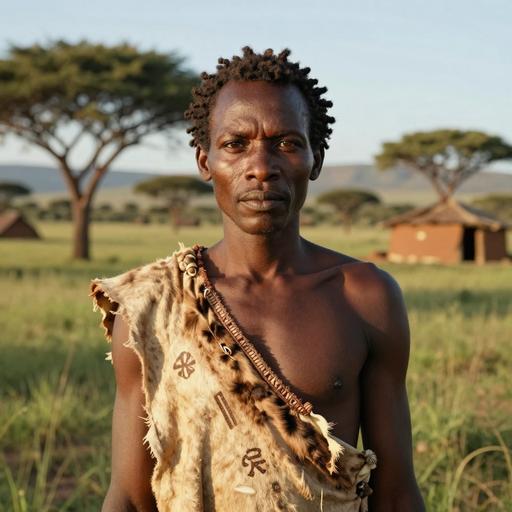
L0D2A is predominantly observed in southern Africa, where it is most frequent among Khoe‑San populations (often recorded in Ju|'hoansi, !Kung, and Nama/Khoekhoe groups). It can also appear at low frequency in neighboring groups due to admixture with Bantu-speaking agriculturalists and later pastoralist movements. Ancient DNA from Later Stone Age burial contexts in southern Africa has recovered L0d-related lineages, supporting continuity of deep maternal lineages in the region over millennia. Broader sampling across eastern and central Africa has occasionally revealed related L0D2 diversity, but the highest concentration and diversity remain in southern Africa.
Historical and Cultural Significance
Because L0D2A and related L0d lineages are largely concentrated in populations associated with the southern African Later Stone Age and historically documented Khoe‑San groups, they are often used as genetic markers of deep regional ancestry predating the Bantu expansions. These lineages provide evidence for early population structure in Africa and for long-term persistence of maternal lineages in southern Africa. In demographic reconstructions, L0d subclades inform on ancient hunter‑gatherer population sizes, local continuity, and interactions (admixture) with incoming pastoralist and agriculturalist groups during the Holocene.
Conclusion
L0D2A is best understood as a southern African, Pleistocene‑aged maternal lineage within the broader L0d family. It highlights the deep antiquity and regional continuity of maternal ancestry among Khoe‑San and other southern African groups. Continued full mitogenome sequencing and ancient DNA sampling are required to refine the internal structure, precise age, and local distribution of L0D2A and its immediate descendants.
关键点
- Origins and Evolution
- Subclades (if applicable)
- Geographical Distribution
- Historical and Cultural Significance
- Conclusion