部门背景
mtDNA 谱系分支 L4B2A2B 的历史背景
Origins and Evolution
mtDNA haplogroup L4B2A2B is a downstream subclade of L4B2A2 and therefore sits within the broader L4 lineage, a branch of macro-haplogroup L that is largely restricted to eastern and northeastern Africa. Based on the position of L4B2A2B beneath L4B2A2 (itself dated to the mid-Holocene ~5.5 kya) and the phylogeographic patterns observed in modern and ancient samples, L4B2A2B most plausibly arose in the Horn/East Africa region during the later mid-Holocene (roughly 4.0 kya). Its emergence likely reflects diversification within small, regionally structured maternal lineages during a period of ecological and cultural change that included the growth of pastoralism and continued hunting‑gathering lifeways in eastern Africa.
Subclades
At present, L4B2A2B is recognized as a terminal or near-terminal branch in many public phylogenies, with only limited further substructure described in the literature and sequence databases. That limited branching is consistent with a relatively recent origin and/or low effective population size in the maternal lineages carrying it. As additional full mitochondrial genomes from East Africa are sequenced, further internal subclades may be identified, particularly within populations that maintain higher frequencies of deep-rooted L4 diversity (for example, Hadza, Sandawe, and some Horn pastoralist groups).
Geographical Distribution
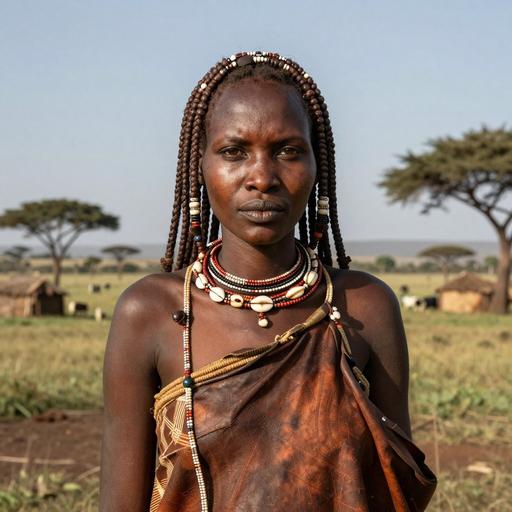
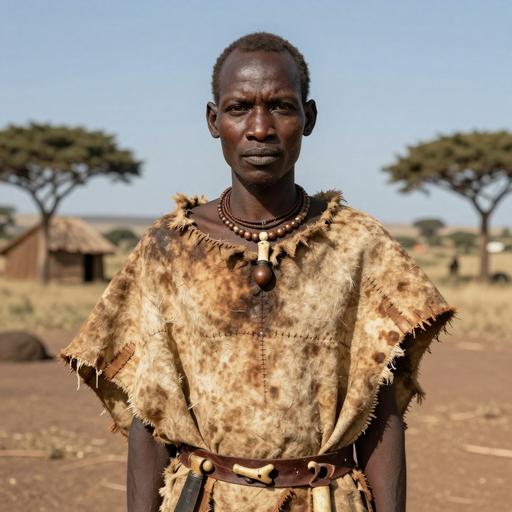
The distribution of L4B2A2B is concentrated in the Horn and neighboring parts of East Africa, recorded at appreciable frequencies in groups of the Ethiopian and Somali Afro‑Semitic sphere and in several eastern African hunter‑gatherer and pastoralist populations. Low-frequency occurrences also appear in Nile Valley populations (northeastern Sudan/Nubia), parts of Kenya and Tanzania (including Hadza and Sandawe), and small numbers in the southern Arabian Peninsula—reflecting millennia of movement across the Red Sea. In the modern diaspora, rare instances appear in African-descended populations in the Americas and the Caribbean, attributable to the transatlantic slave trade. The haplogroup has also been detected in a small number of ancient DNA samples from eastern Africa, confirming its antiquity in the region.
Historical and Cultural Significance
Although L4B2A2B is not associated with a single well-documented archaeological culture in the way some West Eurasian lineages are, its timing and distribution align it with processes important in East African prehistory: the spread and intensification of pastoralism (often referred to regionally as the Pastoral Neolithic), continued occupation by hunter‑gatherer groups, and increased inter-regional contact across the Horn and along Red Sea corridors during the mid- to late Holocene. In groups such as the Hadza and Sandawe, and among pastoralist Oromo, Somali, and Cushitic and Nilotic-speaking communities, L4-lineages more generally mark long-term maternal continuity in eastern Africa and contribute to the genetic signatures that distinguish these populations from neighboring West and Central African groups.
Conclusion
L4B2A2B represents a relatively young, regionally focused maternal lineage that helps illuminate Holocene maternal population structure in the Horn and adjacent eastern African regions. Its pattern—concentrated in East Africa with scattered occurrences to the north, south, and across the Red Sea—matches expectations for a lineage that diversified locally during a period of cultural transition (pastoral expansion and persistent hunter‑gatherer lifeways). Continued sampling of full mitochondrial genomes from underrepresented East African populations and additional ancient DNA recovery will refine the internal topology and timing of this clade.
关键点
- Origins and Evolution
- Subclades
- Geographical Distribution
- Historical and Cultural Significance
- Conclusion